Quality Assurance Services That Ship Defect-Free Software
Full-cycle QA and software testing for mobile apps, web platforms, and AI systems embedded directly into your development workflow.
Whether you’re preparing an MVP for its first release or scaling a production application that millions depend on, every line of untested code is a risk you’re carrying. At Square Infosoft, quality assurance isn’t a phase that happens after development. It’s woven into every sprint, every build, and every deployment.
Our certified QA engineers work alongside your development team (or ours) to catch defects before they reach users, before they damage your reputation, and before they become exponentially more expensive to fix.
TRUSTED CLIENT’S
Trusted Quality Assurance Partner for Reliable Digital Products
Businesses across industries have partnered with Square Infosoft to build digital products. Explore our client relationships and project portfolio to learn more about the work we do.
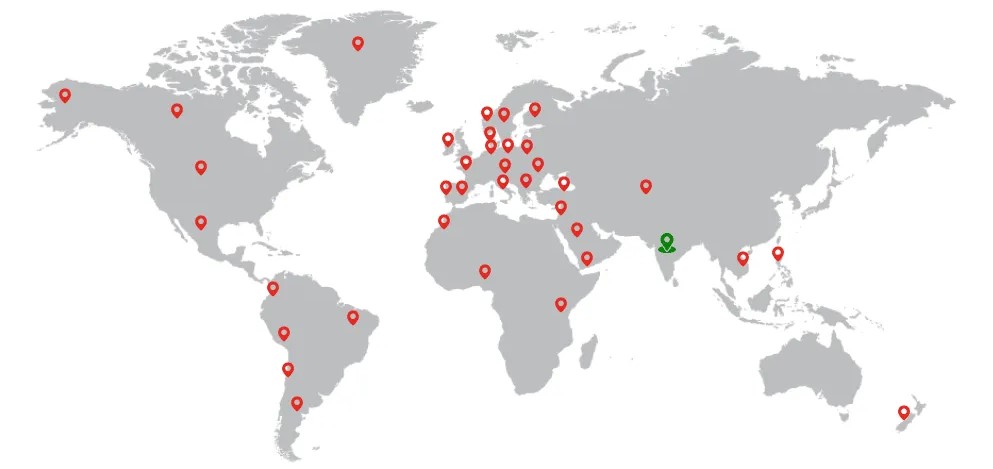
Trusted by high-growth companies across the globe


Projects Delivered
Happy Clients
Countries Served
Years of Experience
PROBLEM/OPPORTUNITY
The Cost of Skipping Quality Assurance and Software Testing
Why Production Bugs Cost More to Fix Than Early-Stage Defects
According to IBM’s Systems Science Institute, the cost of fixing a defect found during production is roughly six times higher than fixing it during the design phase and the gap grows wider as systems become more complex. That’s not a worst-case scenario. That’s a recurring pattern across teams that treat QA as optional or leave it until the end.
A single critical bug in a payment flow can result in abandoned carts, chargebacks, and regulatory scrutiny. A performance issue on a healthcare platform can mean delayed access to patient records. A security vulnerability in a fintech app discovered post-launch can mean months of remediation, regulatory fines, and lost institutional trust.
How Software Bugs and Failed Releases Impact User Trust
Mobile app users are notoriously unforgiving. Studies consistently show that more than 60% of users who encounter a crash or significant bug in an app will not return after uninstalling. For web applications, page load delays above three seconds cause more than half of users to abandon the session entirely.
The math is straightforward: investing in quality assurance before release protects revenue, protects user retention, and protects the months of development effort your team has already committed to the product.
The question isn’t whether you can afford proper QA. It’s whether you can afford to skip it.
New Risks from AI-Generated and No-Code Applications
AI-assisted coding tools and no-code or low-code platforms can help teams build prototypes and applications quickly, but development speed does not replace software testing. AI-generated code, visual workflows, third-party integrations, and platform configurations can still contain functional errors, security gaps, and unexpected edge cases.
Quality assurance for AI-generated, vibe-coded, and no-code or low-code applications helps validate critical user journeys, form submissions, authentication, data handling, API integrations, and responsive behaviour before release. Testing these areas helps teams identify issues that may not appear during a basic demonstration or happy-path check.
CORE SERVICES
Our Comprehensive QA Testing Across Every Service We Deliver
Square Infosoft provides quality assurance and software testing services to help businesses validate application functionality, usability, performance, security, and reliability throughout the software development lifecycle. From mobile apps and web applications to SaaS platforms, AI-powered products, and custom business software, our testing approach is tailored to your application’s requirements and release goals.
Our QA testing services also cover applications built with no-code and low-code platforms, as well as vibe-coded applications developed using AI-assisted coding tools. By validating workflows, integrations, data handling, compatibility, and critical user journeys, teams can identify issues, assess release readiness, and make more informed decisions before deploying software.
Mobile App QA Testing Services
Mobile applications must perform consistently across devices, operating systems, screen sizes, network conditions, and user environments. Our mobile QA team validates application stability, UI consistency, security, offline behavior, push notifications, API communication, and real-world usability before release.
We Provide Quality Assurance For
- iOS App Development
- Android App Development
- Flutter App Development
- React Native App Development
- Cross-Platform App Development
- Native Mobile Applications
- Enterprise Mobile Apps
- Ecommerce Applications
- On-Demand Service Apps
- SaaS Mobile Platforms
- MVP Applications
- Wearable Applications
- Tablet Applications
- Progressive Web Apps (PWA)
- Mobile Web Applications
Our Testing Coverage Includes
- Functional testing
- Mobile responsiveness
- Device compatibility testing
- App performance optimization
- Battery and memory usage validation
- Crash testing
- App store compliance testing
- Real-device testing
- Network simulation testing
- Mobile security testing
Website and Web Application QA Services
Modern web platforms depend on stable frontend experiences, reliable backend systems, scalable infrastructure, and seamless third-party integrations. Our QA engineers validate both user-facing experiences and backend operational workflows to ensure applications remain reliable under real-world usage conditions.
We Provide QA Testing For
- Custom Website Development
- Web Application Development
- Ecommerce Development
- CMS Platforms
- Portal Development
- SaaS Platforms
- Marketplace Platforms
- CRM Systems
- ERP Solutions
- Dashboard Development
- Landing Pages
- Enterprise Websites
- API Development
- Website Redesign Projects
- Website Maintenance & Upgrades
Our Web QA Services Include
- Cross-browser testing
- Responsive testing
- API validation
- Payment gateway testing
- Workflow testing
- Session management testing
- Form validation
- Authentication testing
- Database validation
- Performance testing
- Scalability testing
- Accessibility testing
- SEO-impact validation
- Security testing based on OWASP standards
AI Application and AI Model Testing Services
AI-powered platforms require a completely different testing strategy compared to traditional software applications. In addition to validating functionality, AI systems must be tested for prediction accuracy, hallucination risks, edge-case handling, data reliability, inference speed, automation stability, and integration consistency.
We Provide QA and Validation Services For
- AI App Development
- AI Web Development
- Generative AI Platforms
- OpenAI Integration
- ChatGPT Integration
- AI Chatbot Development
- AI Automation Systems
- AI SaaS Platforms
- AI Agent Development
- Machine Learning Solutions
- Predictive Analytics Platforms
- NLP Applications
- Computer Vision Systems
- Recommendation Engines
- AI CRM Solutions
- AI Business Automation Platforms
Our AI QA Process Includes
- AI workflow validation
- Prompt-response testing
- Hallucination testing
- Edge-case scenario testing
- Model accuracy validation
- AI response consistency testing
- API integration testing
- Inference performance testing
- Dataset validation
- Bias detection analysis
- Automation workflow testing
- Scalability testing for AI systems
No-Code Application Testing Services
No-code applications still need structured testing to confirm that visual workflows, forms, integrations, permissions, and user journeys work as intended. Our QA approach helps identify functional gaps, data-handling issues, and unexpected behaviour before an application is released.
We Provide QA Testing For
- No-code business applications
- No-code MVPs and prototypes
- Workflow-based applications
- Form and data collection apps
- Customer portals
- Internal business tools
- Marketplace and directory apps
- Applications built with platforms such as Bubble, Glide, and Softr, subject to scope
Our No-Code QA Coverage Includes
- Workflow and business-rule validation
- Form and input validation
- User journey testing
- Role and permission testing
- Data integrity checks
- Third-party integration testing
- Responsive layout testing
- Error handling and edge-case testing
Low-Code Application Testing Services
Low-code applications combine visual development tools with configured workflows, custom logic, APIs, and data sources. Our testing approach validates these connected components to help confirm that business processes, access controls, and integrations behave according to requirements.
We Provide QA Testing For
- Low-code business applications
- Workflow and process automation apps
- Enterprise and departmental tools
- Customer and employee portals
- Data-driven dashboards
- Applications with custom logic and integrations
- Low-code MVPs and prototypes
- Applications built with platforms such as Power Apps, OutSystems, or FlutterFlow, subject to scope
Our Low-Code QA Coverage Includes
- Configured workflow validation
- Business logic testing
- API and integration testing
- Data processing and validation
- Authentication and access control testing
- Exception and error handling
- Regression testing after configuration changes
- Performance checks for critical workflows
Vibe-Coded Application Testing Services
Applications created through prompt-driven and AI-assisted coding workflows need validation beyond a successful demo. Our QA approach checks generated functionality, navigation, forms, authentication, integrations, responsive behaviour, and edge cases against the intended requirements before release.
We Provide QA Testing For
- Vibe-coded applications and prototypes
- Prompt-built web applications
- AI-assisted coding projects
- Vibe-coded MVPs before launch
- Applications built with tools such as Lovable, Bolt.new, or Replit, subject to scope
- Projects developed with AI coding assistants such as Cursor
Our Vibe-Coded App QA Coverage Includes
- Requirements and functionality validation
- Critical user journey testing
- Form, navigation, and state validation
- Authentication and authorization testing
- API and third-party integration testing
- Data handling and error-state checks
- Responsive and browser compatibility testing
- Security and regression testing based on scope
UI/UX Testing and Usability Validation Services
A visually attractive interface alone does not create a successful digital product. Applications must also provide intuitive navigation, accessibility compliance, consistent interaction patterns, and friction-free user experiences.
We Provide QA and Usability Validation For
- Mobile App UI/UX Design
- Website UI/UX Design
- SaaS Dashboard Design
- Enterprise Dashboard Interfaces
- Product Design Systems
- Wireframes & Interactive Prototypes
- UX Research Workflows
- Design System Validation
- Figma-Based Design Systems
Our UI/UX QA Process Includes
- Usability testing
- Accessibility validation (WCAG)
- Navigation flow testing
- Interaction testing
- UI consistency reviews
- Design-to-development validation
- Responsive UI testing
- Visual regression testing
- Conversion-focused UX analysis
- User behavior validation
Frontend Application Testing Services
Frontend applications must remain stable across browsers, devices, rendering environments, and user interactions. Our QA engineers test rendering consistency, component behavior, dynamic UI workflows, and frontend performance optimization for modern JavaScript applications.
We Provide Testing Support For
- React JS Applications
- Next JS Platforms
- Vue JS Applications
- Angular Applications
Frontend QA Coverage Includes
- Component testing
- Frontend regression testing
- Rendering validation
- Hydration testing
- Routing validation
- Dynamic UI testing
- State management testing
- SSR/CSR validation
- Browser compatibility testing
- Frontend performance optimization
Backend and API Testing Services
Backend systems power application logic, authentication, workflows, databases, integrations, and business operations. Even minor backend defects can create major failures across entire platforms.
We Provide Backend Testing For
- Node.js Applications
- REST APIs
- Third-Party Integrations
- Enterprise Backend Systems
Our Backend QA Services Include
- API testing
- Database validation
- Authentication testing
- Session management testing
- Business logic validation
- Server-side security testing
- Load testing
- Concurrency testing
- Integration testing
- Webhook validation
- Microservices testing
Mobile Technology Testing Services
Different mobile technologies require platform-specific testing strategies to ensure optimal stability and user experience.
We Provide Testing Expertise For
- Flutter Applications
- Swift iOS Applications
- Kotlin Android Applications
- React Native Applications
Our Testing Process Validates
- Native functionality
- Cross-platform consistency
- App responsiveness
- Device-specific behavior
- Platform integration reliability
- Mobile performance optimization
Cloud, DevOps, and Infrastructure Testing Services
Infrastructure stability directly impacts application reliability, scalability, deployment speed, and operational uptime. Our QA engineers validate cloud environments, deployment workflows, CI/CD pipelines, and infrastructure scalability to reduce operational risk.
We Provide QA Support For
- AWS Infrastructure
- Firebase Platforms
- Google Cloud Environments
- Microsoft Azure Solutions
- DevOps Pipelines
- CI/CD Integrations
Infrastructure QA Coverage Includes
- Deployment testing
- CI/CD validation
- Environment consistency testing
- Cloud scalability testing
- Failover testing
- Uptime monitoring validation
- Server configuration testing
- Infrastructure security testing
Database Testing and Data Integrity Services
Data consistency issues can silently impact business operations, reporting accuracy, and customer experiences. Our QA engineers validate data integrity across applications, APIs, cloud systems, and enterprise workflows.
We Provide Database Testing For
- MongoDB
- MySQL
- PostgreSQL
- Firebase Database
Database QA Includes
- Data validation testing
- Migration testing
- Query optimization validation
- Backup and recovery testing
- Synchronization testing
- Transaction consistency validation
- Relational integrity testing
- Performance benchmarking
End-to-End Software Testing Across the Development Lifecycle
One of the biggest advantages of working with Square Infosoft is that our QA processes are integrated across every service we provide. Whether your project involves mobile applications, SaaS platforms, AI systems, enterprise software, cloud infrastructure, or UI/UX design, our testing workflows ensure every component works together reliably as a unified digital ecosystem. Instead of isolated testing phases, we build continuous quality assurance into the full software development lifecycle, helping businesses reduce production defects, accelerate release cycles, improve user satisfaction, and scale confidently across platforms and technologies.
RESULTS AND CASE STUDIES
Our QA and Software Testing Success Stories Across Digital Products
Our experience across mobile apps, web platforms, SaaS products, AI solutions, and enterprise systems gives our QA team a practical understanding of real-world software quality. Explore some of the digital products we have worked on and the quality, performance, reliability, and user experience standards we help businesses achieve.

What Our Clients Say
What Our Clients Say About Working With Square Infosoft


Kreg Thornley
Marketing Director, Alchemy Spetec Tucker, Georgia, United States
James Guttman
San Francisco, California, United StatesWhy Choose Us
Why Businesses Choose Square Infosoft for Quality Assurance
There are hundreds of QA vendors in the market. Most of them operate as separate testing agencies that receive a finished build, run tests, and return a bug report. That model creates friction, delays, and miscommunication between developers and testers.
We operate differently.
QA Integrated Into Your Software Development Lifecycle
We integrate QA into your development process from sprint one. That means test cases are written alongside user stories, automated tests run with every pull request, and defects are reported with the context developers need to fix them immediately, not two weeks after the code was written.
Cross-Platform Testing Across Apps, Web, AI, and Enterprise Software
Because Square Infosoft builds mobile apps, web applications, AI systems, and UI/UX experiences, our QA engineers understand how each platform behaves internally. We don’t need to be briefed on the technology; we already know where the common failure points are in the systems we test.
Experienced QA Engineers With Industry-Specific Expertise
Our QA team includes ISTQB-certified engineers with deep domain experience in healthcare, fintech, e-commerce, logistics, and SaaS applications. Domain expertise matters because the critical test cases in a healthcare system are fundamentally different from those in a marketplace application.
Transparent QA Reporting and Real-Time Defect Tracking
You’ll never wonder what’s being tested or what has been found. We provide real-time defect reporting via JIRA or your preferred project management tool, with clear severity classifications (critical, major, minor, and cosmetic), detailed reproduction steps, and resolution tracking so your team always has complete visibility.
Quality Assurance for No-Code, Low-Code, and AI-Assisted Applications
Applications built with no-code and low-code platforms or AI-assisted coding tools still require thorough software testing before release. Square Infosoft can help validate application workflows, user permissions, form submissions, API integrations, data handling, and responsive behaviour based on the application’s architecture and testing requirements.
Our QA approach can also support vibe-coded applications and AI-generated prototypes as they move toward production. Testing focuses on identifying functional issues, integration failures, and unexpected edge cases that may not appear during a basic demonstration, helping teams make more informed decisions about application quality and release readiness.
DEVELOPMENT PROCESS
Our Software Testing and Quality Assurance Process
A QA engagement without a structured process produces inconsistent results. Ours is built to be repeatable, transparent, and adaptable to agile, waterfall, or hybrid development environments.
01. Requirements Analysis and QA Planning
We review your product requirements, user stories, acceptance criteria, critical user journeys, and integrations to understand what needs to be validated. Based on the application's features, risks, and release goals, we define the testing scope, priorities, suitable testing types, and agreed entry and exit criteria.
02. Test Case Design and Environment Setup
We prepare test scenarios and test cases for expected workflows, negative scenarios, boundary conditions, edge cases, and integration points. We then arrange the required test environment and data based on the project setup. Where appropriate, we identify test cases that can be automated to support repeatable checks.
03. Functional and Non-Functional Test Execution
We execute manual and, where suitable, automated tests to check application behaviour against the agreed requirements. Depending on the project scope, this can include functional, regression, compatibility, usability, API, performance, and security testing. For no-code, low-code, and AI-assisted applications, relevant checks may also cover workflows, permissions, data handling, and third-party integrations.
04. Defect Reporting and Collaboration
We document identified defects with clear reproduction steps, expected and actual results, severity, and supporting evidence where available. Findings are shared with the relevant team for investigation and resolution, helping developers understand the issue and prioritize fixes according to impact and project requirements.
05. Retesting and Regression Testing
After fixes are provided, we retest the affected areas to verify the reported issues and run relevant regression tests to check whether changes have affected existing functionality or critical user journeys. The extent of retesting and regression coverage depends on the nature of the change and the agreed testing scope.
06. QA Reporting and Release Readiness
We summarize the testing performed, coverage reviewed, defects identified, unresolved issues, and relevant risks. This information helps stakeholders assess the application's readiness against agreed acceptance criteria and decide what needs attention before release. Recommendations can also inform future test planning and ongoing quality improvement.
Ready to build quality into your next release from day one?
Our QA experts help startups and enterprises identify defects early, validate critical workflows, improve software reliability, and deliver confident releases across mobile, web, AI, SaaS, and enterprise applications.
INDUSTRIES WE SERVE
Industry-Specific Quality Assurance and Software Testing Services
Our software quality assurance services are tailored to the workflows, integrations, and quality risks of each application and industry. From healthcare and fintech platforms to eCommerce stores, SaaS products, and logistics systems, we test critical user journeys, business rules, data handling, and system integrations according to project requirements.
Our testing approach can also support industry-specific mobile apps, web applications, and AI-powered products. By aligning test coverage with the application’s intended use and release objectives, we help teams identify issues, evaluate software quality, and make informed release decisions.
Healthcare and MedTech QA Testing
Healthcare applications require rigorous validation because software failures can directly impact patient experiences, clinical operations, and data security. We test EHR systems, telemedicine applications, patient portals, appointment booking platforms, wearable health integrations, and medical software for HIPAA compliance, workflow accuracy, performance stability, and secure patient data handling.
Explore Healthcare and MedTech QA Testing →Fintech, Banking and Insurance QA Testing
Financial systems operate in high-risk environments where even minor defects can result in failed transactions, compliance violations, or loss of customer trust. Our QA engineers test banking applications, payment gateways, digital wallets, lending systems, insurance platforms, and fintech products for PCI-DSS compliance, fraud prevention workflows, transaction accuracy, API reliability, and high-load performance.
Explore Fintech, Banking and Insurance QA Testing →Ecommerce and Retail QA Testing
Revenue depends on platform stability in e-commerce environments. We test online stores, multi-vendor marketplaces, inventory systems, POS integrations, checkout workflows, payment processing, product filtering, recommendation engines, and mobile commerce functionality to reduce cart abandonment and improve conversion reliability across devices.
Explore Ecommerce and Retail QA Testing →Logistics and Transportation QA Testing
Logistics platforms rely heavily on real-time synchronization and operational accuracy. We test fleet management systems, shipment tracking platforms, warehouse management software, route optimization engines, delivery applications, and transportation APIs for data consistency, GPS accuracy, integration stability, and scalability under peak operational load.
Explore Logistics and Transportation QA Testing →Education and eLearning QA Testing
Learning platforms must remain accessible, scalable, and reliable for students, educators, and administrators across multiple devices and network conditions. We test LMS platforms, virtual classrooms, online assessment systems, certification portals, video streaming functionality, accessibility compliance, and real-time collaboration features to ensure uninterrupted learning experiences.
Explore Education and eLearning QA Testing →Real Estate and PropTech QA Testing
Real estate platforms require accurate search experiences, media-heavy performance optimization, and stable lead generation workflows. We test property listing systems, CRM integrations, virtual tour applications, map integrations, mortgage calculators, and inquiry systems for cross-device consistency, search reliability, and performance optimization.
Explore Real Estate and PropTech QA Testing →Travel and Hospitality QA Testing
Travel applications process large volumes of real-time bookings, third-party integrations, and transactional workflows. Our QA practice covers hotel booking systems, travel marketplaces, reservation platforms, itinerary management applications, payment flows, and dynamic pricing engines to ensure smooth booking experiences and platform reliability.
Explore Travel and Hospitality QA Testing →Food Delivery and Restaurant QA Testing
Food delivery systems depend on real-time order processing, location tracking, and uninterrupted communication between customers, restaurants, and delivery teams. We test ordering flows, payment systems, live order tracking, delivery management platforms, loyalty systems, and push notification workflows under varying traffic conditions.
Explore Food Delivery and Restaurant QA Testing →Manufacturing and Industrial QA Testing
Manufacturing platforms require stability, automation accuracy, and operational continuity. We test ERP systems, industrial dashboards, production monitoring applications, IoT-enabled manufacturing systems, inventory automation workflows, and reporting platforms for real-time synchronization, performance reliability, and process integrity.
Explore Manufacturing and Industrial QA Testing →SaaS Product QA and Testing
SaaS applications require continuous testing across rapidly evolving release cycles. We test subscription platforms, cloud-based dashboards, multi-tenant architectures, workflow automation systems, user management modules, analytics platforms, and API ecosystems for regression stability, scalability, and long-term maintainability.
Explore SaaS Product QA and Testing →Enterprise Software QA Testing
Enterprise software environments involve complex integrations, role-based access systems, and large-scale operational workflows. Our QA engineers test ERP platforms, CRM systems, HRMS software, internal business applications, enterprise portals, and process automation tools for performance stability, access control validation, and cross-department workflow reliability.
Explore Enterprise Software QA Testing →B2B and B2C Platform QA Testing
Modern business platforms must deliver seamless user experiences across web and mobile environments. We test customer portals, vendor platforms, service management systems, client dashboards, onboarding workflows, and customer engagement platforms to ensure usability, performance, and conversion reliability.
Explore B2B and B2C Platform QA Testing →HR and Recruitment Software QA Testing
Recruitment and HR platforms handle sensitive employee data, automated workflows, and high-volume user interactions. We test ATS systems, payroll integrations, onboarding platforms, employee portals, interview scheduling systems, and performance management applications for workflow accuracy, security, and reporting reliability.
Explore HR and Recruitment Software QA Testing →Legal and Professional Services QA Testing
Legal and professional service applications require secure document handling, permission-based access, and workflow consistency. We test document management systems, consultation booking platforms, contract workflow systems, secure portals, and compliance-focused applications for data integrity, accessibility, and operational reliability.
Explore Legal and Professional Services QA Testing →Media, Entertainment and Streaming QA Testing
Media platforms demand stable performance under high traffic and uninterrupted content delivery. We test OTT platforms, live streaming systems, subscription media platforms, content management systems, ad delivery integrations, and media playback functionality for scalability, buffering performance, and cross-device compatibility.
Explore Media, Entertainment and Streaming QA Testing →Marketplace and Multi-Vendor QA Testing
Marketplace ecosystems involve complex workflows between buyers, sellers, payment systems, and inventory management processes. We test vendor onboarding, commission systems, product management workflows, order processing, dispute handling, and multi-user interactions for transactional stability and operational accuracy.
Explore Marketplace and Multi-Vendor QA Testing →AI and Machine Learning QA Testing
AI-powered systems require testing beyond traditional functional validation. We test AI applications, recommendation engines, predictive analytics systems, LLM-powered platforms, chatbot workflows, and machine learning integrations for model accuracy, edge-case handling, inference performance, bias detection, and integration stability across production environments.
Explore AI and Machine Learning QA Testing →Blockchain, Web3 and Crypto QA Testing
Blockchain applications require rigorous validation of transaction behavior, wallet integrations, smart contract interactions, and decentralized workflows. We test crypto platforms, NFT marketplaces, DeFi applications, blockchain wallets, token systems, and Web3 integrations for transaction integrity, security vulnerabilities, and scalability under concurrent usage.
Explore Blockchain, Web3 and Crypto QA Testing →IoT and Smart Device QA Testing
IoT ecosystems involve real-time communication between devices, cloud systems, and mobile applications. We test smart device integrations, connected applications, industrial IoT systems, wearable platforms, telemetry workflows, and sensor-driven environments for synchronization reliability, network resilience, and data accuracy.
Explore IoT and Smart Device QA Testing →EV Charging, Smart City and Sustainability QA Testing
Emerging smart infrastructure platforms require stable real-time operations and large-scale system coordination. We test EV charging applications, smart city platforms, renewable energy monitoring systems, climate-tech applications, and sustainability analytics platforms for API reliability, live data synchronization, transaction workflows, and operational scalability.
Explore EV Charging, Smart City and Sustainability QA Testing →Startup and MVP QA Testing
Early-stage startups move quickly, which increases the risk of releasing unstable features into production. We help startups validate MVPs, launch-ready applications, SaaS products, and scalable prototypes through agile QA processes, rapid regression testing, automation readiness planning, and release-focused quality assurance strategies designed for fast-moving product teams.
Explore Startup and MVP QA Testing →Tech Stack
QA Testing Tools and Frameworks We Use
Professional software testing requires the right tools and frameworks for each testing requirement. Our QA team uses proven testing technologies across functional, automation, API, performance, mobile, web, and continuous testing workflows to deliver reliable and measurable results.
Cross-browser web automation
Modern end-to-end browser testing
Mobile automation for iOS and Android
Java-based test frameworks
Low-code/pro-code automation platform
Load and performance testing
Modern developer-focused performance testing
High-performance load simulation
Web application security scanning
Advanced security testing
Web server vulnerability scanning
API testing and documentation
Java API testing framework
SOAP and REST API testing
Real device cloud for iOS and Android
Google-hosted Android testing
Development-phase mobile testing
Test case management and defect tracking
Structured test management
Test documentation and reporting
FAQ’s
Frequently Asked Questions About Our Quality Assurance Services
What is the difference between quality assurance and software testing?
Software testing focuses on identifying defects, bugs, and functional issues in a software application. Quality assurance (QA) is a broader process that includes testing, process improvement, quality standards, risk prevention, and continuous monitoring throughout the software development lifecycle. QA ensures software quality is built into the product from the beginning, not just checked at the end.
Why are quality assurance services important for software development?
Quality assurance services help businesses prevent production bugs, security vulnerabilities, poor user experiences, and costly post-launch fixes. A structured QA process improves application stability, protects user trust, accelerates release cycles, and reduces long-term maintenance costs for mobile apps, websites, SaaS platforms, and enterprise systems.
How much do software testing and QA services cost?
QA pricing depends on project complexity, testing scope, application size, required testing types, and engagement model. Dedicated offshore QA teams typically range from $15–$45 per hour based on expertise and technology requirements. Enterprise-level automation, security testing, and performance testing may require specialized pricing.
Do you provide QA testing services for mobile applications?
Yes. We provide comprehensive mobile app testing services for iOS, Android, Flutter, React Native, and cross-platform applications. Our mobile QA process includes functional testing, usability testing, device compatibility testing, performance testing, network simulation testing, and app store compliance validation.
What types of software testing services do you offer?
We provide end-to-end software testing services including:
- Manual Testing
- Automated Testing
- Regression Testing
- Functional Testing
- Performance & Load Testing
- Security Testing
- API Testing
- Mobile App Testing
- Cross-Browser Testing
- Compatibility Testing
- Usability Testing
- AI & ML Model Testing
- SaaS Platform Testing
- Enterprise Application Testing
What industries do you provide QA services for?
We provide quality assurance services across multiple industries including healthcare, fintech, banking, ecommerce, education, logistics, real estate, SaaS, insurance, travel, manufacturing, automotive, legal, media, AI platforms, marketplaces, and enterprise software solutions. Our QA engineers adapt testing strategies based on industry-specific compliance, security, and performance requirements.
Can your QA team work with our existing development team?
Yes. Our QA engineers integrate directly into your existing development workflow and collaborate with your in-house developers, project managers, DevOps teams, and product owners. We work within Agile, Scrum, Kanban, and hybrid development environments using your preferred communication and project management tools.
Do you support automated testing and test automation frameworks?
Yes. We build scalable automation testing frameworks using Selenium, Cypress, Appium, Playwright, TestNG, JUnit, and other modern automation tools. Automated testing helps reduce regression risks, improve release speed, and increase testing efficiency across web and mobile applications.
Can you integrate QA testing into our CI/CD pipeline?
Absolutely. Our QA engineers integrate automated testing into CI/CD pipelines using Jenkins, GitHub Actions, GitLab CI, CircleCI, Azure DevOps, and Bitbucket Pipelines. Automated test suites can run during every build, deployment, or pull request to detect issues early in the development lifecycle.
How long does the QA onboarding process take?
Most projects can begin within 5–7 business days. The onboarding process includes requirement analysis, test environment setup, access configuration, test planning, and initial test execution. For urgent releases or production-critical applications, we also offer expedited onboarding.
Do you offer dedicated QA teams for long-term projects?
Yes. We provide dedicated QA engineers and full QA teams for startups, SaaS companies, enterprises, and growing technology businesses. Dedicated QA engagement models allow continuous testing, regression maintenance, sprint-based collaboration, and long-term quality improvement.
Can you perform QA testing for vibe-coded or AI-generated applications?
AI-assisted development can accelerate prototyping and application development, but generated code and configurations still need validation. Testing can focus on functional behaviour, edge cases, authentication, API integrations, data handling, and regression risks based on the application’s architecture and available test access.
What tools do your QA engineers use?
Our QA engineers use industry-standard testing tools including Selenium, Cypress, Appium, JMeter, k6, Postman, REST Assured, BrowserStack, OWASP ZAP, Burp Suite, JIRA, TestRail, Jenkins, GitHub Actions, Firebase Test Lab, and Azure DevOps depending on project requirements.
Do you provide security testing services?
Yes. We perform security testing and vulnerability assessments following OWASP best practices. Our security QA services include authentication testing, API security validation, penetration testing support, vulnerability scanning, session management testing, and compliance-focused testing for industries like healthcare and fintech.
What is regression testing and why is it important?
Regression testing ensures that newly added features, updates, or bug fixes do not unintentionally break existing functionality. It is essential for maintaining software stability during continuous development and frequent release cycles. Automated regression testing significantly reduces release risks and post-deployment failures.
Do you provide performance and load testing services?
Yes. We conduct performance, load, stress, and scalability testing to evaluate how applications behave under real-world traffic conditions. Using tools like Apache JMeter, k6, and Gatling, we identify bottlenecks, optimize response times, and ensure applications remain stable during peak usage.
Can you test AI-powered applications and machine learning systems?
Yes. We provide AI and ML testing services for AI-powered applications, chatbots, recommendation engines, predictive analytics systems, and machine learning platforms. Our QA process includes model accuracy validation, edge-case testing, bias analysis, inference performance testing, and AI workflow stability verification.
Do you provide ongoing QA support after product launch?
Yes. We offer post-launch QA support for ongoing releases, feature updates, API integrations, platform upgrades, and performance monitoring. Continuous QA support helps businesses maintain software stability, improve user experience, and prevent production issues as products scale.
What is the benefit of outsourcing QA testing services?
Outsourcing QA testing helps businesses reduce operational costs, access specialized QA expertise, accelerate testing cycles, and improve software quality without building a large in-house testing team. Offshore QA partnerships also provide flexibility for scaling testing resources based on project demands.
How do you report bugs and testing progress?
We provide transparent defect reporting using tools like JIRA, ClickUp, Trello, Azure DevOps, or your preferred project management system. Every issue includes severity level, reproduction steps, screenshots/videos, environment details, and testing status updates for complete visibility.
Can you test applications built using no-code and low-code platforms?
Yes, applications built with no-code and low-code platforms can be tested for workflow accuracy, form validation, user permissions, integrations, data handling, and responsive behaviour. Testing coverage depends on the platform, available access, application architecture, and project requirements.
Do you test both web applications and enterprise software?
Yes. We test web applications, SaaS platforms, enterprise software systems, CRM solutions, ERP systems, portals, dashboards, APIs, ecommerce platforms, and cloud-based business applications across multiple browsers, devices, and operating environments.
Why choose Square Infosoft as your QA testing company?
Square Infosoft combines software development expertise with full-cycle quality assurance services under one roof. Our embedded QA approach, industry-specific experience, automation expertise, real-time collaboration, and scalable testing processes help businesses release secure, stable, and high-performing software faster and with greater confidence.
Ready to Improve the Quality of Your Next Release?
Whether you are launching a new product, scaling an existing platform, or improving a mature software system, Square Infosoft provides structured QA and software testing to identify defects early, validate critical workflows, and improve release confidence across mobile, web, AI, SaaS, and enterprise applications.