
Android App Development Company for Scalable, AI-Powered Apps
From Android MVP development and full-stack applications to AI-powered mobile experiences, modernization, and long-term support.
From first concept to Google Play launch, we provide Android app development services for startups, businesses, and enterprises. Our Android development team builds secure, scalable mobile applications using Kotlin, Jetpack Compose, and modern Android technologies. Whether you need a new Android application, an AI-powered Android app, or AI integration into an existing mobile product, we help you turn your idea into a production-ready application.
Android apps shipped
Client satisfaction rate
Years of Android development expertise
Average rating
TRUSTED CLIENT’S
Our Trusted Android App Development Clients
Startups, businesses, and enterprises trust Square Infosoft for reliable Android app development services. Our Android development team has delivered mobile applications across industries, helping businesses turn product ideas into scalable, secure, and user-focused Android experiences.









ANDROID DEVELOPMENT CHALLENGES
Android Development Challenges That Businesses Need to Solve
Building an Android application is more than developing screens and publishing an APK. Businesses need to handle device fragmentation, performance, security, scalable architecture, changing Android technologies, and demanding release timelines. AI-powered features and modern development approaches add another layer of technical decisions. Our Android development team helps startups, businesses, and enterprises address these challenges with the right architecture, technologies, and development strategy.
Android Device Fragmentation and Compatibility
Android applications need to perform consistently across different screen sizes, operating system versions, devices, tablets, and foldable devices. We plan responsive and adaptive Android experiences using modern Android development practices, helping businesses maintain reliable performance across their target device ecosystem.
Android App Security and Data Protection
Protecting user information, authentication credentials, payment data, and business information is critical for Android applications. Our development approach incorporates secure architecture, Android security practices, authentication, encryption, biometric authentication, secure API communication, and appropriate application protection based on project requirements.
Adding AI to Android Applications
Businesses increasingly want more than traditional mobile functionality. AI can be integrated into Android applications for recommendations, personalization, intelligent search, chatbots, computer vision, predictive features, automation, and AI assistants. We help businesses evaluate where AI can add genuine product value and integrate AI models or AI APIs into Android applications.
Modernizing an Existing Android Application
Older Android applications can become difficult to maintain when they rely on outdated technologies, legacy architecture, or inefficient code. We help businesses modernize existing applications, migrate Java to Kotlin, transition XML interfaces toward Jetpack Compose where appropriate, improve architecture, optimize performance, and add new features without unnecessarily rebuilding the entire product.
Android App Performance and Stability
Slow screens, crashes, excessive battery usage, and application-not-responding issues can quickly affect user experience. We focus on application architecture, efficient data handling, API performance, memory management, testing, and monitoring to build stable Android applications that remain responsive as usage grows.
Keeping Up With Modern Android Technologies
Android development continues to evolve across frameworks, UI technologies, APIs, devices, and platform capabilities. Our Android development team works with technologies such as Kotlin, Jetpack Compose, Android SDK, Kotlin Coroutines, StateFlow, and modern architecture patterns to build applications that are easier to maintain and evolve.
Building an MVP Without Overengineering
Startups often need to validate an idea before investing in a full-scale product. An Android MVP can help businesses launch core functionality, collect user feedback, and validate product-market assumptions before expanding the application. We help define the right MVP scope, architecture, features, and roadmap while keeping future scalability in mind.
Balancing Time-to-Market With Product Quality
Businesses need to launch quickly without sacrificing application quality, security, scalability, or user experience. Our development process combines product planning, rapid prototyping, iterative development, automated and device-based testing, and structured release management to help teams move from an Android app idea to a production-ready application efficiently.
Ready to Build Something Users Will Love?
Tell us about your Android App Development project. We will review it and respond with a no-obligation strategy session within 24 hours.
SERVICES OVERVIEW
End-to-End Android App Development Services
From product strategy and MVP development to AI integration, application modernization, testing, and Google Play launch, our Android app development services cover the complete mobile product lifecycle. We build Android applications for startups, businesses, and enterprises using Kotlin, Jetpack Compose, modern Android architecture, cloud technologies, and AI-powered capabilities where they create meaningful product value.
Custom Android App Development
Build scalable Android applications with Kotlin, Android SDK, Jetpack Compose, and modern architecture. We develop Android applications for startups, businesses, and enterprises with a focus on performance, security, usability, and long-term maintainability.
Enterprise Android App Development
Develop secure Android applications for enterprise workflows, field teams, internal operations, and business systems. Our enterprise Android solutions can support integrations such as enterprise APIs, SSO, SAML, MDM, offline-first workflows, and secure data handling based on project requirements.
Android MVP Development
Launch your Android product idea with a focused MVP that prioritizes the features needed to validate your concept and gather real user feedback. We help startups define MVP scope, select the right architecture, build core functionality, and prepare the application for future expansion.
Android App Migration & Modernization
Modernize an existing Android application without unnecessarily rebuilding everything from scratch. Our team can support Java to Kotlin migration, XML to Jetpack Compose modernization, architecture improvements, performance optimization, technology upgrades, and new feature development.
Cross-Platform Android Development(Flutter and Kotlin Multiplatform)
Develop applications for Android and other platforms using technologies such as Flutter, React Native, and Kotlin Multiplatform when a cross-platform approach makes sense for the product. We help select the right architecture based on functionality, performance, platform requirements, and long-term maintenance.
Ongoing Android App Maintenance and Support
A Google Play launch is not a finish line; it is a starting point. We provide structured post-launch support, including OS compatibility updates as new Android versions are released, performance monitoring and crash analysis via Firebase Crashlytics, Google Play policy compliance management, security patching, and continuous feature development as your product and user base grow.
AI-Powered Android App Development
Add intelligent capabilities to your Android application with AI-powered features such as personalized recommendations, intelligent search, AI chatbots, predictive analytics, computer vision, content generation, and AI assistants. Our AI Android app development approach combines mobile engineering with AI model and API integration.
Generative AI & LLM Integration for Android
Build Android applications with Generative AI, LLMs, AI assistants, AI copilots, and conversational experiences. We can integrate suitable AI models and APIs into Android applications for intelligent conversations, content generation, summarization, recommendations, search, and other product-specific workflows.
AI/ML and On-Device AI Development
Implement machine learning and on-device intelligence for Android applications using technologies such as ML Kit, TensorFlow Lite, and MediaPipe. Depending on the use case, we can support image recognition, computer vision, personalization, recommendations, predictive functionality, and other AI/ML features.
Full-Stack Android App Development
Build complete mobile products with Android frontend development, backend systems, APIs, databases, cloud infrastructure, and third-party integrations. Our full-stack approach helps businesses manage the complete application architecture instead of treating the Android application as an isolated frontend.
Android UI/UX Design
Design Android experiences around usability, accessibility, responsive layouts, and platform-specific interaction patterns. We create interfaces using Material Design 3 and adaptive layouts for smartphones, tablets, foldable devices, and other supported Android form factors.
No-Code & Low-Code Android App Development
Use No-Code and Low-Code approaches for suitable prototypes, MVPs, internal applications, and rapid product validation. We can evaluate whether a No-Code or Low-Code approach is appropriate for your Android product and help with app development, migration, integration, or rebuilding when greater flexibility is required.
AI-Assisted Development & Vibe Coding
For suitable projects, AI-assisted development and Vibe Coding can accelerate prototyping, experimentation, and early product development. We combine AI coding tools with conventional engineering practices to ensure the resulting Android application receives appropriate architecture, testing, security, performance optimization, and production review.
Android App Testing & QA
Test Android applications across supported devices, screen sizes, operating system versions, and real-world usage conditions. Our QA process covers functional testing, compatibility testing, performance, security, API behavior, regression testing, and release readiness.
DEVELOPMENT PROCESS
Our Android App Development Process Built Around Predictability and Quality
We follow a structured Android app development process that takes your product from initial idea and requirements to design, development, testing, Google Play deployment, and ongoing support. Whether you are building a startup MVP, an enterprise Android application, or an AI-powered mobile app, we define the right scope, architecture, technology, and roadmap before development begins.
Step 1: Discovery, Requirements & Product Strategy
We start by understanding your business goals, target users, application requirements, competitors, core features, integrations, and expected outcomes. For startups, we can define an MVP scope and prioritize the features needed for initial validation. For existing applications, we assess current functionality and identify opportunities for modernization or improvement.
Step 2: User Journey & Android UI/UX Design
We map user journeys and create an Android app experience around usability, accessibility, and platform-specific interaction patterns. The design process can include wireframes, prototypes, UI design, responsive layouts, and adaptive experiences for smartphones, tablets, and foldable devices.
Step 3: Technology & Architecture Planning
Before development begins, we select the appropriate technology stack and application architecture based on the product requirements. Depending on the project, this may include Kotlin, Jetpack Compose, Android SDK, Kotlin Coroutines, StateFlow, MVVM, MVI, Clean Architecture, Firebase, cloud services, APIs, and other required technologies.
Step 4: AI, API & Integration Planning
If your Android application requires intelligent features or external integrations, we define those requirements before implementation. This can include AI API integration, AI model integration, OpenAI or other supported LLM integrations, recommendation systems, AI chatbots, third-party APIs, payment gateways, maps, analytics, authentication, and cloud services.
Step 5: Android App Development
Our developers then build the application in structured development cycles, implementing the approved features, interfaces, APIs, integrations, and business logic. We use Kotlin, Jetpack Compose, modern Android architecture, and appropriate development practices based on the application requirements.
Step 6: AI/ML & Intelligent Feature Development
For AI-powered Android applications, we implement the required AI and machine learning capabilities based on the approved product requirements. Depending on the use case, this may include AI recommendations, personalization, computer vision, predictive features, AI assistants, conversational experiences, or on-device machine learning using technologies such as ML Kit, TensorFlow Lite, and MediaPipe.
Step 7: Quality Assurance & Android Device Testing
Before release, we test the application across the required Android device and operating system combinations. Our QA process covers functionality, UI, compatibility, performance, security, API behavior, regression testing, and real-world application stability. Where appropriate, device testing can include Firebase Test Lab and other project-specific testing environments.
Step 8: Google Play Store Deployment
Once the application passes the required testing and release checks, we prepare the Android application for production deployment. This includes release configuration, final testing, Google Play requirements, application submission, and production release support.
Step 9: Post-Launch Maintenance, Optimization & Scaling
After launch, we continue supporting the application through maintenance, bug fixing, performance optimization, application updates, security improvements, new feature development, and future scaling. For AI-powered applications, ongoing optimization can also include monitoring AI functionality and improving integrations as product requirements evolve.
OUR WORK
Android App Projects We Have Built and What They Achieved
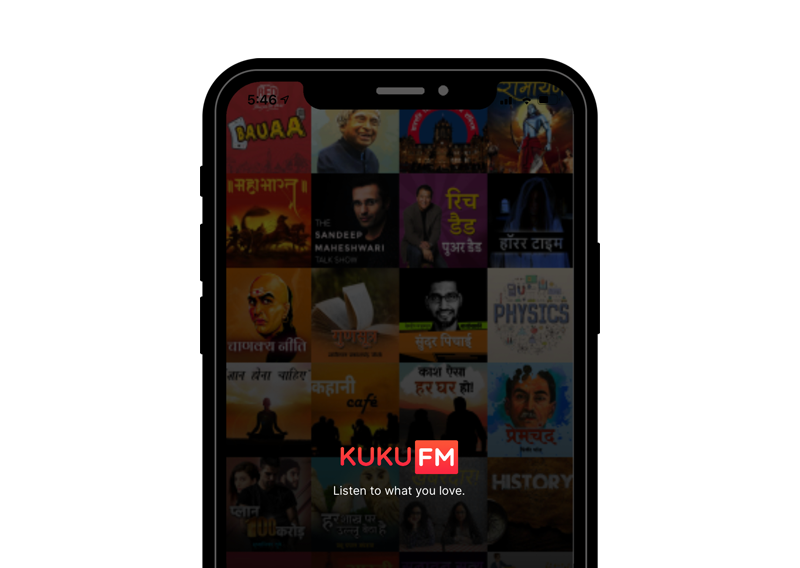
Explore Android applications we have developed for different business models and user needs. Our portfolio demonstrates experience across Android app development, scalable mobile products, ecommerce, media and entertainment, AI-powered experiences, and location-based applications.


BENEFITS OF NATIVE ANDROID DEVELOPMENT
The Case for Purpose-Built Android App Development
A purpose-built Android application gives your business greater control over performance, user experience, security, platform capabilities, and future scalability. With modern Android development technologies such as Kotlin and Jetpack Compose, businesses can build applications around their specific users, workflows, and product goals while taking advantage of the Android ecosystem.
Benefit 1: High Performance and Responsive User Experiences
Purpose-built Android applications can be designed around the specific performance requirements of your product. From application architecture and efficient data handling to optimized UI rendering and network performance, we build Android experiences that remain responsive as functionality and usage grow.
Benefit 2: Direct Access to Android Platform Capabilities
Android applications can take advantage of platform capabilities such as camera functionality, biometrics, Bluetooth, NFC, location services, notifications, Android Auto, Wear OS, Health Connect, and other device features when required by the product.
Benefit 3: Stronger Security and Data Protection
Purpose-built Android applications allow security requirements to be considered throughout the architecture and development process. Depending on the application, this can include secure authentication, biometric access, protected data storage, secure API communication, certificate pinning, and application protection measures.
Benefit 4: AI-Powered Android Experiences
Android applications can go beyond traditional features by incorporating AI where it provides genuine user or business value. AI-powered Android apps can support personalized recommendations, intelligent search, conversational assistants, computer vision, predictive features, content generation, and other intelligent experiences.
Benefit 5: Better Support for New Android Devices and Experiences
Android’s device ecosystem continues to expand across smartphones, tablets, foldables, wearables, and other connected experiences. A purpose-built application can be designed around the devices and form factors relevant to your users, including adaptive layouts and platform-specific capabilities.
Benefit 6: Scalable Architecture for Growing Products
A well-planned Android application architecture makes it easier to introduce new features, support growing user demand, integrate new APIs, and maintain the product over time. We use modern Android architecture patterns based on project requirements to support long-term scalability.
Benefit 7: Faster Product Validation With Android MVP Development
Startups can use an Android MVP to validate their product idea before investing in a larger application. By prioritizing essential functionality, businesses can launch faster, gather user feedback, and establish a roadmap for future product development.
Benefit 8: Easier Integration With Business Systems
Android applications can connect with existing business systems, APIs, cloud services, payment platforms, analytics tools, authentication systems, and other third-party services. This allows the mobile application to become part of a broader digital product ecosystem rather than operating as an isolated application.
Benefit 9: Lower Long-Term Maintenance Complexity
Building with a modern Android architecture and maintainable codebase can make future updates, bug fixes, feature additions, and platform upgrades easier to manage. This is particularly valuable for businesses planning to continuously evolve their Android application.
Benefit 10: Better Control Over Google Play Distribution
A purpose-built Android application gives businesses control over their Google Play release strategy, application updates, feature releases, performance improvements, and ongoing product optimization.
Client Reviews
What Our Clients Say

Kreg Thornley
Marketing Director, Alchemy Spetec Tucker, Georgia, United States
James Guttman
San Francisco, California, United StatesGet Recommendations From Android Specialists
Need advice on Kotlin, Jetpack Compose, Flutter, architecture decisions, scalability, security, or AI integration? Our team is happy to help.
TECHNOLOGY STACK
The Technology Stack Behind Our Android App Development
We build exclusively on Google’s recommended modern Android development stack. Every technology in our toolkit is deliberately chosen for production-grade reliability, long-term maintainability, and alignment with where the Android platform is heading, not where it has been.
Kotlin
Primary language for modern Android development with coroutines, null safety and clean syntax.
Java
Used for legacy integrations and migration projects.
Jetpack Compose
Google's modern declarative UI toolkit.
Material Design 3
Adaptive design system for Android devices.
Hilt
Dependency Injection framework built on Dagger.
MVVM & MVI
Scalable architecture patterns.
Coroutines & Flow
Reactive asynchronous programming.
Firebase
Authentication, analytics, crash monitoring and backend services.
AWS & GCP
Enterprise cloud infrastructure and scalability.
Room Database
SQLite abstraction layer.
DataStore
Modern replacement for SharedPreferences.
Retrofit & OkHttp
Industry standard networking stack.
JUnit 5
Unit testing framework.
Espresso
UI automation testing.
Firebase Test Lab
Real device testing at scale.
Android Keystore
Hardware-backed credential storage.
Biometric Prompt
Fingerprint and face authentication.
ProGuard & R8
Code obfuscation and optimization.
ML Kit
On-device machine learning.
TensorFlow Lite
Custom AI model inference.
MediaPipe
Vision, audio and language AI pipelines.
INDUSTRY EXPERTISE
Android App Development Across Every Major Industry
We build Android applications for startups, growing businesses, and enterprises across diverse industries. Our industry-focused approach combines Android app development with the workflows, integrations, security requirements, and user experiences specific to each business. Where it adds genuine value, we also incorporate AI, automation, analytics, personalization, and intelligent features into industry-specific Android applications.
Healthcare App Development
Build secure Android healthcare applications for patients, providers, clinics, and healthcare businesses. Solutions can include patient portals, appointment management, telemedicine, secure communication, health data integrations, and AI-powered healthcare experiences based on project requirements.
Logistics and Supply Chain App Development
Develop Android applications for logistics, transportation, delivery, and field operations. Solutions can support GPS tracking, real-time location updates, route management, delivery workflows, driver applications, proof of delivery, and operational dashboards.
Food, Beverage, and On-Demand Delivery App Development
Build Android applications for restaurants, food delivery businesses, cloud kitchens, and on-demand services. Features can include ordering, menus, payment integration, location tracking, delivery management, notifications, subscriptions, and personalized recommendations.
Travel, Hospitality, and Tourism App Development
Develop Android applications for travel companies, hotels, tourism businesses, and destination platforms. We can support booking workflows, trip planning, maps, location-based experiences, travel recommendations, notifications, and AI-powered travel assistance.
Fintech and Financial App Development
Build Android applications for fintech companies and financial businesses with a focus on secure transactions, authentication, financial workflows, dashboards, notifications, API integrations, and other required financial functionality.
Education and EdTech App Development
Create Android applications for schools, education companies, training providers, and eLearning platforms. Solutions can include course delivery, video learning, assessments, progress tracking, live classes, notifications, and AI-powered learning assistants.
Enterprise Productivity and Field Services
Develop Android applications for internal business operations, enterprise teams, field workers, and distributed workforces. Applications can support task management, employee workflows, offline-first functionality, authentication, enterprise APIs, reporting, and real-time operational updates.
Media and Entertainment App Development
Build Android applications for digital media, audio, video, entertainment, and content businesses. Solutions can include content discovery, streaming, subscriptions, personalized recommendations, user profiles, notifications, and AI-powered content experiences.
eCommerce and Retail App Development
Develop Android ecommerce applications for retailers, marketplaces, and online brands. Features can include product discovery, search, shopping carts, checkout, payment integration, order tracking, push notifications, personalized recommendations, and AI-powered shopping experiences.
Real Estate and Property App Development
Build Android applications for real estate companies, property marketplaces, brokers, agents, and property management businesses. Solutions can include property search, maps, listings, inquiries, saved properties, agent communication, virtual experiences, and location-based functionality.
Health, Fitness, and Wellness App Development
Develop Android applications for fitness businesses, wellness platforms, gyms, trainers, and health-focused products. Features can include workout plans, activity tracking, nutrition management, progress tracking, wearable integrations, personalized recommendations, and AI-powered fitness experiences.
Industrial IoT and Manufacturing App Development
Build Android applications for manufacturing, industrial operations, connected devices, and field teams. Applications can support equipment monitoring, data collection, IoT integrations, operational dashboards, alerts, maintenance workflows, and connected device experiences.
WHY CHOOSE US
Why Choose Square Infosoft for Android App Development?
Choosing an Android development partner is about more than writing code. You need a team that understands product requirements, Android architecture, performance, security, integrations, testing, deployment, and long-term product growth. Square Infosoft combines Android engineering expertise with a structured development process to help startups, businesses, and enterprises build and improve reliable mobile applications.
Android Development With an Architecture-First Approach
We start with application architecture rather than simply moving into development. Our Android team evaluates requirements, scalability, integrations, performance, security, and future product needs before selecting the appropriate technical approach.
Experienced Android Development Team
Our development team works across Android application development, modern Android technologies, backend integrations, APIs, testing, deployment, and ongoing maintenance. We can support projects ranging from startup MVPs to enterprise Android applications.
Modern Android Technology Stack
We use modern Android technologies based on project requirements, including Kotlin, Jetpack Compose, Android SDK, Coroutines, StateFlow, MVVM, MVI, Hilt, Room, Retrofit, and other supporting technologies. For AI-enabled applications, we can also work with Android AI and machine learning technologies such as ML Kit, TensorFlow Lite, and MediaPipe where appropriate.
AI-Ready Android App Development
Modern Android products increasingly need intelligent capabilities alongside traditional mobile functionality. We can integrate AI into Android applications for use cases such as recommendations, personalization, conversational experiences, computer vision, predictive features, AI assistants, and other product-specific workflows.
Built for Performance, Security & Scalability
We consider performance, security, scalability, and maintainability throughout the development lifecycle. From application architecture and API performance to secure authentication, device compatibility, and release testing, we build Android applications with long-term product requirements in mind.
Support From MVP to Product Growth
Whether you are validating a new idea or improving an established Android application, we can support different stages of the product lifecycle. This includes MVP development, new feature development, modernization, migration, performance improvements, bug fixing, application updates, and ongoing maintenance.
Flexible Development and Engagement Options
Different projects require different delivery models. Depending on your requirements, you can work with our team through a dedicated development model, fixed-price engagement, or time-and-materials approach. We can help determine which model fits your scope, timeline, and level of involvement.
Post-Launch Android App Support
Launching the application is only the beginning. We can continue supporting your Android product through maintenance, bug fixing, performance optimization, Play Store updates, new features, and ongoing improvements as your business and users evolve.
Transparent Communication & Practical Recommendations
We keep communication structured throughout the project and focus on practical technical recommendations rather than pushing a particular technology or development model. Our goal is to select an approach that fits your product requirements, budget, timeline, scalability needs, and long-term roadmap.
FREQUENTLY ASKED QUESTIONS
Frequently Asked Questions About Android App Development
Have questions about Android app development, technology choices, AI integration, MVP development, modernization, or ongoing support? Here are answers to common questions businesses, startups, and enterprises ask before starting an Android application project.
How much does it cost to develop a custom Android app?
The cost of Android app development depends on the application’s features, UI/UX requirements, backend architecture, integrations, security requirements, testing scope, and development timeline. AI-powered features, third-party APIs, real-time functionality, payment systems, and complex business workflows can also affect the overall project scope.
We first understand your requirements and then provide a project estimate based on the features and technical requirements of your Android application.
How long does it take to build an Android app?
The development timeline depends on the complexity of the application. A focused Android MVP can generally move faster than a large enterprise application with multiple integrations, advanced security requirements, AI features, and complex workflows.
Our process covers discovery, UI/UX design, architecture, Android development, testing, Google Play deployment, and post-launch support.
Should I build a native Android app or use a cross-platform framework like Flutter or React Native?
The right choice depends on your specific product requirements, timeline constraints, and budget. Native Android development using Kotlin and Jetpack Compose delivers the best possible performance, deepest platform integration, strongest security architecture, and lowest long-term maintenance burden. It is the right choice when you need access to hardware APIs, when performance is critical, when security is non-negotiable, or when your product strategy is Android-first. Cross-platform frameworks like Flutter or Kotlin Multiplatform are genuinely strong options when you need to support both Android and iOS from a single codebase, your timeline is compressed, or your budget does not support separate native teams. Flutter in particular has reached a maturity level where it is appropriate for a wide range of consumer application types. We build both and will give you an honest recommendation based on your actual project requirements, not based on what is simplest for us to deliver.
How do you handle Android device fragmentation?
Device fragmentation is one of the most underestimated challenges in Android development, and addressing it requires both disciplined architecture and systematic testing. Our approach combines several practices: we use Jetpack Compose’s adaptive layout APIs and Material Design 3 responsive components to handle the full range of screen sizes from small phones to large tablets and foldable devices. We use vector drawables and density-independent units throughout to ensure consistent visual rendering across display densities. We test against a device matrix that covers the most commonly used Android versions, screen sizes, and manufacturer skin configurations. We also use Firebase Test Lab for automated testing across a broad library of real physical devices, which reliably surfaces manufacturer-specific rendering and behavior issues before they reach production. Fragmentation is a solvable problem with the right process; it is not an excuse for inconsistent behavior.
Will we own the source code and intellectual property after the project?
Yes, unconditionally. Upon project completion and final payment, full intellectual property rights to all custom code, assets, documentation, and related deliverables transfer entirely to you. We deliver a well-organized, fully documented codebase that your internal team or any future development partner can continue working with. We do not implement proprietary lock-in mechanisms, embed undisclosed dependencies, or retain any rights over work product created for your engagement. We believe your continued partnership should be earned by the quality of our work and the strength of the relationship, not enforced by artificial dependency.
Can you integrate AI and machine learning features into an Android app?
Yes, and it is a capability we have invested in significantly. For on-device AI, we integrate ML Kit for common tasks including text recognition, object detection, image labeling, barcode scanning, and language identification. For custom model inference, we use TensorFlow Lite and the MediaPipe Tasks framework, which can run sophisticated models directly on Android hardware without requiring a network connection. We also build integrations with cloud-based AI services LLM APIs for conversational features, recommendation engines, predictive analytics, and computer vision systems hosted on GCP, AWS, or Azure. On-device AI in 2026 is production-viable for a wide range of use cases and can meaningfully differentiate your product from competitors who rely entirely on server-side processing.
What does post-launch support and maintenance look like?
Post-launch support is a structured service offering for us, not an afterthought. We offer tiered maintenance retainers that include monitoring of crash rates and ANR data through Firebase Crashlytics, proactive OS compatibility updates as new Android versions are released, Google Play policy compliance management, security patch implementation, performance optimization work, and ongoing feature development according to your product roadmap. Most of our long-term clients transitioned from a single project engagement into a continuous partnership because the economics of working with a team that deeply understands your codebase, your users, and your product strategy are significantly more favorable than starting the vendor evaluation process again every 12 months.
Do you work with startups or only with established enterprises?
We work with both, and we have structured our service offering specifically to serve each well. For startups, our MVP development practice is designed to minimize time-to-market and upfront cost while maintaining the architectural discipline that prevents expensive rewrites later. We have helped dozens of startups go from idea to funded product using their Android app as the primary demonstration of product-market fit. For enterprises, we bring the security rigor, compliance expertise, integration capability, and change management experience that large-scale Android deployments require. The difference in how we approach each is in scope, timeline, and process structure; the commitment to quality is identical.
Do You Build AI-Powered Android Apps?
Yes. We can develop AI-powered Android applications and integrate AI capabilities into new or existing mobile products.
Depending on the use case, AI can support features such as AI chatbots, AI assistants, recommendations, personalization, AI search, predictive analytics, computer vision, content generation, and intelligent automation.
Can You Integrate AI Into an Existing Android App?
Yes. AI can be integrated into an existing Android application without necessarily rebuilding the entire product.
We can assess your existing application, backend, APIs, data architecture, and current user flows before planning AI integration. Depending on the use case, this may include AI APIs, machine learning models, recommendation engines, AI assistants, chatbots, or other intelligent features.
Can You Build Generative AI Apps for Android?
Yes. We can integrate Generative AI and LLM capabilities into Android applications where they provide practical product value.
Examples include AI assistants, conversational interfaces, content generation, intelligent search, AI copilots, document-based interactions, and other LLM-powered mobile experiences.
Can You Integrate OpenAI, ChatGPT, Claude, or Gemini Into an Android App?
AI services and LLM APIs can be integrated into Android applications when they match the product’s requirements and technical architecture.
The integration approach depends on the use case, including conversational AI, AI assistants, content generation, recommendations, intelligent search, or other AI-powered functionality.
Can You Develop AI Agents for Android Applications?
Yes. AI agents can be integrated into Android applications for use cases that require AI to perform tasks, interact with systems, or support multi-step workflows.
Depending on the product, this may include AI assistants, AI workflow agents, AI customer service agents, AI copilots, or other agentic AI experiences.
Can You Build an Android MVP for a Startup?
Yes. We provide Android MVP development for startups and businesses that want to validate an app idea before investing in a larger product.
We can help define the MVP scope, prioritize core features, design the user experience, select the technology stack, develop the application, test it, and prepare it for Google Play launch.
AI-powered MVPs, rapid prototyping, and other accelerated development approaches can also be considered based on the product requirements.
Do You Provide Full-Stack Android App Development?
Yes. We can support the complete application stack, including Android frontend development, backend development, APIs, databases, cloud infrastructure, authentication, third-party integrations, and deployment.
This approach is useful for products that require both the Android application and the backend systems that power it.
Do You Provide No-Code and Low-Code Android App Development?
Yes, No-Code and Low-Code approaches can be considered for suitable application requirements, especially for prototypes, MVPs, internal tools, and products where rapid development is a priority.
The right approach depends on the required functionality, integrations, scalability, security, and long-term product roadmap.
Do You Support Vibe Coding and AI-Assisted Android Development?
Yes. AI-assisted development and Vibe Coding can be used for suitable development tasks such as rapid prototyping, experimentation, MVP development, and accelerating parts of the development workflow.
For production applications, the final implementation still needs appropriate architecture, security, testing, performance optimization, and maintainability.
Can You Modernize or Rebuild an Existing Android App?
Yes. We can help modernize existing Android applications, including technology migration, architecture improvements, UI updates, performance optimization, bug fixing, and new feature development.
Common modernization requirements include Java to Kotlin migration, XML to Jetpack Compose migration, architecture modernization, API updates, and improving application stability.
Do You Build Android Apps for Tablets and Foldable Devices?
Yes. Android applications can be designed for different screen sizes and device experiences, including smartphones, tablets, and foldable devices.
We consider adaptive layouts, responsive UI patterns, screen sizes, orientation changes, and platform-specific requirements during Android application development.
Can You Integrate APIs and Third-Party Services Into Android Apps?
Yes. We can integrate Android applications with backend APIs and third-party services based on project requirements.
This can include REST APIs, GraphQL, payment systems, maps and location services, authentication, cloud services, analytics, notifications, and other business integrations.
Do You Provide Android App Testing and Google Play Deployment?
Yes. Android applications can be tested across relevant devices, screen sizes, operating system versions, and application scenarios before release.
Our development process also covers Google Play deployment and post-launch support, including application updates, performance improvements, bug fixing, and ongoing maintenance.
Can I Hire Dedicated Android Developers?
Yes. Businesses can work with Android developers based on their project requirements and engagement model.
Depending on your needs, you can hire Android developers, Android app developers, Kotlin developers, or a dedicated Android development team.
Do You Provide Post-Launch Android App Maintenance?
Yes. Post-launch support can include bug fixing, performance optimization, application updates, new feature development, compatibility updates, security improvements, and ongoing maintenance.
We can also help with the continued development and scaling of an Android application as product requirements evolve.
How Do You Handle Android Device Fragmentation?
Android applications need to work across a wide range of devices, screen sizes, operating system versions, and hardware configurations.
We address device fragmentation through adaptive UI development, compatibility testing, performance testing, appropriate Android architecture, and testing across relevant device configurations.
Talk to an Android App Developer Today
Tell us about your project and receive a structured response within 24 hours. No generic sales pitch. Just practical guidance from experienced Android developers.
- Free 30-minute discovery call
- NDA signed before any discussion
- No sales pressure, ever
Get a Free Project Estimate
Interested in driving growth with Android App Development? Have a general question? We’re just an email away.

