
Ecommerce Software Development Company for Modern Retail & Online Businesses
Build a scalable digital commerce ecosystem with custom ecommerce software development, ecommerce websites, mobile commerce apps, marketplace platforms, B2B and D2C solutions, AI-powered shopping experiences, CRM and ERP integrations, and business automation.
Let’s discuss your ecommerce goals, business model, technical requirements, and growth plans with our development experts.
TRUSTED CLIENT’S
Trusted Mobile App Development Partner’s
Trusted by high-growth companies across the globe









Projects Delivered
Happy Clients
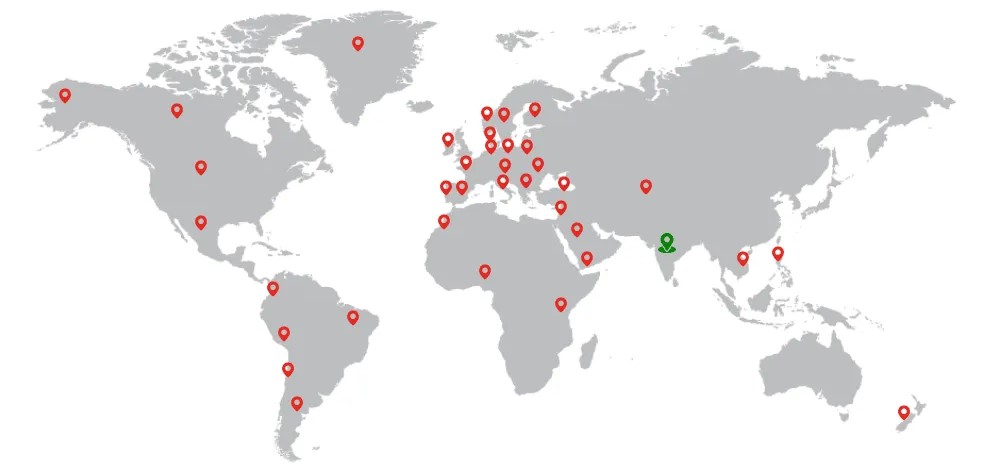
Countries Served
Years of Experience
At Square Infosoft, we develop ecommerce technology solutions around your business model, customer journey, operational workflows, and growth goals. Whether you are launching a new ecommerce platform, building a multi-vendor marketplace, expanding into mobile commerce, modernizing an existing system, or adding AI-powered capabilities, our team can design, develop, integrate, and support the technology you need.
Our ecommerce development expertise covers custom ecommerce platforms, ecommerce web development, ecommerce mobile app development, headless commerce, SaaS platforms, AI app development, AI integration, personalization, intelligent search, recommendation engines, automation, analytics, and third-party API integrations.
From rapid ecommerce MVP development and No-Code or Low-Code prototypes to enterprise ecommerce software, we help businesses choose an architecture and development approach that fits their current requirements while allowing the platform to evolve as they grow.

Challenges We Help Solve
Ecommerce Challenges Businesses Face and How We Solve Them
Growing an ecommerce business requires more than an attractive storefront. Businesses often need to manage customer experience, product data, inventory, orders, payments, integrations, security, and multiple sales channels through connected technology.
At Square Infosoft, our custom ecommerce software development approach focuses on solving these operational, technical, and customer-facing challenges through scalable ecommerce platforms, mobile applications, business software, integrations, automation, and AI-powered capabilities.
Cart Abandonment and Checkout Friction
Customers may leave before completing a purchase because of complicated navigation, slow checkout, limited payment options, unexpected steps, or poor mobile experiences.
We can improve the ecommerce journey with streamlined checkout flows, payment integrations, saved carts, personalized product recommendations, faster product discovery, and analytics to identify where customers drop off.
Complex Inventory and Product Management
Managing products, stock levels, pricing, variants, warehouses, and multiple sales channels can become difficult as an ecommerce business grows.
We develop and integrate inventory management, Product Information Management (PIM), Order Management Systems (OMS), warehouse workflows, and real-time synchronization to help businesses maintain more consistent product and inventory data.
Disconnected Ecommerce Systems
Ecommerce businesses often use multiple systems for their storefront, CRM, ERP, payments, inventory, marketing, logistics, analytics, and customer support.
Our ecommerce API integration services connect these systems through APIs, webhooks, middleware, and custom integrations, creating a more connected technology ecosystem.
Difficulty Scaling During Traffic Spikes
Flash sales, seasonal campaigns, product launches, and promotional events can create sudden increases in traffic and transactions.
We design ecommerce architectures with scalability, performance, caching, database optimization, cloud infrastructure, API efficiency, and appropriate frontend architecture in mind so the platform can evolve with changing traffic and business requirements.
Legacy Ecommerce Technology
Older ecommerce platforms can become difficult to maintain, integrate, scale, or extend with modern capabilities.
We support ecommerce platform modernization, migration, API integration, application rebuilds, headless commerce implementation, and AI integration while assessing which existing components can be retained and which should be replaced.
Building an Ecommerce MVP Quickly
Startups and businesses testing a new commerce concept may not need a full enterprise platform from day one.
We can support Rapid Ecommerce MVP Development, Rapid Prototyping, No-Code Ecommerce MVP, Low-Code Ecommerce MVP, and custom MVP development, depending on the product requirements. No-Code and Low-Code approaches can be considered for suitable prototypes or early validation, while production requirements such as payments, security, integrations, scalability, and data architecture should guide the final technology choice.
Poor Mobile Shopping Experience
Customers increasingly expect ecommerce experiences that work smoothly across smartphones and tablets.
Our ecommerce mobile app development and responsive ecommerce solutions help businesses create mobile-first shopping experiences with intuitive navigation, fast product discovery, secure checkout, push notifications, loyalty features, and personalized content.
Order Processing and Fulfillment Bottlenecks
Manual order processing can create delays between purchase, payment, inventory allocation, fulfillment, shipping, and delivery.
Custom ecommerce software can connect orders with inventory, warehouses, payment systems, shipping providers, CRM, ERP, and other operational systems. Workflow automation can also reduce repetitive manual tasks across the order lifecycle.
Limited Personalization and Product Discovery
Customers expect relevant products, useful search results, and experiences that reflect their interests.
We can implement AI-powered ecommerce capabilities such as intelligent product search, recommendation engines, customer segmentation, personalization, semantic search, and AI shopping assistants based on the project’s data and business requirements.
Fraud, Security, and Data Protection
Ecommerce platforms handle customer accounts, personal information, orders, payments, and other sensitive business data.
Our development and QA processes can include secure authentication, role-based access, API security, secure payment integrations, access controls, data protection, vulnerability testing, and other security measures appropriate to the application.
Limited Automation Across Ecommerce Operations
Manual work across inventory, order processing, customer support, marketing, vendor management, returns, and reporting can slow business operations.
We can implement workflow automation and AI-powered automation to connect business rules, APIs, data, and operational workflows, helping teams reduce repetitive processes and create more consistent execution.
Need an Ecommerce Platform That Can Evolve
An ecommerce platform should support today’s requirements without unnecessarily limiting future expansion.
Our Ecommerce Software Development Services can cover custom ecommerce platforms, B2B and D2C commerce, marketplaces, mobile commerce, SaaS platforms, AI-powered applications, integrations, automation, modernization, and ongoing product development.
CORE SERVICES
Our Ecommerce Software Development Services
Every ecommerce business has different products, customers, workflows, integrations, and growth requirements. Our ecommerce software development services cover the technology layer needed to build, launch, modernize, and scale digital commerce products across B2B, B2C, D2C, marketplace, subscription, and enterprise models.
We can work with an existing ecommerce platform, extend its capabilities, or develop a custom ecommerce application around your specific business requirements. This broader service approach reflects how current ecommerce development providers increasingly cover storefronts, marketplaces, mobile commerce, headless architecture, integrations, migration, and ongoing support rather than focusing only on website development.
Custom Ecommerce Platform Development
Build an ecommerce platform around your products, pricing rules, customer journeys, operational workflows, and business logic.
Our custom ecommerce development can include
- Custom storefront and backend development
- Product catalogue and category management
- Custom cart and checkout workflows
- Pricing, discount, coupon, and promotion rules
- Customer and account management
- Admin dashboards and operational panels
- Custom order and inventory workflows
- Multi-language and multi-currency capabilities
- Business-specific ecommerce functionality
This approach is useful when standard platforms cannot adequately support your business model or when proprietary workflows are central to the product.
Explore Custom Ecommerce Platform Development →Ecommerce Website Development
We develop ecommerce websites for brands, retailers, manufacturers, wholesalers, startups, and enterprises.
Solutions can include
- B2C ecommerce websites
- D2C storefronts
- B2B ecommerce portals
- Enterprise ecommerce websites
- Custom ecommerce storefronts
- Responsive and mobile-first experiences
- Product catalogues and advanced filtering
- Shopping cart and checkout
- Customer accounts and loyalty
- Search and product discovery
- Ecommerce analytics and conversion tracking
The frontend can be developed around the technology and architecture appropriate to the project, including traditional, API-driven, or headless approaches.
Explore Ecommerce Website Development →Ecommerce Mobile App Development
Extend your commerce experience beyond the website with an ecommerce mobile app for iOS and Android.
Our ecommerce app development services can cover
- Customer shopping applications
- Marketplace mobile apps
- D2C brand apps
- B2B ordering applications
- Grocery and on-demand commerce apps
- Subscription commerce apps
- Loyalty and rewards applications
- Product discovery and personalized shopping
- Push notifications and customer engagement
- Mobile checkout and payment integration
- Order tracking and delivery updates
We can develop native or cross-platform applications based on the project's product requirements, backend architecture, performance expectations, and long-term roadmap.
Explore Ecommerce Mobile App Development →Ecommerce Marketplace Development
Build a multi-vendor ecommerce marketplace connecting customers with multiple sellers or suppliers.
Marketplace development can include
- Seller registration and onboarding
- Vendor dashboards
- Product and catalogue management
- Commission and fee management
- Seller order management
- Inventory synchronization
- Payment splitting and payout workflows
- Buyer and seller communication
- Reviews and ratings
- Vendor analytics
- Dispute and return workflows
- Marketplace administration
For complex marketplaces, seller operations, catalogue orchestration, payments, commissions, and integrations need to be considered alongside the customer-facing storefront.
Explore Ecommerce Marketplace Development →B2B Ecommerce Software Development
B2B commerce often requires capabilities that differ from standard retail shopping.
We can build B2B ecommerce solutions with
- Company accounts and multiple users
- Customer-specific pricing
- Bulk ordering
- Wholesale catalogues
- Request-for-quote workflows
- Approval processes
- Purchase orders
- Credit and payment terms
- Dealer and distributor portals
- ERP and CRM integrations
- Account-level product visibility
- Reordering workflows
D2C Ecommerce Development
Build a direct-to-consumer ecommerce experience around your brand, products, customer relationships, and marketing strategy.
Solutions can include
- Branded ecommerce storefronts
- Ecommerce mobile applications
- Subscription commerce
- Customer accounts
- Loyalty and referral programs
- Personalized product discovery
- Marketing integrations
- Customer analytics
- Reviews and social commerce
- AI-powered recommendations
Ecommerce SaaS Platform Development
Build a multi-tenant ecommerce SaaS platform for merchants, retailers, suppliers, vendors, or other businesses.
Our SaaS ecommerce development can include
- Multi-tenant architecture
- Merchant onboarding
- Store and account management
- Subscription and billing workflows
- Role-based access
- Merchant dashboards
- Product and inventory management
- API-first architecture
- Third-party integrations
- Analytics and reporting
- Scalable cloud infrastructure
Headless & API-First Ecommerce Development
Separate the customer-facing experience from the underlying commerce infrastructure with a headless ecommerce architecture.
This can allow a single commerce backend to support websites, mobile apps, progressive web applications, kiosks, and other digital channels through APIs.
We can work on
- Headless storefront development
- Commerce API development
- REST and GraphQL integrations
- Decoupled frontend architecture
- Product and customer APIs
- Omnichannel commerce
- Custom checkout experiences
- CMS and commerce integrations
Headless and API-driven approaches are particularly relevant when businesses need multiple customer-facing channels or greater flexibility over the frontend experience.
Explore Headless & API-First Ecommerce Development →Ecommerce Platform Development & Migration
Move from an existing ecommerce platform or legacy application to a technology architecture that better supports your current requirements.
Migration projects can include
- Shopify or Shopify Plus migration
- WooCommerce migration
- Magento or Adobe Commerce migration
- Custom ecommerce platform migration
- Product and catalogue migration
- Customer and order data migration
- URL and SEO migration planning
- API and third-party integration migration
- Headless commerce migration
- Ecommerce application rebuild
Migration should be planned around data integrity, integrations, customer continuity, performance, and SEO rather than simply moving the storefront.
Explore Ecommerce Platform Development & Migration →Ecommerce CRM, ERP, PIM & OMS Integration
Connect your ecommerce platform with the systems that manage customers, products, orders, inventory, finance, and business operations.
We can integrate ecommerce applications with
- CRM systems
- ERP platforms
- Product Information Management systems
- Order Management Systems
- Inventory systems
- Warehouse management systems
- Accounting platforms
- Marketing platforms
- Customer support systems
- Shipping and logistics providers
Ecommerce Payment & Third-Party API Integration
Create connected commerce workflows through secure API integrations.
Integration areas can include
- Payment gateways
- Shipping and logistics APIs
- Tax and invoicing systems
- CRM and ERP APIs
- Marketplace APIs
- Marketing platforms
- Analytics systems
- Communication services
- Social commerce platforms
- Authentication services
AI-Powered Ecommerce Development & AI Integration
Add AI capabilities to ecommerce applications where they provide a clear business or customer benefit.
Our AI App Developers, AI Mobile App Developers, AI Software Developers, AI/ML Developers, AI Engineers, and AI Full-Stack Developers can work on
- AI product recommendations
- Intelligent ecommerce search
- Semantic and visual product search
- Personalized shopping experiences
- AI shopping assistants
- Ecommerce chatbots
- Product discovery
- Product content generation
- Catalogue enrichment
- Demand and inventory forecasting
- Customer analytics
- Workflow automation
- AI-powered customer support
Businesses can also engage an AI Product Developer or AI Application Engineer during the planning stage to identify suitable AI use cases before moving into full AI App Development or AI Integration.
Explore AI-Powered Ecommerce Development & AI Integration →Ecommerce Maintenance, Modernization & Support
Ecommerce development continues after launch. We provide ongoing technical support for businesses that need to improve, maintain, or expand their existing commerce applications.
Support can include
- Performance optimization
- Security updates
- Bug fixing
- API and integration maintenance
- Feature enhancements
- Ecommerce app updates
- Platform upgrades
- Cloud and infrastructure support
- Analytics improvements
- AI feature enhancements
- Technical modernization
No-Code, Low-Code & Rapid Ecommerce Development
For early-stage products and suitable internal workflows, No-Code Development, Low-Code Development, and rapid prototyping can help validate ecommerce concepts before committing to a larger custom build.
Depending on requirements, businesses can evaluate
- No-Code Ecommerce App Development
- Low-Code Ecommerce App Development
- No-Code Ecommerce MVP
- Low-Code Ecommerce MVP
- No-Code Ecommerce Platform
- Low-Code Ecommerce Platform
- Rapid Ecommerce MVP Development
- Rapid Ecommerce Prototyping
- No-Code App Builder for Ecommerce
- Low-Code App Builder for Ecommerce
Tools such as FlutterFlow, Bubble, Bubble.io, Glide, Airtable, Softr, and Zapier may be relevant for specific prototypes or workflows. Production ecommerce systems still require appropriate consideration of payments, security, data, integrations, scalability, performance, and maintainability.
Explore No-Code, Low-Code & Rapid Ecommerce Development →Ecommerce QA & Performance Testing
Quality assurance is integrated into ecommerce development to validate the complete customer and operational journey.
Testing can cover
- Functional testing
- Ecommerce checkout testing
- Payment testing
- API testing
- Mobile app testing
- Cross-browser and device testing
- Regression testing
- Performance testing
- Security testing
- Usability testing
- Integration testing
- User acceptance testing
Ready to Build or Modernize Your Ecommerce Platform?
Whether you are launching a new ecommerce product, expanding into mobile commerce, building a marketplace, modernizing an existing platform, or adding AI-powered capabilities, our ecommerce development team can help you plan the right technology approach.
Discuss your business model, customer experience, integrations, technical requirements, and growth goals with our team. We can help define the development scope and identify the ecommerce architecture and capabilities that fit your project.
RESULTS AND CASE STUDIES
Our Software Development Success Stories Across Digital Products
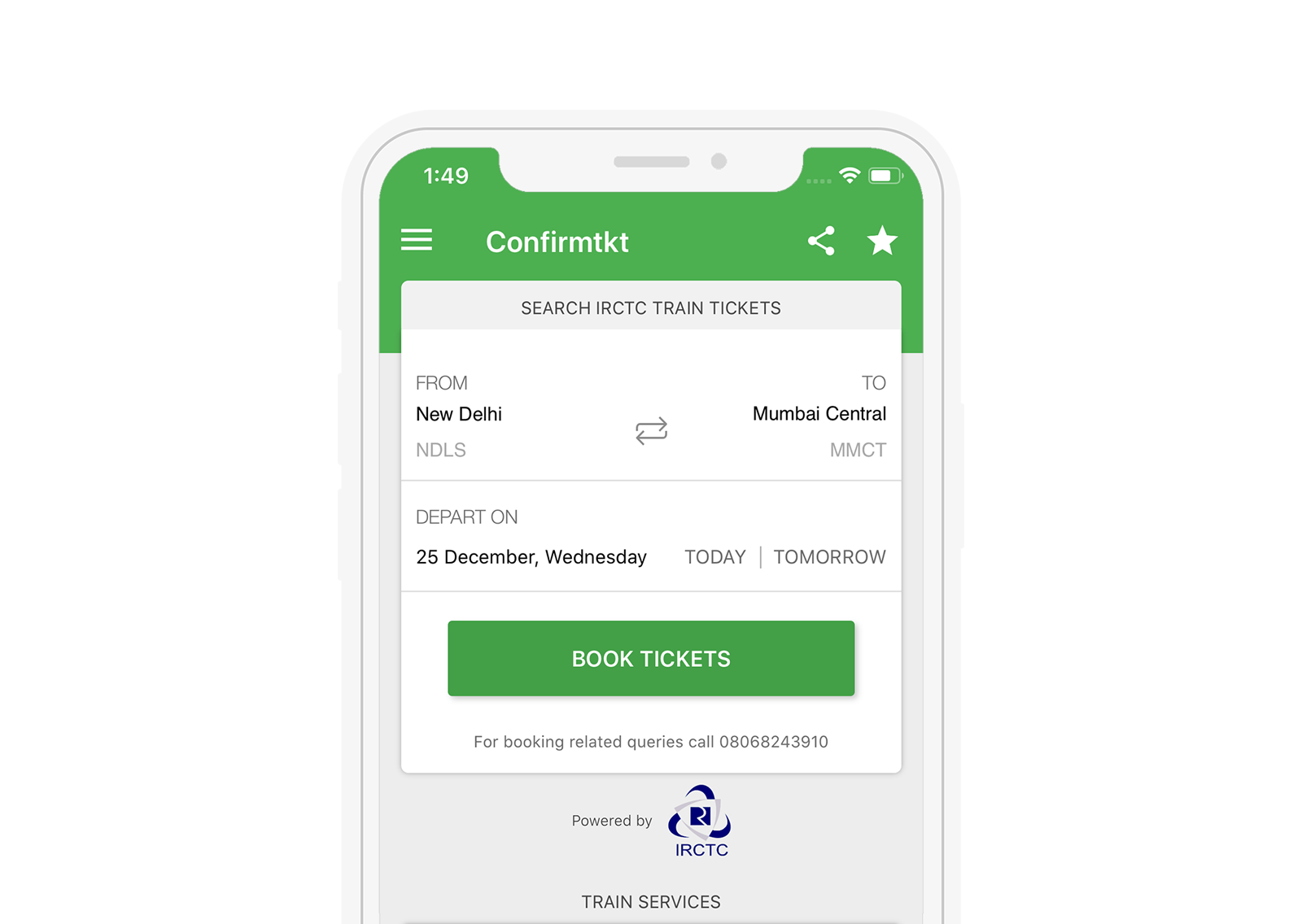
Our portfolio includes ecommerce and retail products that combine mobile app development, ecommerce functionality, payments, product discovery, customer accounts, order management, UI/UX, and quality assurance. These projects demonstrate how ecommerce technology can be designed around real customer journeys rather than treated as a standard online store.

What Our Clients Say
What Our Clients Say About Working With Us



Kreg Thornley
Marketing Director, Alchemy Spetec Tucker, Georgia, United States
James Guttman
San Francisco, California, United StatesBusiness Types We Serve
Ecommerce Software Solutions for Different Business Models
Different ecommerce models require different customer journeys, pricing structures, workflows, integrations, and technology architecture. B2B, B2C, D2C, marketplace, subscription, and omnichannel businesses can have very different operational requirements, so we design ecommerce software around the way each business actually sells and operates.
B2C Ecommerce Businesses
Build customer-focused ecommerce platforms for businesses selling directly to individual shoppers.
Solutions can include:
- Ecommerce websites and mobile apps
- Product search and filtering
- Personalized recommendations
- Cart and checkout
- Payment integration
- Customer accounts and loyalty
- Reviews and ratings
- Order tracking
- Marketing and analytics integrations
- AI-powered shopping experiences
D2C Brands & Retailers
For brands selling directly to customers through their own digital channels, we build technology around brand experience, customer relationships, product discovery, and repeat purchases.
Solutions can include:
- Custom D2C ecommerce platforms
- Mobile commerce applications
- Subscription commerce
- Loyalty and referral programs
- Personalized product discovery
- AI-powered recommendations
- Customer analytics
- Marketing automation
- Social commerce integrations
B2B & Wholesale Ecommerce
B2B ecommerce often requires company accounts, negotiated pricing, bulk orders, purchasing workflows, payment terms, and business-system integrations rather than a standard retail checkout.
Solutions can include:
- B2B ecommerce portals
- Wholesale ordering platforms
- Customer-specific pricing
- Bulk ordering
- Company accounts and user roles
- Quote and approval workflows
- Purchase orders
- Dealer and distributor portals
- ERP and CRM integration
- Invoice and payment workflows
Multi-Vendor Ecommerce Marketplaces
Build marketplace platforms that connect customers with multiple sellers, suppliers, or brands.
Solutions can include:
- Vendor onboarding
- Seller dashboards
- Vendor catalogue management
- Commission management
- Payment and payout workflows
- Seller inventory management
- Order management
- Reviews and ratings
- Vendor analytics
- Buyer and seller communication
- Marketplace administration
Subscription Commerce Businesses
Develop ecommerce systems for businesses selling products or services through recurring purchases or memberships.
Solutions can include:
- Subscription management
- Recurring billing
- Membership accounts
- Subscription plans
- Renewal and cancellation workflows
- Customer self-service portals
- Personalized offers
- Subscription analytics
- CRM and payment integrations
Omnichannel Retail Businesses
Connect ecommerce websites, mobile apps, marketplaces, physical stores, social channels, POS systems, and operational platforms into a more unified commerce ecosystem.
Solutions can include:
- Unified product and customer data
- Multi-channel inventory synchronization
- POS integration
- Click-and-collect workflows
- Ship-from-store capabilities
- Customer account synchronization
- Marketplace integrations
- Mobile commerce
- Centralized analytics
Ecommerce Startups & New Digital Products
Startups can begin with an Ecommerce MVP or Rapid Ecommerce MVP Development approach and expand the product as customer and business requirements become clearer.
Depending on the project, we can support:
- Ecommerce MVP development
- No-Code Ecommerce MVP
- Low-Code Ecommerce MVP
- No-Code Ecommerce App Prototype
- Low-Code Ecommerce App Prototype
- Custom ecommerce application development
- Marketplace MVP development
- D2C MVP development
- AI-powered ecommerce MVPs
For suitable early-stage concepts, FlutterFlow, Bubble, Bubble.io, Glide, Airtable, Softr, and Zapier can be evaluated for rapid prototyping or specific workflows. Production requirements should determine whether the product needs a custom architecture.
Enterprise Ecommerce Organizations
Enterprise ecommerce projects often involve multiple systems, business units, markets, channels, warehouses, and customer groups.
We can support:
- Enterprise ecommerce platforms
- Headless and API-first commerce
- ERP, CRM, PIM and OMS integration
- Multi-market and multi-language commerce
- Custom business workflows
- Ecommerce modernization
- Advanced analytics
- AI integration
- Cloud and backend development
- QA and ongoing maintenance
Manufacturers, Wholesalers & Distributors
Manufacturers and distributors can use ecommerce technology to connect product catalogues, customers, inventory, orders, sales teams, warehouses, and business systems.
Solutions can include:
- B2B ordering portals
- Distributor portals
- Product catalogues
- Bulk ordering
- Customer-specific pricing
- Inventory synchronization
- ERP integration
- Order management
- Procurement workflows
- Sales dashboards
Niche & Industry-Specific Ecommerce Businesses
We also develop tailored ecommerce solutions for businesses with specialized product catalogues, workflows, or customer requirements, including:
Fashion & Apparel | Beauty & Cosmetics | Grocery & Food | Electronics | Furniture & Home | Jewelry | Healthcare Products | Automotive Products | Sports & Fitness | Consumer Goods
The technology can be adapted around each industry’s catalogue structure, purchasing journey, fulfillment requirements, integrations, and customer experience.
Businesses Expanding Into AI-Powered Ecommerce
Businesses can add AI capabilities to an existing ecommerce platform or build them into a new product from the beginning. Our AI development team works across mobile, web, backend, and ecommerce applications to integrate intelligent capabilities such as product recommendations, AI-powered search, personalized shopping experiences, visual product discovery, shopping assistants, customer support automation, demand forecasting, and workflow automation.
For businesses developing more advanced products, our AI and machine learning expertise can also support custom AI App Development, AI Integration, AI-powered mobile applications, and AI-enabled ecommerce software that connect intelligent models with ecommerce data, APIs, business workflows, and cloud infrastructure.
Have an Ecommerce Idea or Existing Platform to Improve?
Whether you are starting a new ecommerce product, expanding an existing platform, or looking to improve your digital commerce operations, our team can help you plan the next stage.
Share your business model, current challenges, technology requirements, or product idea with us. We will discuss the practical development approach, integrations, and capabilities your ecommerce product may need.
Solutions
Ecommerce Software Solutions Built Around Your Business
Modern ecommerce is more than a storefront. A complete commerce ecosystem can connect the customer experience with products, inventory, orders, payments, customer data, fulfillment, analytics, and business operations. Current ecommerce development approaches increasingly bring these layers together through custom platforms, marketplaces, headless architecture, PIM, OMS, integrations, and AI-powered experiences.
At Square Infosoft, we build and integrate ecommerce software solutions based on your business model, operational workflows, technology environment, and growth plans.
B2C Ecommerce Solutions
Create streamlined digital shopping experiences for customers buying directly from your business.
Solutions can include:
- Product catalogue and discovery
- Smart search and filtering
- Shopping cart and checkout
- Customer accounts
- Wishlist and reviews
- Loyalty and rewards
- Personalized recommendations
- Payment integration
- Order tracking
- Customer notifications
- Ecommerce analytics
B2B Ecommerce Solutions
Support wholesale, distributor, manufacturer, and enterprise purchasing workflows with technology designed around business-to-business commerce.
Solutions can include:
- Company accounts and user roles
- Customer-specific pricing
- Bulk ordering
- Minimum order quantities
- Quote and approval workflows
- Purchase orders
- Contract pricing
- Credit and payment terms
- Dealer and distributor portals
- ERP and CRM integration
Multi-Vendor Marketplace Solutions
Build a complete marketplace ecosystem for businesses that connect multiple sellers with customers.
Core capabilities include:
- Vendor onboarding
- Seller dashboards
- Product and catalogue management
- Vendor inventory
- Commission management
- Payment and payout workflows
- Buyer and seller accounts
- Order management
- Reviews and ratings
- Vendor analytics
- Dispute and return workflows
Product Information Management Solutions
A PIM solution can centralize product information and help businesses maintain consistent product data across ecommerce websites, mobile applications, marketplaces, and other sales channels.
We can develop or integrate PIM capabilities for:
- Product attributes and specifications
- Categories and variants
- Product descriptions
- Images and digital assets
- Localization
- Product enrichment
- Catalogue synchronization
- Multi-channel publishing
Order Management Solutions
An Order Management System (OMS) can connect orders across ecommerce channels and help businesses coordinate inventory, fulfillment, shipping, returns, and customer updates.
Our solutions can support:
- Centralized order management
- Order routing
- Inventory availability
- Warehouse coordination
- Shipment tracking
- Returns and refunds
- Order status updates
- Multi-channel order synchronization
- Integration with logistics providers
PIM and OMS are increasingly treated as important parts of broader ecommerce architecture rather than isolated back-office tools.
Inventory & Warehouse Management Solutions
Connect ecommerce sales channels with inventory and warehouse workflows to maintain better visibility into stock and fulfillment operations.
Capabilities can include:
- Multi-location inventory
- Stock synchronization
- Warehouse management
- Product availability
- Stock alerts
- Purchase and replenishment workflows
- Pick, pack, and dispatch processes
- Returns management
- Inventory reporting
Ecommerce CRM Solutions
Connect customer information and shopping activity with CRM workflows to create a more connected customer experience.
Solutions can support:
- Customer profiles
- Purchase history
- Segmentation
- Lead management
- Customer communication
- Loyalty programs
- Marketing automation
- Support integration
- Customer analytics
Ecommerce ERP Integration Solutions
Connect ecommerce operations with ERP systems to synchronize important business data across sales, inventory, finance, procurement, and fulfillment.
Depending on the project, integrations can connect:
Ecommerce ↔ ERP ↔ Inventory ↔ Orders ↔ Finance ↔ CRM ↔ Logistics
This can help reduce disconnected workflows and provide a more consistent flow of business data across systems.
Omnichannel Ecommerce Solutions
Create connected experiences across websites, mobile apps, marketplaces, physical stores, social channels, and other customer touchpoints.
Solutions can include:
- Unified product information
- Centralized customer data
- Multi-channel inventory
- POS integration
- Order synchronization
- Click-and-collect workflows
- Marketplace connectivity
- Mobile commerce
- Centralized reporting
Subscription Commerce Solutions
Develop commerce platforms for recurring products, memberships, subscriptions, and replenishment-based business models.
Features can include:
- Subscription plans
- Recurring payments
- Customer self-service
- Renewals and cancellations
- Subscription management
- Membership access
- Billing integration
- Customer retention workflows
- Subscription analytics
Ecommerce Analytics & Business Intelligence
Turn ecommerce data into useful information for product, marketing, sales, and operational decisions.
We can develop dashboards and analytics solutions covering:
- Sales performance
- Product performance
- Customer behaviour
- Order trends
- Inventory visibility
- Marketing performance
- Customer retention
- Revenue reporting
- Business KPIs
- Custom management dashboards
AI-Powered Ecommerce Solutions
Add intelligent capabilities to the ecommerce journey where AI can provide meaningful value.
Our AI ecommerce development solutions can include:
- AI product recommendations
- Intelligent product search
- Semantic search
- Visual product discovery
- Personalized shopping
- AI shopping assistants
- Ecommerce chatbots
- Product catalogue enrichment
- Customer insights
- Demand forecasting
- AI-powered workflow automation
AI can be integrated into an existing ecommerce platform or included as part of a new AI-powered ecommerce application, depending on the data, architecture, and business requirements. Current ecommerce technology research also identifies native AI features, agentic commerce, and custom AI connected through platform APIs as distinct implementation layers.
Headless & Composable Ecommerce Solutions
For businesses that need flexible digital experiences across multiple channels, headless or composable approaches can separate the customer-facing frontend from the underlying commerce services.
This can support:
- Custom web storefronts
- Ecommerce mobile apps
- Multiple regional storefronts
- API-driven commerce
- Custom checkout experiences
- Omnichannel applications
- Independent frontend development
- Integration with CMS, PIM, OMS, and other services
Headless commerce separates the presentation layer from the commerce backend, allowing different customer-facing channels to use the same underlying commerce capabilities.
Ecommerce Automation Solutions
Automate repetitive workflows across ecommerce operations using business rules, APIs, integrations, and AI where appropriate.
Automation opportunities include:
- Order processing
- Inventory synchronization
- Customer notifications
- Product data updates
- Marketing workflows
- Returns processing
- Vendor management
- Reporting
- Customer support
- Reorder workflows
Ecommerce SaaS & Platform Solutions
Build a scalable ecommerce SaaS product for merchants, retailers, suppliers, or other businesses.
Solutions can include:
- Multi-tenant architecture
- Merchant onboarding
- Store management
- Product and inventory management
- Subscription billing
- Merchant dashboards
- Role-based access
- APIs
- Third-party integrations
- Analytics
- Cloud infrastructure
Ecommerce Modernization & Replatforming Solutions
Modernize an existing ecommerce application without automatically rebuilding everything from scratch.
Depending on the current platform, modernization can involve:
- Frontend modernization
- Backend modernization
- API development
- Headless migration
- Platform migration
- Database modernization
- Cloud migration
- Performance optimization
- AI integration
- Third-party system integration
AI Solution’s
AI-Powered Ecommerce Solutions for Smarter Shopping & Operations
AI can be integrated into different parts of the ecommerce journey, from helping customers discover products to improving recommendations, customer support, catalogue management, forecasting, and operational workflows. Current ecommerce implementations increasingly use AI for product discovery, personalization, recommendations, conversational shopping, and automation.
At Square Infosoft, we approach AI ecommerce development around a specific business problem rather than adding AI simply as a feature. Our team can integrate AI into new or existing ecommerce websites, mobile applications, custom software, APIs, and business systems.
AI Product Search & Intelligent Discovery
Traditional ecommerce search can struggle with synonyms, natural-language queries, misspellings, and complex product requirements.
We can develop AI-powered ecommerce search that helps customers discover products based on intent and context.
Possible capabilities include:
- Semantic product search
- Natural-language search
- Intelligent autocomplete
- Typo and synonym handling
- Attribute-based product matching
- Conversational product discovery
- Personalized search results
- AI-powered category discovery
- Search analytics and relevance optimization
AI-powered search is increasingly being used to move ecommerce discovery beyond simple keyword matching toward intent-based experiences.
AI Product Recommendation Engine
An ecommerce recommendation engine can analyze product relationships and relevant customer signals to surface products that may be useful to each shopper.
We can develop recommendation experiences for:
- Product pages
- Category pages
- Shopping carts
- Checkout
- Homepages
- Emails and notifications
- Post-purchase experiences
- Mobile applications
Recommendation logic can consider browsing behaviour, purchase history, cart contents, product attributes, and other available business data.
Personalized Ecommerce Experiences
Personalization can help ecommerce platforms present different products, content, offers, and experiences based on customer context.
Our AI solutions can support:
- Personalized product recommendations
- Customer segmentation
- Personalized search
- Dynamic content
- Personalized offers
- Cross-sell and upsell suggestions
- Customer journey personalization
- Personalized mobile app experiences
The specific data and AI approach should be selected according to the business model, available data, privacy requirements, and desired customer experience.
AI Shopping Assistant & Conversational Commerce
Customers can interact with an AI shopping assistant using natural language instead of navigating through multiple categories and filters.
An AI assistant can help shoppers:
- Find relevant products
- Compare products
- Understand product specifications
- Answer product questions
- Recommend suitable options
- Check order information
- Guide customers through the buying journey
Conversational shopping is increasingly being explored across ecommerce websites and AI platforms, including experiences where shoppers use natural language to discover products.
AI-Powered Ecommerce Mobile Apps
AI capabilities can also be integrated directly into mobile commerce applications.
An AI-Powered Mobile App can provide:
- Personalized home screens
- AI product recommendations
- Intelligent product search
- Conversational shopping
- Visual product discovery
- Personalized notifications
- AI customer support
- Smart product comparisons
- Personalized offers
Our AI Mobile App Developers can connect these capabilities with ecommerce APIs, customer data, product catalogues, backend systems, and cloud infrastructure.
AI Visual Search & Product Discovery
Visual search allows shoppers to use images as part of product discovery instead of relying only on text.
Depending on the ecommerce use case, computer vision can support:
- Image-based product search
- Similar product discovery
- Visual product matching
- Image classification
- Product attribute recognition
- Fashion and apparel discovery
- Furniture and home-product discovery
This can be particularly useful for catalogues where visual characteristics are important to the buying decision.
Generative AI for Ecommerce
Generative AI can assist ecommerce teams with product information, customer communication, content workflows, and internal operations.
Potential applications include:
- Product description generation
- Product catalogue enrichment
- Marketing content assistance
- Product comparison summaries
- Customer response generation
- Internal knowledge assistants
- Content translation and localization
- AI-assisted merchandising workflows
Our Generative AI Developers can connect these capabilities with ecommerce data and existing business systems while keeping appropriate human review and business rules in the workflow.
AI Demand & Inventory Forecasting
Machine learning can be used to analyze historical and operational data to support demand planning and inventory decisions.
Possible applications include:
- Demand forecasting
- Stock-level prediction
- Replenishment recommendations
- Seasonal demand analysis
- Product performance forecasting
- Inventory anomaly detection
- Sales trend analysis
Forecasting outputs should support business decision-making rather than automatically replacing operational controls.
AI Customer Support & Ecommerce Chatbots
AI-powered customer support can help businesses handle common customer questions across websites and mobile applications.
Use cases include:
- Product questions
- Order status
- Delivery information
- Return and refund guidance
- Frequently asked questions
- Account assistance
- Product comparisons
- Support ticket classification
For more advanced implementations, an AI assistant can connect to approved ecommerce data and APIs so responses are based on current business information rather than generic model knowledge.
AI Fraud Detection & Risk Analysis
Machine learning can support ecommerce risk workflows by identifying unusual transaction or account behaviour for further review.
Potential applications include:
- Transaction anomaly detection
- Account behaviour analysis
- Suspicious order identification
- Payment risk signals
- Automated alerts
- Risk scoring
- Review workflows
The exact approach depends on transaction volume, available data, payment architecture, and applicable security requirements.
AI Ecommerce Automation
AI can work alongside traditional workflow automation to support repetitive ecommerce processes.
Potential workflows include:
Product Data → AI Enrichment → Review → Catalogue Update
Customer Query → AI Assistant → Ecommerce Data/API → Response
Order Data → Rules + AI Analysis → Exception Detection → Team Notification
Sales Data → Forecasting Model → Inventory Signal → Replenishment Workflow
This combination of AI, APIs, business rules, and automation can connect intelligent capabilities with the operational systems already used by an ecommerce business.
AI Ecommerce Analytics & Customer Intelligence
AI can help ecommerce teams analyze large amounts of customer and business data to identify patterns that may be difficult to evaluate manually.
Use cases can include:
- Customer segmentation
- Purchase behaviour analysis
- Product performance analysis
- Churn prediction
- Customer lifetime value modelling
- Sales forecasting
- Recommendation analytics
- Search behaviour analysis
- Anomaly detection
AI Integration for Existing Ecommerce Platforms
You do not always need to rebuild your ecommerce platform to introduce AI.
Our AI Integration Developers can connect AI capabilities with existing:
- Ecommerce platforms
- Mobile applications
- Custom web applications
- Product catalogues
- PIM and OMS systems
- CRM and ERP systems
- Analytics platforms
- APIs and databases
- Cloud infrastructure
This allows businesses to introduce AI capabilities incrementally where they provide a clear use case.
AI Full-Stack Ecommerce Development
For businesses building an AI-first commerce product, our AI Full-Stack Developers, AI Application Engineers, AI Software Developers, and AI/ML Engineers can work across the application layer, backend, APIs, databases, AI services, and cloud infrastructure.
This can support products such as:
- AI-powered ecommerce platforms
- AI shopping applications
- AI commerce SaaS
- AI marketplace solutions
- Personalized shopping platforms
- AI product discovery systems
- Ecommerce automation platforms
AI Ecommerce Development for New Products & MVPs
AI capabilities can also be introduced during ecommerce product validation.
Depending on the project, businesses may start with:
- AI-powered ecommerce MVP
- AI ecommerce app prototype
- Rapid AI product prototyping
- AI-powered mobile app MVP
- No-Code or Low-Code ecommerce prototype
- Custom AI ecommerce MVP
For rapid experimentation, tools such as FlutterFlow, Bubble, Glide, Replit, Lovable, Bolt.new, Cursor, Claude, Google AI Studio, and Rork may be evaluated where appropriate. The production architecture should ultimately be determined by requirements such as ecommerce data, payments, security, integrations, scalability, and maintainability.
Tech Stack
Ecommerce Technology Stack for Scalable Digital Commerce
We use a flexible technology stack to build ecommerce software around your business model, product catalogue, customer experience, integrations, and operational workflows. The right technologies can vary based on whether you are building a B2B ecommerce platform, D2C store, marketplace, mobile commerce app, SaaS product, headless commerce solution, or enterprise ecommerce ecosystem.
Depending on your requirements, ecommerce software can be developed, extended, migrated, or integrated with platforms and frameworks such as:
We build responsive ecommerce interfaces designed for different customer journeys, devices, and business models using technologies such as:
For businesses expanding into mobile commerce, we develop ecommerce applications for iOS, Android, and cross-platform environments using:
These technologies can support product discovery, search, recommendations, cart and checkout, payments, customer accounts, loyalty, order tracking, push notifications, and personalized shopping experiences.
A reliable backend connects ecommerce experiences with products, customers, orders, payments, inventory, fulfillment, and external business systems. Depending on the project, our backend development can use:
We can also design API integrations between ecommerce platforms and ERP, CRM, PIM, OMS, payment gateways, shipping systems, marketplaces, POS systems, accounting software, marketing platforms, and other third-party services.
Ecommerce platforms often manage large volumes of product, customer, order, inventory, transaction, and behavioural data. Technology choices may include:
The architecture can be designed around the data requirements, scalability, reporting needs, integrations, and performance expectations of the ecommerce product.
AI can be integrated into ecommerce applications to improve product discovery, personalization, customer support, automation, forecasting, and business intelligence.
Our AI development capabilities can support:
For more advanced products, our AI and machine learning development can connect models with ecommerce data, APIs, business workflows, and cloud infrastructure to create AI-enabled ecommerce software.
Ecommerce platforms need infrastructure that can support changing traffic, integrations, deployments, monitoring, backups, and application growth. Depending on project requirements, we work with:
Technology can also connect ecommerce applications with analytics and business intelligence systems to help businesses understand customer behaviour, product performance, orders, conversions, inventory, and operational activity. We can integrate analytics and reporting capabilities into ecommerce platforms, dashboards, mobile apps, and internal business systems based on the data and reporting requirements of the business.
DEVELOPMENT PROCESS
Our Ecommerce Software Development Process
We follow a structured ecommerce software development process that connects business requirements with user experience, technology architecture, integrations, testing, and long-term scalability. Whether you are building a custom ecommerce platform, mobile commerce app, marketplace, B2B solution, D2C product, SaaS platform, or AI-powered ecommerce application, the development approach is adapted to the product and its business workflows.
1. Ecommerce Discovery & Requirement Analysis
We start by understanding your ecommerce business model, target customers, products, sales channels, operational workflows, and technical requirements.
Our team reviews requirements such as
This stage helps establish the product scope and identify the technology capabilities required for development.
2. Ecommerce Strategy & Solution Architecture
After understanding the requirements, we define the technical approach for the ecommerce product.
The architecture may include custom ecommerce software, a platform-based solution, headless commerce, API-first development, microservices, cloud infrastructure, or a combination of technologies.
We define how the frontend, mobile applications, backend, databases, APIs, ecommerce platform, business systems, AI services, payment systems, and external integrations will work together.
3. Ecommerce UI/UX Design
We design the customer experience around the shopping journey and business requirements.
The UI/UX process can include
The objective is to create ecommerce interfaces that are easy to navigate while supporting the workflows and functionality defined during discovery.
4. Ecommerce Web & Mobile App Development
Once the designs and architecture are defined, development begins across the required platforms.
Depending on the project, this can include custom ecommerce website development, ecommerce web applications, iOS and Android apps, cross-platform mobile applications, PWA development, customer portals, vendor dashboards, and administrative systems.
The development team builds the frontend, backend, database, APIs, business logic, authentication, product catalogue, cart, checkout, orders, customer accounts, and other required ecommerce functionality.
5. Ecommerce API & Third-Party Integration
We connect the ecommerce platform with the systems required to operate the business.
Integrations may include
API development and integration help keep customer, product, inventory, payment, and order data connected across the ecommerce ecosystem.
6. AI Integration & Ecommerce Automation
When AI can provide practical value, we integrate intelligent capabilities into the relevant ecommerce workflows.
This may include AI-powered product search, recommendation engines, personalization, conversational shopping assistants, ecommerce chatbots, visual search, catalogue enrichment, demand forecasting, customer intelligence, and workflow automation.
For new products, AI capabilities can be incorporated into the architecture from the beginning. For existing ecommerce platforms, AI Integration can be added through APIs, backend services, data pipelines, or dedicated AI features without necessarily rebuilding the complete platform.
7. Ecommerce QA & Testing
Before launch, the ecommerce application is tested across its critical customer and operational workflows.
Testing can cover
The goal is to identify functional, performance, integration, and usability issues before the product reaches customers.
8. Deployment & Ecommerce Launch
After testing and final validation, we prepare the ecommerce product for deployment.
Depending on the architecture, deployment may involve cloud infrastructure, application stores, production databases, domain configuration, APIs, monitoring, analytics, backups, security controls, and deployment pipelines.
For ecommerce businesses migrating from an existing platform, the launch process can also include data migration, integration validation, redirects, environment testing, and production cutover planning.
9. Monitoring, Maintenance & Continuous Improvement
Ecommerce development does not end when the platform goes live. We provide ongoing maintenance, technical support, modernization, performance improvements, feature development, and integration updates based on project requirements.
As your business grows, the ecommerce platform can evolve with new products, markets, customer journeys, integrations, mobile capabilities, AI features, automation, analytics, and operational requirements.
WHY CHOOSE US
Why Choose Square Infosoft for Ecommerce Software Development?
Choosing an ecommerce development partner means looking beyond the storefront. Your technology partner needs to understand customer experiences, product data, business workflows, integrations, security, scalability, and the technology required to operate and grow digital commerce.
Square Infosoft brings these capabilities together to help businesses build, modernize, integrate, and maintain ecommerce software across web, mobile, backend, cloud, and AI.
Custom Ecommerce Development Around Your Business
We build ecommerce solutions around your products, customers, business model, workflows, and growth requirements instead of forcing every project into the same structure.
Our development capabilities can support B2B, B2C, D2C, marketplace, subscription, omnichannel, SaaS, and enterprise ecommerce products.
Web, Mobile, Backend & Full-Stack Expertise
Ecommerce products often require more than a website. We can support the complete technology layer, including ecommerce websites, mobile applications, backend systems, APIs, databases, customer portals, dashboards, and administrative platforms.
This allows different parts of the ecommerce ecosystem to be planned and developed as connected products.
AI-Powered Ecommerce Development
AI can become part of the ecommerce experience when it solves a real customer or operational need.
Our AI development capabilities can support AI-powered search, product recommendations, personalization, conversational shopping, visual product discovery, ecommerce chatbots, catalogue enrichment, forecasting, customer intelligence, and workflow automation.
We can also support AI App Development, AI Integration, AI-powered mobile applications, and AI-enabled ecommerce software for businesses building new digital products or modernizing existing platforms.
Strong Integration & API Capabilities
Ecommerce systems often need to communicate with ERP, CRM, PIM, OMS, payment, shipping, accounting, POS, marketing, analytics, marketplace, and other business systems.
Our API development and integration capabilities help connect these systems so product, customer, inventory, order, payment, and operational data can move between the services your business depends on.
Scalable Ecommerce Architecture
We consider both current requirements and future growth when planning an ecommerce platform.
Depending on the project, the architecture can support custom development, API-first systems, headless commerce, cloud infrastructure, microservices, SaaS platforms, mobile applications, and third-party integrations.
The technology approach can evolve as your catalogue, customers, markets, channels, and operational requirements grow.
Ecommerce UI/UX and Product Experience
A technically capable ecommerce platform also needs a clear and usable customer experience.
Our UI/UX capabilities cover ecommerce websites, mobile apps, product discovery, search, product pages, cart and checkout, customer accounts, dashboards, portals, and other digital commerce interfaces.
Design and development can be planned together to create a consistent experience across customer and business-facing applications.
Quality Assurance Across Ecommerce Workflows
Ecommerce applications contain interconnected workflows where problems can affect customers, orders, payments, inventory, and business operations.
Our QA capabilities cover functional, API, integration, performance, security, usability, regression, compatibility, mobile, and web testing based on project requirements.
This helps validate important workflows before and after launch.
Support for New Builds, Modernization & Migration
We can work with businesses at different stages of their ecommerce journey.
Whether you are launching a new ecommerce MVP, rebuilding an existing application, migrating from an older platform, adding mobile commerce, integrating new systems, or modernizing legacy ecommerce software, the development approach can be adapted to the existing technology and future roadmap.
Flexible Development for Startups and Enterprises
An ecommerce startup may need rapid prototyping and an MVP, while an established business may need complex integrations, multiple customer channels, enterprise workflows, and scalable infrastructure.
We can support different development stages, including rapid ecommerce MVP development, custom ecommerce software development, platform modernization, feature development, integrations, and ongoing product engineering.
End-to-End Ecommerce Technology Support
From discovery and UI/UX through development, API integration, AI capabilities, QA, deployment, maintenance, and modernization, our team can support multiple stages of the ecommerce product lifecycle.
This provides a connected development approach instead of treating the website, mobile app, backend, integrations, and business systems as completely separate projects.
Built for Long-Term Ecommerce Growth
Your ecommerce platform may start with a focused set of requirements and expand over time.
We build with the expectation that products, customers, integrations, channels, automation, analytics, and AI capabilities may evolve. The goal is to create technology that can be maintained, improved, and extended as your ecommerce business develops.
FAQ’s
Frequently Asked Questions About Ecommerce Software Development
What is ecommerce software development?
Ecommerce software development is the process of designing and building technology that supports online commerce operations and customer experiences. It can include custom ecommerce platforms, websites, mobile apps, marketplaces, B2B and D2C commerce systems, product and order management, payments, integrations, analytics, automation, and AI-powered ecommerce features.
Unlike basic ecommerce website development, custom ecommerce software development can address deeper business workflows and connect multiple systems across the commerce ecosystem.
What is the difference between ecommerce website development and ecommerce software development?
Ecommerce website development primarily focuses on creating the online storefront where customers browse products and complete purchases.
Ecommerce software development can cover the broader technology ecosystem behind the business, including websites, mobile applications, backend systems, product catalogues, inventory, orders, payments, CRM, ERP, PIM, OMS, APIs, analytics, automation, and AI capabilities.
A business may need only an ecommerce website, while a growing or complex organization may require a complete ecommerce software solution.
Can you build a custom ecommerce platform from scratch?
Yes. A custom ecommerce platform can be designed around your products, customers, business rules, workflows, integrations, and future requirements.
Custom development can include the storefront, backend, product catalogue, customer accounts, cart and checkout, payments, order management, inventory, admin dashboards, APIs, integrations, analytics, and other functionality required by the business.
Can you develop B2B and B2C ecommerce software?
Yes. Ecommerce software can be designed for B2B, B2C, D2C, wholesale, marketplace, subscription, and enterprise business models.
B2B ecommerce may require company accounts, customer-specific pricing, bulk ordering, quotations, purchase orders, approval workflows, credit terms, distributor portals, and ERP integration. B2C and D2C platforms may focus more on customer experience, personalization, promotions, loyalty, mobile commerce, and streamlined checkout.
Can you develop a multi-vendor ecommerce marketplace?
Yes. We can develop custom multi-vendor marketplace software with functionality such as vendor onboarding, seller profiles, product management, commissions, inventory, orders, payments and payouts, reviews, customer accounts, vendor dashboards, administration, reporting, and marketplace integrations.
The marketplace architecture can be planned around the number of vendors, product catalogue, transaction workflows, business rules, and future scalability requirements.
Can you build an ecommerce mobile app?
Yes. We provide ecommerce mobile app development for iOS, Android, and cross-platform applications.
Depending on the product, the app can include product discovery, search and filtering, personalized recommendations, customer accounts, cart and checkout, payment integration, order tracking, loyalty, push notifications, wishlist functionality, and AI-powered shopping features.
Can you add AI features to an existing ecommerce platform?
Yes. AI capabilities can be integrated into an existing ecommerce website, mobile app, backend, or ecommerce platform without necessarily rebuilding the entire system.
Possible AI integrations include product recommendations, semantic search, conversational shopping assistants, visual product discovery, AI chatbots, catalogue enrichment, personalization, demand forecasting, customer intelligence, and workflow automation.
What AI solutions can be developed for ecommerce?
AI can support different parts of the ecommerce customer and operational journey.
Common applications include:
- AI product search and semantic search
- AI product recommendation engines
- Personalized shopping experiences
- AI shopping assistants
- Conversational ecommerce
- AI-powered mobile apps
- Visual product search
- Generative AI for product and catalogue content
- AI customer support and chatbots
- Demand and inventory forecasting
- AI fraud and risk analysis
- Ecommerce workflow automation
- Customer intelligence and analytics
The appropriate AI approach depends on the available data, business workflow, customer journey, and specific ecommerce objective.
Can you integrate AI into an ecommerce mobile application?
Yes. AI features can be integrated into ecommerce mobile applications through APIs, backend services, machine learning models, or generative AI technologies.
For example, an ecommerce app can use AI for personalized recommendations, natural-language product search, shopping assistance, customer support, visual discovery, or personalized content.
This can involve AI App Development, AI Integration, and AI-powered mobile application development depending on the product requirements.
Can you integrate an ecommerce platform with ERP, CRM, PIM, or OMS systems?
Yes. Ecommerce platforms can be connected with ERP, CRM, PIM, OMS, inventory, warehouse, accounting, POS, shipping, payment, marketing, analytics, and other business systems.
API development and integration can help synchronize relevant product, customer, inventory, order, payment, and operational data between systems.
Can you migrate an existing ecommerce platform?
Yes. Ecommerce modernization and migration can involve moving from an existing ecommerce platform to a new platform or custom architecture.
The migration approach may include data migration, product catalogue transfer, customer and order data, integrations, business rules, redirects, API connections, testing, and production cutover.
The exact migration scope depends on the existing platform, data structure, integrations, and target architecture.
Can you build headless ecommerce software?
Yes. Headless ecommerce separates the customer-facing frontend from the commerce backend and can provide flexibility for websites, mobile applications, progressive web apps, and other digital channels.
A headless or API-first approach can be considered when a business requires multiple customer experiences, custom frontend experiences, complex integrations, or greater control over the presentation layer.
Can you build an ecommerce SaaS platform?
Yes. Ecommerce SaaS development can include multi-tenant architecture, customer accounts, subscription management, tenant-specific configurations, billing, administration, APIs, dashboards, integrations, analytics, and scalable cloud infrastructure.
The architecture depends on whether the SaaS product serves retailers, brands, marketplaces, wholesalers, enterprises, or another ecommerce segment.
Can you develop an ecommerce MVP?
Yes. An ecommerce MVP can focus on the core functionality required to validate a business idea before expanding the platform.
Depending on the business model, an MVP may include product management, catalogue, search, customer accounts, cart, checkout, payments, orders, basic administration, and analytics.
Rapid ecommerce MVP development can also include rapid prototyping and selected No-Code or Low-Code tools when they are appropriate for validating an idea or workflow.
Can No-Code or Low-Code tools be used for ecommerce development?
No-Code and Low-Code development can be useful for prototypes, internal workflows, simple MVPs, and early product validation. Tools such as FlutterFlow, Bubble, Glide, Airtable, Softr, and Zapier can be considered for suitable use cases.
However, more complex ecommerce products may require custom development for areas such as payment workflows, security, high-volume transactions, complex business logic, ERP integrations, inventory synchronization, marketplace operations, and scalability.
The right approach depends on the product requirements rather than the technology label alone.
How much does custom ecommerce software development cost?
The cost depends on the scope and complexity of the ecommerce product.
Important cost factors include:
- Business model and product complexity
- Website and mobile app requirements
- Custom functionality and business logic
- Product catalogue and data requirements
- Payment integrations
- ERP, CRM, PIM, OMS, and third-party integrations
- Marketplace or multi-vendor functionality
- AI and automation requirements
- UI/UX complexity
- Backend and cloud architecture
- Security and compliance requirements
- Migration and modernization requirements
- Testing and ongoing maintenance
A simple ecommerce MVP and an enterprise ecommerce ecosystem can have very different development requirements, so the project scope needs to be assessed before estimating cost.
How long does it take to build ecommerce software?
The development timeline depends on the product scope, number of platforms, integrations, custom functionality, design requirements, testing, migration needs, and AI capabilities.
An MVP with focused functionality generally requires a different development process from a large ecommerce platform with multiple applications, complex integrations, and enterprise workflows.
A realistic timeline can be established after reviewing the requirements and defining the project scope.
Can you maintain and upgrade existing ecommerce software?
Yes. Ecommerce maintenance and modernization can include bug fixes, performance improvements, security updates, feature development, API updates, third-party integration changes, UI/UX improvements, platform upgrades, mobile app updates, and architectural modernization.
This can help businesses continue improving an existing ecommerce product instead of replacing it when only specific areas require change.
What technologies do you use for ecommerce software development?
The technology stack depends on the project requirements. Ecommerce development can involve technologies such as React, Next.js, Angular, Vue.js, Flutter, React Native, Swift, Kotlin, Node.js, Python, PHP, Laravel, .NET, Java, MySQL, PostgreSQL, MongoDB, Firebase, Redis, REST APIs, GraphQL, AWS, Azure, Google Cloud, and AI technologies.
We select technologies based on the required ecommerce architecture, integrations, scalability, performance, development requirements, and long-term roadmap.
Do you provide ecommerce software development for startups and enterprises?
Yes. Ecommerce development can be structured for startups, growing businesses, established retailers, manufacturers, wholesalers, distributors, marketplaces, and enterprise organizations.
Startups may begin with an ecommerce MVP or rapid prototype, while larger organizations may require custom platforms, mobile applications, headless architecture, ERP and CRM integrations, cloud infrastructure, AI, automation, and ongoing modernization.
What happens after an ecommerce application is launched?
Post-launch support can include monitoring, maintenance, bug fixing, performance optimization, security updates, feature development, integration updates, analytics improvements, mobile app updates, AI enhancements, and platform modernization.
The ecommerce product can continue evolving as customer expectations, business processes, product offerings, integrations, and technology requirements change.
How do I start an ecommerce software development project with Square Infosoft?
You can start by sharing your ecommerce idea, existing platform, business model, target customers, required features, integrations, and technical challenges.
Our team can review the requirements and discuss the appropriate development approach, technology architecture, project scope, and next steps for your ecommerce software.
Build Your Ecommerce Software With Square Infosoft
Have an ecommerce idea, an existing platform that needs improvement, or a complex commerce workflow that needs custom software?
Tell us about your project, and our ecommerce development team will review your requirements and discuss the right technology approach for your business.

