Healthcare Has a Data Problem. AI Is Fixing It.
Introduction:
How AI is Transforming the Healthcare Industry
Artificial intelligence (AI) is transforming healthcare by enabling faster disease diagnosis, smarter clinical decision-making, and more efficient hospital operations. AI in healthcare uses technologies such as machine learning, predictive analytics, and medical data analysis to help doctors interpret complex medical information, improve patient outcomes, and deliver more personalized healthcare services.
Healthcare organizations today generate massive amounts of medical data through electronic health records (EHRs), medical imaging systems, wearable devices, and digital health platforms. Traditional systems often struggle to process this information quickly and accurately. With artificial intelligence in healthcare, advanced algorithms can analyze medical data in seconds, detect patterns that humans may miss, and support doctors with more precise diagnostic insights.
AI technologies are also addressing several real healthcare problems that affect hospitals and healthcare systems worldwide. Medical professionals face challenges such as delayed disease detection, increasing patient demand, physician shortages, and overwhelming clinical data. AI-powered healthcare tools help reduce these pressures by assisting doctors in diagnosing diseases, automating repetitive administrative tasks, and improving patient monitoring capabilities.
Another major impact of AI is in preventive healthcare and health & fitness monitoring. AI-powered wearable devices and mobile health applications allow individuals to track vital signs, physical activity levels, sleep quality, and other health & fitness indicators in real time. These technologies help detect potential health risks earlier and encourage people to maintain healthier lifestyles through continuous monitoring.
As healthcare systems continue to adopt digital technologies, AI healthcare applications are becoming essential for building smarter, data-driven medical environments. From AI medical imaging and drug discovery to personalized medicine and remote patient monitoring, artificial intelligence is reshaping how healthcare services are delivered and how medical professionals interact with patient data.
In this guide, we explore the benefits of AI in healthcare, major healthcare problems AI is solving, real-world use cases, emerging technologies, and the future of AI-driven healthcare innovation.
Many healthcare organizations are partnering with specialized providers offering AI development services to build intelligent healthcare platforms and data-driven medical applications.
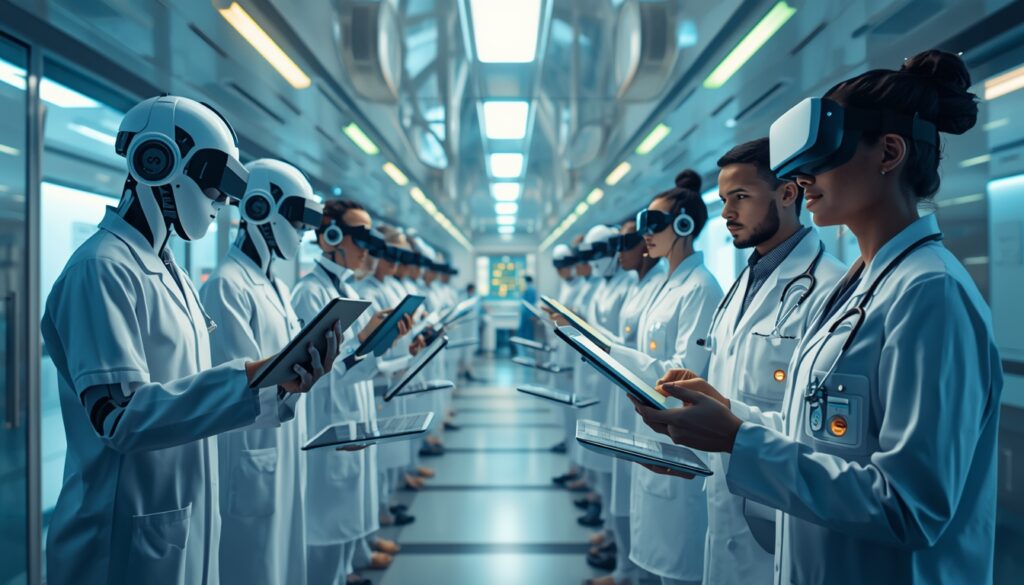
What is AI in Healthcare?
Artificial intelligence in healthcare refers to the use of advanced algorithms, machine learning models, and data analytics systems to analyze medical data, assist clinical decision-making, and improve patient care. AI in healthcare helps doctors detect diseases earlier, interpret medical images, predict health risks, and automate hospital operations.
Definition of Artificial Intelligence in Healthcare
Artificial intelligence in healthcare is the application of AI technologies such as machine learning, deep learning, and natural language processing to medical data and healthcare processes. These technologies enable computers to learn from medical datasets, recognize patterns, and generate insights that support doctors and healthcare professionals in diagnosing and treating patients more effectively.
AI systems can analyze large amounts of healthcare data, including medical records, diagnostic images, laboratory reports, and patient monitoring data, much faster than traditional manual methods. This allows healthcare providers to make quicker, more accurate clinical decisions and deliver better patient outcomes.
How AI Works in Modern Healthcare Systems
AI-powered healthcare systems work by collecting and analyzing medical data from multiple healthcare sources. These systems use trained algorithms to identify patterns, detect anomalies, and generate predictive insights that help medical professionals understand patient conditions more accurately.
For example, AI systems can analyze thousands of medical images to detect early signs of diseases such as cancer, heart disease, or neurological disorders. Similarly, predictive AI models can analyze patient health data to identify individuals at risk of chronic illnesses, allowing doctors to provide preventive care earlier.
Key Technologies Behind AI Healthcare Solutions
Several advanced technologies power modern AI healthcare applications:
• Machine Learning in Healthcare – Enables AI systems to learn from medical data and improve diagnostic accuracy over time.
• Deep Learning Models – Used for analyzing complex medical images such as MRI scans, CT scans, and X-rays.
• Natural Language Processing (NLP) – Helps analyze unstructured healthcare data like physician notes, research papers, and clinical reports.
• Predictive Analytics – Uses patient data to forecast disease risks and treatment outcomes.
• Healthcare Data Analytics – Processes large healthcare datasets to uncover trends and support medical research.
Together, these technologies enable AI healthcare systems to support doctors, improve hospital efficiency, and advance medical innovation across the global healthcare industry.
Planning an AI Healthcare Solution?
From AI-powered diagnostics and predictive analytics to intelligent hospital management systems and digital health platforms, modern healthcare organizations are adopting AI to improve patient outcomes and operational efficiency. Square Infosoft helps hospitals, healthcare providers, and health-tech startups design and develop secure, scalable AI healthcare applications.
Discuss Your AI Healthcare ProjectMajor Healthcare Problems That AI Is Solving
Healthcare systems around the world face several long-standing challenges that affect patient care, operational efficiency, and medical outcomes. Rising patient demand, increasing medical data complexity, and shortages of healthcare professionals make it difficult for hospitals and clinics to deliver timely and effective treatment. AI in healthcare is emerging as a powerful solution to address many of these real-world healthcare problems by improving diagnostics, automating workflows, and enhancing patient monitoring.
Below are some of the major healthcare challenges that artificial intelligence is helping solve.
Diagnostic Errors and Delayed Disease Detection
Accurate diagnosis is one of the most critical aspects of healthcare, yet diagnostic errors remain a major concern in many healthcare systems. Doctors must analyze large volumes of medical data, including patient histories, laboratory results, and medical imaging scans. In complex cases, identifying early disease patterns can be difficult.
AI-powered diagnostic tools can analyze medical images, clinical data, and patient records much faster than traditional methods. Technologies such as AI medical imaging and machine learning models help detect conditions like cancer, heart disease, and neurological disorders earlier, enabling faster treatment and improved patient outcomes.
Shortage of Healthcare Professionals
Many countries face a growing shortage of doctors, nurses, and medical specialists. Increasing patient populations and aging societies are placing greater pressure on healthcare providers, often leading to longer waiting times and overburdened medical staff.
AI-powered healthcare systems can support medical professionals by automating repetitive administrative tasks, assisting with clinical decision-making, and providing intelligent patient monitoring tools. By reducing workload pressures, AI allows healthcare professionals to focus more on patient care and complex medical cases.
Healthcare Data Overload
Modern healthcare systems generate enormous amounts of medical data every day through electronic health records, diagnostic imaging, wearable devices, and hospital management systems. Managing and analyzing this data manually can be extremely challenging.
AI technologies such as healthcare data analytics and predictive analytics enable healthcare organizations to process vast datasets efficiently. These systems help identify hidden patterns in medical data, predict disease risks, and support healthcare research, ultimately improving the quality of medical decision-making.
Limited Patient Monitoring and Preventive Care
Many chronic diseases require continuous monitoring to prevent complications and ensure effective treatment. However, traditional healthcare models often rely on periodic hospital visits, making it difficult to monitor patients consistently.
AI-powered remote patient monitoring systems and wearable health devices allow doctors to track patient health data in real time. These technologies enable early detection of health issues, improve preventive healthcare strategies, and support long-term patient management.
Key Benefits of AI in Healthcare
Artificial intelligence provides several significant benefits for modern healthcare systems, including improved diagnostic accuracy, faster medical research, better patient monitoring, and more efficient hospital operations. By analyzing large volumes of medical data, AI in healthcare helps doctors make better clinical decisions, reduces human errors, and enables healthcare providers to deliver more personalized patient care.
Below are some of the most important benefits of artificial intelligence in healthcare.
Faster and More Accurate Disease Diagnosis
One of the most important benefits of artificial intelligence in healthcare is its ability to improve diagnostic accuracy. AI-powered medical imaging tools can analyze X-rays, CT scans, and MRI images with remarkable precision, helping doctors detect diseases such as cancer, heart conditions, and neurological disorders at earlier stages.
Machine learning algorithms can identify subtle patterns in medical data that may be difficult for humans to detect. As a result, healthcare providers can diagnose conditions faster and begin treatment earlier, significantly improving patient outcomes.
Improved Patient Care and Personalized Treatment
AI enables healthcare providers to deliver more personalized treatment plans by analyzing patient data such as medical history, genetics, lifestyle factors, and treatment responses. These insights help doctors recommend treatments tailored to individual patient needs.
AI-driven healthcare systems can also assist in predicting patient risks, monitoring treatment effectiveness, and recommending adjustments to care plans. This approach improves overall patient care and helps ensure better long-term health outcomes.
Increased Efficiency and Healthcare Automation
Hospitals and healthcare organizations handle large numbers of administrative tasks every day, including appointment scheduling, medical documentation, billing processes, and patient record management. AI technologies can automate many of these routine operations.
By automating repetitive workflows, AI healthcare systems allow healthcare professionals to focus more on patient care rather than administrative work. This increases operational efficiency and helps healthcare facilities manage resources more effectively.
Reduced Healthcare Costs
Healthcare costs continue to rise worldwide due to increasing patient demand, complex treatments, and administrative overhead. AI technologies can help reduce healthcare expenses by improving efficiency and minimizing unnecessary procedures.
Predictive analytics systems can identify high-risk patients earlier, allowing healthcare providers to intervene before conditions become severe. Preventive care supported by AI can reduce hospital readmissions, lower treatment costs, and improve overall healthcare system sustainability.
Better Patient Monitoring and Preventive Healthcare
AI-powered remote patient monitoring systems and wearable health devices enable continuous tracking of patient health data. These systems collect real-time information such as heart rate, blood pressure, activity levels, and sleep patterns.
This technology is particularly useful for managing chronic diseases and supporting preventive healthcare strategies. Continuous monitoring allows doctors to detect health risks earlier and intervene before medical conditions worsen.
Start Your AI Healthcare Project
Have an idea for an AI healthcare platform or medical app? Let’s discuss how we can build it together.
Get in Touch View ServicesApplications of AI in Healthcare
Artificial intelligence is transforming many areas of modern healthcare by enabling smarter diagnostics, more efficient hospital operations, and improved patient care. AI healthcare applications are used across hospitals, medical research centers, pharmaceutical companies, and digital health platforms to analyze complex medical data and support healthcare professionals in delivering better treatment outcomes.
Below are some of the most important applications of AI in healthcare that are shaping the future of the medical industry.
AI in Medical Diagnosis
One of the most impactful applications of AI in healthcare is medical diagnosis. AI systems can analyze patient data, laboratory results, and medical imaging scans to help doctors detect diseases earlier and more accurately.
Machine learning algorithms are capable of identifying patterns in medical data that may not be visible to the human eye. These technologies assist doctors in diagnosing conditions such as cancer, cardiovascular diseases, and neurological disorders, enabling faster and more precise treatment decisions.
AI in Drug Discovery and Medical Research
AI technologies are significantly accelerating the process of drug discovery and medical research. Traditional drug development can take many years and requires extensive laboratory testing. AI models can analyze biological data, molecular structures, and clinical research results to identify potential drug candidates more efficiently.
By reducing the time required for early-stage research, AI healthcare systems help pharmaceutical companies develop new treatments faster and bring life-saving medications to patients sooner.
AI in Personalized Medicine
Personalized medicine aims to tailor medical treatments to the specific needs of individual patients. AI technologies can analyze genetic information, medical history, lifestyle data, and treatment responses to create customized healthcare plans.
Using predictive analytics and machine learning models, healthcare providers can recommend more effective treatments and reduce the risk of adverse reactions. This approach improves patient outcomes and supports more targeted healthcare strategies.
AI in Remote Patient Monitoring
Remote patient monitoring is becoming increasingly important, especially for managing chronic diseases and providing care to patients outside traditional hospital settings. AI-powered monitoring systems collect real-time health data from wearable devices, mobile health apps, and connected medical equipment.
Doctors can analyze this data to track patient health conditions, detect early warning signs, and intervene before serious complications occur. These technologies improve long-term patient care and support more efficient healthcare delivery.
AI in Healthcare Chatbots and Virtual Assistants
AI-powered chatbots and virtual assistants are helping healthcare organizations improve patient engagement and communication. These systems can answer common health-related questions, schedule medical appointments, and guide patients through basic healthcare processes.
By automating routine patient interactions, healthcare providers can improve accessibility and reduce the workload for administrative staff while ensuring patients receive timely information and support.
Real-World AI Use Cases in Healthcare
Artificial intelligence is already being used across hospitals, research laboratories, and digital health platforms to solve real healthcare challenges. From analyzing medical images to monitoring patients remotely, AI in healthcare is enabling faster diagnosis, more accurate treatment decisions, and improved healthcare efficiency.
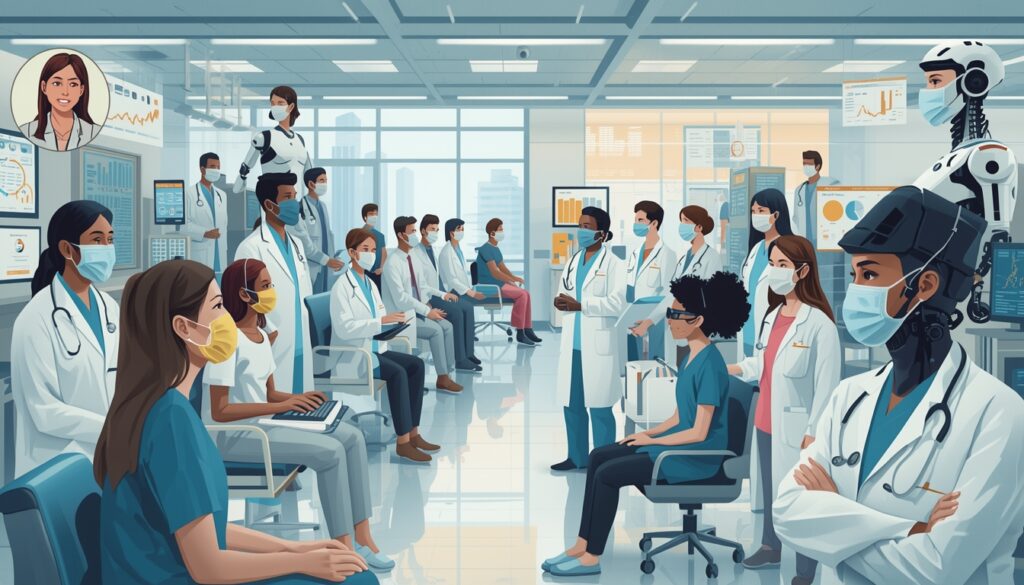
Below are some of the most important AI healthcare use cases transforming modern healthcare systems.
AI Medical Imaging and Radiology
Medical imaging is one of the most widely adopted applications of artificial intelligence in healthcare. AI systems can analyze medical images such as X-rays, CT scans, and MRI scans to detect abnormalities with high accuracy.
AI medical imaging tools help radiologists identify early signs of diseases including cancer, tumors, fractures, and neurological conditions. By assisting doctors in analyzing complex imaging data, AI technologies help improve diagnostic accuracy and reduce the time required for medical image interpretation.
AI Cancer Detection and Disease Prediction
Early detection of diseases can significantly improve treatment outcomes. AI-powered diagnostic systems analyze patient data and medical imaging to detect early signs of diseases such as cancer, cardiovascular conditions, and respiratory disorders.
Machine learning algorithms can identify subtle changes in medical data that may indicate the early stages of a disease. This allows healthcare providers to begin treatment earlier and improve survival rates for many life-threatening conditions.
AI Clinical Decision Support Systems
AI-powered clinical decision support systems assist doctors by analyzing patient data and recommending potential diagnoses or treatment options. These systems evaluate large datasets that include patient medical history, research studies, treatment outcomes, and clinical guidelines.
By providing data-driven insights, AI tools help doctors make more informed medical decisions and reduce the risk of diagnostic errors.
AI Telemedicine and Virtual Healthcare
Telemedicine platforms powered by artificial intelligence are transforming how patients access healthcare services. AI technologies help improve remote consultations by assisting doctors with patient data analysis, symptom assessment, and treatment recommendations.
Virtual healthcare platforms enable patients to consult doctors remotely, improving healthcare accessibility for individuals living in rural or underserved areas.
AI-Powered Healthcare Apps
AI-powered healthcare applications are becoming increasingly popular for monitoring health conditions, managing chronic diseases, and promoting preventive healthcare. These apps can track vital signs, analyze patient health data, and provide personalized health insights.
Many AI health applications also support health & fitness monitoring, medication reminders, and lifestyle recommendations, helping individuals maintain better long-term health.
Modern mobile healthcare applications powered by AI allow patients to track health data, communicate with doctors, and receive personalized treatment insights.
Technologies Powering AI Healthcare
Artificial intelligence in healthcare is supported by several advanced technologies that enable computers to analyze medical data, recognize patterns, and assist healthcare professionals in making informed decisions. These technologies form the foundation of modern AI healthcare systems, allowing hospitals and medical organizations to improve diagnostics, patient monitoring, and healthcare operations.
Below are the key technologies powering AI in healthcare.
Machine Learning in Healthcare
Machine learning is one of the most important technologies used in healthcare AI systems. Machine learning algorithms analyze large medical datasets and learn from patterns in patient data, medical images, and treatment outcomes.
These systems can identify trends and predict potential health risks, helping doctors diagnose diseases earlier and recommend more effective treatments. Machine learning models are widely used in medical imaging analysis, disease prediction, and healthcare data analytics.
Deep Learning for Medical Imaging
Deep learning is a specialized form of machine learning that uses neural networks to analyze complex data such as medical images. Deep learning models are particularly effective in identifying abnormalities in X-rays, CT scans, and MRI images.
These systems help radiologists detect conditions like tumors, fractures, and neurological disorders with greater accuracy. Deep learning technologies are increasingly used in AI medical imaging platforms to improve diagnostic speed and precision.
Natural Language Processing in Healthcare
Natural language processing (NLP) enables AI systems to understand and analyze human language. In healthcare, NLP is used to process unstructured medical data such as physician notes, clinical reports, research papers, and electronic health records.
By converting written medical information into structured data, NLP systems help healthcare organizations extract valuable insights from large volumes of medical documents and improve healthcare data management.
Predictive Analytics for Healthcare
Predictive analytics uses historical patient data and machine learning algorithms to forecast potential health outcomes. These systems can identify patients who may be at risk of developing chronic diseases, experiencing hospital readmissions, or requiring urgent medical intervention.
By predicting potential health issues earlier, predictive analytics helps healthcare providers implement preventive care strategies and improve long-term patient outcomes.
Internet of Medical Things (IoMT)
The Internet of Medical Things (IoMT) refers to connected healthcare devices such as wearable health monitors, smart medical equipment, and remote patient monitoring systems. These devices continuously collect health data from patients and transmit it to healthcare platforms.
AI technologies analyze this real-time data to detect health risks, track patient conditions, and support remote healthcare services. IoMT plays a critical role in modern digital healthcare ecosystems and enables more proactive patient care.
AI in Health & Fitness and Preventive Care
Artificial intelligence is not only transforming hospitals and clinical environments but is also playing a growing role in health & fitness monitoring and preventive healthcare. AI-powered digital health technologies allow individuals to track their health in real time, helping people adopt healthier lifestyles and detect potential health risks earlier.
Modern AI healthcare applications are integrated into wearable devices, mobile health apps, and smart health platforms that continuously collect and analyze personal health data. These technologies monitor vital signs such as heart rate, physical activity, sleep patterns, and calorie consumption. By analyzing this information, AI systems provide personalization in Mobile Apps insights that help individuals improve their health & fitness habits and maintain long-term wellness.
AI-Powered Fitness Tracking Applications
AI-powered fitness apps have become increasingly popular for helping users monitor daily activities, exercise routines, and overall health performance. These applications use machine learning algorithms to analyze user data and provide personalized workout recommendations, health insights, and performance tracking.
Fitness tracking apps can adapt to user behavior over time, suggesting optimized exercise plans, monitoring recovery patterns, and helping users achieve their health & fitness goals more effectively.
Wearable Health Monitoring Devices
Wearable devices such as smartwatches and fitness trackers are transforming how people monitor their health. These devices collect real-time data on heart rate, physical activity, sleep cycles, oxygen levels, and other physiological indicators.
AI technologies analyze this data to detect irregular health patterns and provide early warnings for potential health risks. Continuous monitoring helps healthcare providers and individuals manage chronic conditions and maintain better health & fitness awareness.
AI for Preventive Healthcare
Preventive healthcare focuses on identifying health risks before serious medical conditions develop. AI technologies analyze patient data, lifestyle factors, and historical health records to predict potential diseases and recommend preventive actions.
For example, AI-powered healthcare systems can identify early warning signs of heart disease, diabetes, or respiratory conditions based on patient data. By enabling early intervention and lifestyle improvements, AI helps individuals take proactive steps toward better health & fitness and long-term wellness.
Challenges and Risks of AI in Healthcare
While artificial intelligence offers many benefits to the healthcare industry, its adoption also presents several challenges and risks that must be carefully addressed. Implementing AI in healthcare requires strong data governance, regulatory compliance, and responsible technology development to ensure patient safety and ethical use of medical data.
Healthcare organizations must consider issues such as data privacy, algorithm bias, regulatory approval, and integration with existing healthcare systems when deploying AI healthcare technologies.
Healthcare Data Privacy and Security
Healthcare data is highly sensitive and includes patient records, diagnostic reports, and medical histories. AI systems rely on large datasets to train algorithms and improve predictive accuracy, which raises concerns about data privacy and security.
Healthcare organizations must ensure that AI systems comply with strict data protection regulations and implement strong cybersecurity measures to prevent unauthorized access to patient information.
AI Bias in Healthcare Algorithms
AI models learn from historical healthcare data. If the training data contains biases or lacks diversity, the AI system may produce inaccurate or unfair results for certain patient groups.
Algorithmic bias can lead to disparities in diagnosis, treatment recommendations, and healthcare outcomes. To reduce this risk, developers must train AI models on diverse datasets and continuously evaluate algorithm performance across different populations.
Regulatory and Compliance Challenges
Healthcare technologies are subject to strict regulatory oversight to ensure patient safety and medical reliability. AI healthcare solutions must comply with healthcare regulations and obtain approval from regulatory authorities before being deployed in clinical environments.
Because AI systems evolve over time through continuous learning, regulators face challenges in establishing frameworks that ensure safety while allowing innovation in AI healthcare applications.
Integration with Existing Healthcare Systems
Many hospitals still rely on legacy healthcare IT infrastructure and outdated systems. Integrating advanced AI technologies with these systems can be technically complex and costly.
Successful AI implementation requires seamless integration with electronic health records (EHR), hospital management systems, and medical data platforms. Healthcare organizations must invest in modern digital infrastructure to fully benefit from AI-driven healthcare innovation.
Future of AI in Healthcare
The future of healthcare will be increasingly driven by artificial intelligence as hospitals, research institutions, and digital health companies continue adopting intelligent technologies. AI in healthcare is expected to transform how diseases are diagnosed, how treatments are developed, and how healthcare systems manage patient data and clinical workflows.
Advancements in machine learning, big data analytics, and connected medical devices will enable healthcare providers to deliver faster diagnoses, more personalized treatments, and more efficient patient care. As healthcare systems continue to digitalize, AI healthcare technologies will play a central role in improving medical outcomes and expanding access to healthcare services worldwide.

Generative AI in Healthcare
Generative AI is emerging as one of the most powerful innovations in healthcare technology. These advanced AI models can analyze large medical datasets, generate medical insights, assist in clinical documentation, and support medical research.
Generative AI tools can help doctors summarize patient records, generate medical reports, and assist in drug discovery by identifying potential molecular structures for new treatments. As generative AI continues to evolve, it is expected to accelerate medical research and improve healthcare productivity.
AI-Powered Smart Hospitals
Hospitals of the future will increasingly rely on AI-driven technologies to automate operations and improve patient care. Smart hospital systems will integrate AI-powered diagnostics, automated workflows, predictive analytics, and connected medical devices.
AI systems will help hospitals manage patient flow, optimize resource allocation, and monitor patients in real time. These intelligent hospital environments will reduce operational inefficiencies and enhance healthcare delivery.
AI-Driven Drug Discovery and Medical Innovation
Drug development is traditionally a long and expensive process that can take many years of research and testing. AI technologies are helping pharmaceutical companies accelerate this process by analyzing biological data and predicting which compounds are most likely to become effective treatments.
AI-driven research platforms can analyze massive biomedical datasets and identify potential drug candidates much faster than traditional research methods. This innovation has the potential to speed up the development of new therapies and improve treatment options for many diseases.
Expansion of Remote and Personalized Healthcare
AI technologies will continue expanding remote healthcare services, enabling doctors to monitor patients outside traditional hospital environments. Remote patient monitoring systems, wearable health devices, and digital health platforms will collect real-time patient data and allow doctors to track health conditions continuously.
Personalized healthcare supported by AI will also become more common. By analyzing genetic data, lifestyle factors, and medical history, AI systems will help doctors develop treatment plans tailored specifically to individual patients.
Similar innovations are also transforming other sectors where intelligent systems improve customer experiences and operational efficiency. Let’s see, ai-use-cases-across-industries-solutions/
By sectors such as:
- AI in Travel Industry
- AI in Fashion Industry
- AI in Fitness Industry
- AI in Construction Industry
- AI in Spirituality Industry
- AI in Education Industry
- AI in Medical Education Industry
- AI in Business Industry
- AI in Social Industry
- AI in News Industry
- AI in Utility Industry
- AI in Food Industry
AI Healthcare Software and App Development
As healthcare organizations adopt artificial intelligence technologies, the demand for AI healthcare app development and intelligent medical software solutions continues to grow. Hospitals, digital health startups, research institutions, and healthcare providers are investing in AI-powered platforms that improve diagnostics, automate workflows, enhance patient monitoring, and deliver more personalized healthcare services.
AI healthcare software development involves building intelligent systems that analyze medical data, support clinical decision-making, and integrate with modern healthcare technologies such as electronic health records, wearable health devices, and telemedicine platforms. These solutions help healthcare organizations improve operational efficiency while delivering better patient care.
AI Healthcare App Development Solutions
AI-powered healthcare applications are becoming essential tools for both patients and healthcare professionals. These applications can monitor patient health, analyze medical data, and provide real-time insights that support preventive care and treatment decisions.
AI healthcare apps are commonly used for:
• Remote patient monitoring
• Chronic disease management
• AI-powered symptom analysis
• Telemedicine and virtual consultations
• Health & fitness tracking and wellness monitoring
By combining mobile technologies with artificial intelligence, healthcare apps can help patients manage their health more effectively while allowing doctors to track patient conditions remotely.
Custom AI Healthcare Platforms
Healthcare organizations often require customized AI solutions tailored to their specific medical workflows and operational needs. Custom AI healthcare platforms integrate machine learning models, healthcare data analytics, and predictive algorithms to deliver intelligent healthcare services.
Examples of custom AI healthcare platforms include:
• AI-powered diagnostic systems
• Clinical decision support platforms
• Healthcare data analytics dashboards
• AI-driven hospital management systems
• Intelligent patient monitoring solutions
These platforms help healthcare organizations make better data-driven decisions and improve the quality of healthcare delivery.
AI Healthcare Software Development Services
Developing reliable healthcare AI solutions requires expertise in healthcare technologies, secure data management, and advanced software engineering. A professional AI healthcare mobile app development company can help healthcare organizations design, build, and deploy intelligent healthcare applications that comply with industry regulations and medical standards.
Key services typically include:
• AI healthcare software development
• AI healthcare mobile app development
• Healthcare data analytics platforms
• AI-powered telemedicine solutions
• Integration with electronic health record systems
By implementing advanced AI technologies, healthcare organizations can create smarter healthcare systems that improve patient outcomes and support digital healthcare transformation.
FAQ: Artificial Intelligence in Healthcare
What is AI in healthcare?
Artificial intelligence in healthcare refers to the use of machine learning, data analytics, and intelligent algorithms to analyze medical data and support healthcare professionals. AI in healthcare helps doctors diagnose diseases, monitor patients, analyze medical images, and improve treatment planning. These technologies enable healthcare providers to deliver faster, more accurate, and more personalized patient care.
How is AI used in healthcare?
AI is used in healthcare for many purposes including medical diagnosis, medical imaging analysis, drug discovery, patient monitoring, and clinical decision support. AI systems analyze patient data and medical records to detect disease patterns and assist doctors in making more informed treatment decisions.
What are examples of AI in healthcare?
Examples of AI in healthcare include AI medical imaging systems that detect cancer, predictive analytics tools that identify disease risks, remote patient monitoring platforms, AI-powered telemedicine systems, and healthcare chatbots that assist patients with medical information and appointment scheduling.
What are the benefits of AI in healthcare?
The main benefits of AI in healthcare include improved diagnostic accuracy, faster disease detection, better patient monitoring, reduced healthcare costs, and more personalized treatment plans. AI technologies help healthcare providers analyze medical data more efficiently and support better clinical decision-making.
What is the future of AI in healthcare?
The future of AI in healthcare will involve advanced technologies such as generative AI, predictive healthcare analytics, smart hospitals, and AI-powered medical research. These innovations will help healthcare providers deliver more efficient, personalized, and data-driven healthcare services worldwide.