
MVP App Development Services for Launching Scalable Digital Products
Turn your product idea into a market-ready MVP with our MVP app development services. We help startups, entrepreneurs, and enterprises validate ideas, prioritize essential features, and launch high-quality mobile, web, SaaS, marketplace, and AI-powered MVPs. From product strategy and UI/UX design to development, testing, deployment, and post-launch scaling, our team provides end-to-end MVP development tailored to your business goals.
TRUSTED CLIENT’S
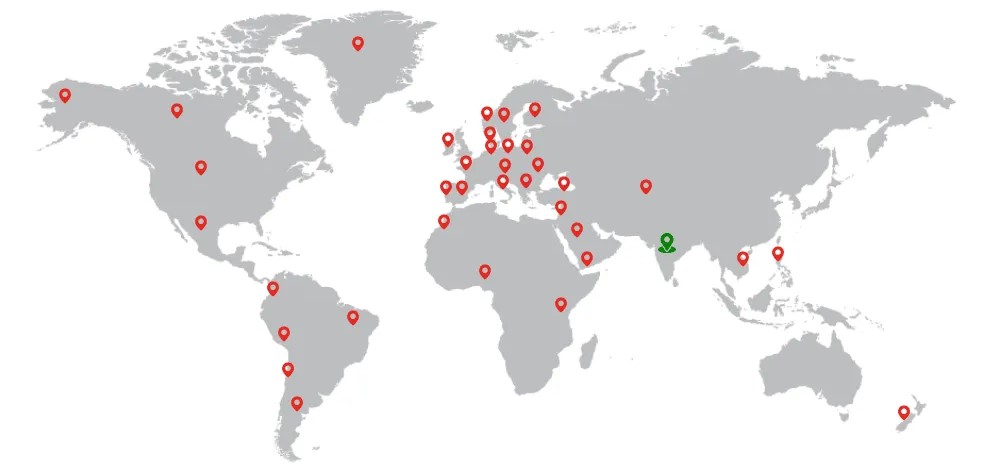
Trusted by Startups & Enterprises Across 40+ Countries
Helping startups, enterprises, and global brands leverage AI for growth, automation, and competitive advantage.








Recognized as a top MVP app development company by leading platforms.
Clients
Projects delivered
Countries
IT Professionals
Serving Clients Across 40+ Countries
MVP App Development Services for Turning Product Ideas Into Launch-Ready MVPs
An MVP (Minimum Viable Product) focuses on the essential functionality needed to introduce a product to its target users, validate the core idea, and gather real-world feedback before investing in a larger product build. Our MVP development services help businesses transform product concepts into focused, functional digital products with the right combination of features, user experience, technology, and scalability.
We work with startups, growing businesses, and enterprises to define MVP scope, prioritize features, design user journeys, select suitable technologies, and develop the first production-ready version of their product. Whether you need a mobile app MVP, web MVP, SaaS platform, marketplace, on-demand solution, or AI-powered product, we align development with your business objectives and future product roadmap.
Key Capabilities
- Product discovery and MVP strategy to define the right scope before development.
- Feature prioritization to focus resources on essential product functionality.
- UI/UX design to create intuitive user journeys and usable MVP experiences.
- Custom MVP development for mobile, web, SaaS, marketplace, enterprise, and emerging product ideas.
- API and third-party integrations to connect essential business services and platforms.
- Testing and quality assurance to improve reliability, performance, and usability before launch.
- Post-launch iteration and scaling to evolve the MVP based on user feedback and business requirements.
Have an MVP idea you want to validate?
Let’s discuss your product requirements, target users, core features, and development roadmap.
MVP DEVELOPMENT SERVICES
End-to-End MVP Development Services We deliver
From product discovery and MVP strategy to design, development, testing, deployment, and post-launch growth, our MVP app development services cover the complete product development lifecycle. We tailor each engagement to your product idea, target users, business model, technical requirements, and validation goals; helping you launch an MVP without overbuilding the first version.
MVP Strategy & Consulting
Turn an early-stage product idea into a practical MVP roadmap with product discovery, requirement analysis, feature prioritization, technical planning, and MVP scope definition. Our MVP consulting approach helps identify what your first release needs to validate the core business idea and what can be introduced later.
Explore MVP Strategy & Consulting →MVP Product Discovery & Scope Definition
Define the right product scope before development begins. We analyze business objectives, target users, core workflows, market requirements, and essential functionality to separate must-have MVP features from features that can be planned for future releases.
Explore MVP Product Discovery →MVP UI/UX Design
Create intuitive and conversion-focused product experiences with MVP UI/UX design. We map user journeys, design wireframes and interfaces, and create practical user experiences that support the core purpose of your MVP without adding unnecessary complexity.
Explore MVP UI/UX Design →Mobile App MVP Development
Build functional mobile app MVPs for iOS, Android, or both platforms based on your product requirements. We develop focused mobile experiences that include the essential features needed to launch, validate user demand, and collect feedback for future product iterations.
Explore Mobile App MVP Development →Cross-Platform MVP Development
Develop MVPs for multiple platforms from a shared codebase using technologies such as Flutter and React Native where they fit the project requirements. Cross-platform development can help businesses maintain consistent experiences while reducing unnecessary development complexity.
Explore Cross-Platform MVP Development →Web MVP Development
Launch responsive web-based MVPs for startups, businesses, SaaS products, marketplaces, portals, and other digital platforms. Our web MVP development approach focuses on essential functionality, usability, performance, and an architecture that can support future product growth.
Explore Web MVP Development →SaaS MVP Development
Validate SaaS product concepts with focused MVPs that can include user accounts, subscription plans, dashboards, role-based access, billing, analytics, integrations, and other essential SaaS functionality.
Explore SaaS MVP Development →Marketplace & On-Demand MVP Development
Build MVPs for two-sided marketplaces and on-demand business models with functionality such as customer and provider profiles, listings, search, booking, orders, payments, notifications, ratings, and management dashboards.
Explore Marketplace & On-Demand MVPs →AI-Powered MVP Development
Add practical AI capabilities to MVPs where they create measurable product value. Depending on the use case, this can include AI assistants, chatbots, recommendation systems, intelligent search, personalization, predictive analytics, natural language processing, and workflow automation.
Explore AI-Powered MVP Development →Enterprise MVP Development
Help established organizations validate new digital products, services, and business models through structured MVP development. Enterprise MVPs can incorporate existing systems, APIs, authentication requirements, analytics, security considerations, and scalable architecture.
Explore Enterprise MVP Development →MVP API & Third-Party Integration
Connect MVP products with the external services they need to operate effectively. Depending on project requirements, integrations can include payment gateways, maps, communication platforms, analytics, CRM/ERP systems, cloud services, authentication providers, and other third-party APIs.
Explore MVP API & Third-Party Integration →MVP Testing & Quality Assurance
Test the MVP across functionality, usability, compatibility, performance, security, and other project-specific requirements. Our QA process helps identify issues before launch and supports a more reliable first product release.
Explore MVP Testing & QA →MVP Deployment & DevOps
Prepare the MVP for production deployment across the required platforms and infrastructure. We support deployment, environment configuration, release processes, monitoring, and other DevOps requirements based on the product architecture.
Explore MVP Deployment & DevOps →MVP Maintenance, Iteration & Scaling
An MVP is the beginning of product validation, not necessarily the final product. After launch, we can help analyze feedback, prioritize improvements, add new functionality, optimize performance, and scale the product as adoption and business requirements grow.
Explore MVP Maintenance & Scaling →SOLUTIONS
MVP Solutions We Build
Every MVP has different product goals, users, workflows, and business models. Our MVP development solutions are designed around the core functionality required to launch and validate each product type without unnecessarily expanding the initial scope. From SaaS platforms and marketplaces to ecommerce, on-demand, booking, and AI-powered products, we build MVPs around the specific requirements of the business model.
Mobile App MVPs
Launch focused iOS and Android applications with the essential functionality needed to validate your mobile product idea. We can develop consumer, business, marketplace, service, and industry-specific mobile MVPs with scalable foundations for future releases.
Web & Platform MVPs
Validate web-based product concepts through responsive MVP platforms designed around core user workflows. These can include customer portals, business platforms, marketplaces, dashboards, management systems, and other browser-based digital products.
SaaS MVPs
Build and validate subscription-based software products with essential functionality such as user accounts, role-based access, dashboards, subscriptions, billing, analytics, and integrations. The MVP can provide a focused foundation for expanding the SaaS product after market validation.
Marketplace MVPs
Develop multi-sided platforms that connect different user groups, such as buyers and sellers, customers and providers, or businesses and professionals. Marketplace MVP functionality can include profiles, listings, search, filters, communication, transactions, reviews, and administration.
On-Demand MVPs
Launch digital platforms that connect customers with service providers, delivery partners, professionals, or other resources on demand. Depending on the business model, functionality can include service discovery, booking, location tracking, payments, notifications, provider management, and order workflows.
Ecommerce MVPs
Validate online retail concepts with focused ecommerce functionality such as product catalogs, search, filters, shopping carts, checkout, payments, order management, customer accounts, and administration.
Booking & Reservation MVPs
Build booking platforms for appointments, services, rentals, travel, events, healthcare, hospitality, and other scheduling-based businesses. MVP functionality can include availability, booking, cancellation, reminders, payments, and management workflows.
Subscription-Based MVPs
Test recurring-revenue business models with subscription plans, user accounts, billing, renewals, access controls, notifications, and subscription management. The MVP can focus on validating pricing, customer demand, and the core subscription experience.
Social & Community MVPs
Launch social and community products with essential engagement functionality such as user profiles, content sharing, feeds, messaging, notifications, connections, groups, and moderation.
Enterprise & Internal Business MVPs
Validate new enterprise products, internal tools, workflows, and digital business models through focused MVP solutions. These products can connect with existing business systems and include role-based access, dashboards, reporting, APIs, and workflow automation.
AI-Powered Product MVPs
Build MVPs where artificial intelligence is part of the core product experience, such as AI assistants, intelligent search, recommendations, automation, content generation, predictive features, or conversational interfaces.
Proven Results
Our MVP Portfolio Products We’ve Built and Shipped
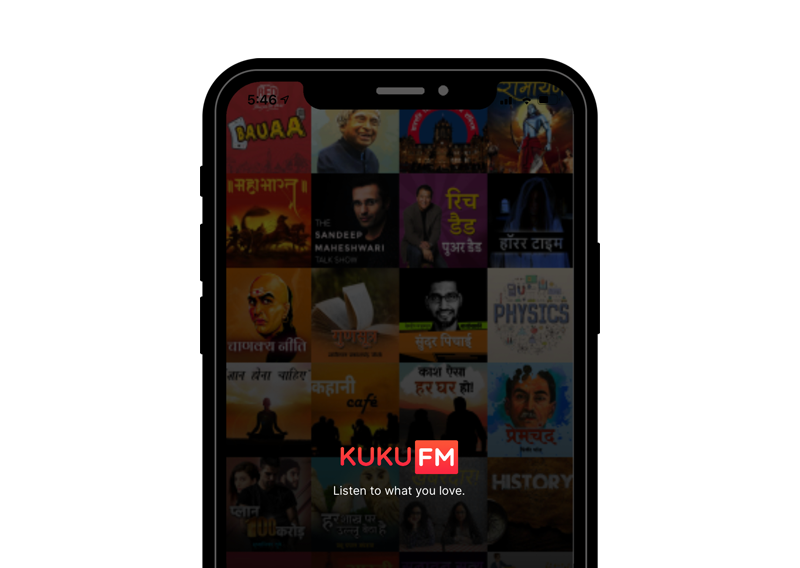
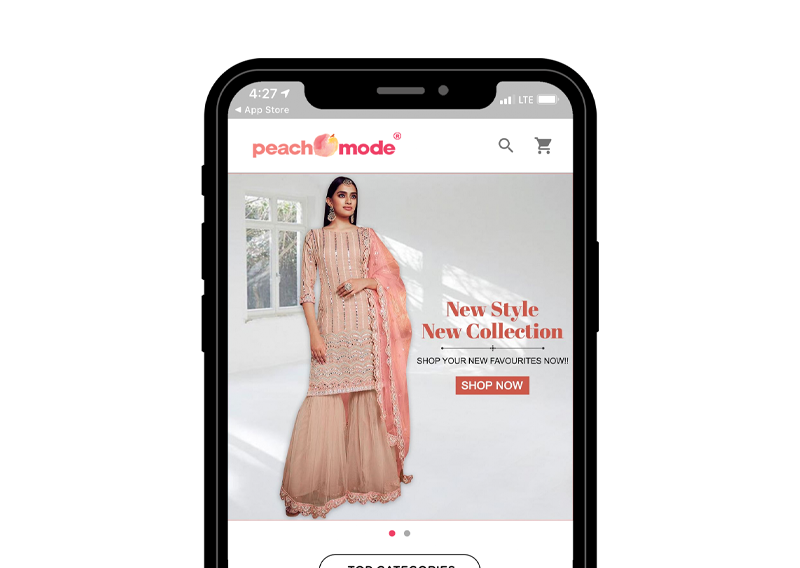
Across 8+ years and 300+ MVPs, we’ve shipped products across industries from telehealth to blockchain to B2B logistics. Our MVP development portfolio demonstrates how product ideas can be transformed into functional digital solutions across different industries, business models, and technology environments.

Client Reviews
What Our Clients Say About Our MVP App Development Services

Kreg Thornley
Marketing Director, Alchemy Spetec Tucker, Georgia, United States
James Guttman
San Francisco, California, United StatesIndustries We Serve
Industry-Specific MVP App Development Solutions
Every industry has different users, workflows, regulations, business models, and product requirements. Our industry-specific MVP app development solutions are designed around these differences, helping startups, businesses, and enterprises validate digital product ideas with the features and workflows most relevant to their target market.
We develop MVPs across healthcare, finance, real estate, education, ecommerce, logistics, hospitality, manufacturing, professional services, and other specialized industries. Each industry can be supported with dedicated MVP strategy, UI/UX, development, integrations, testing, and post-launch scaling based on the product requirements.
Healthcare & Life Sciences MVP Development
Build MVPs for healthcare providers, health-tech startups, medical businesses, wellness platforms, and life sciences organizations. Solutions can include telemedicine, patient engagement, appointment management, healthcare marketplaces, health tracking, pharmacy platforms, and other healthcare-focused digital products.
Industries Covered:
- Healthcare
- Telemedicine
- HealthTech
- Medical
- Wellness
- Pharmacy
- Life Sciences
- Healthcare MVP Development
- Telemedicine MVP Development
- HealthTech MVP Development
Finance, Fintech, Banking & Insurance MVP Development
Develop financial technology MVPs around payments, personal finance, lending, investment, banking, insurance, and financial management use cases. Depending on the product, MVPs can include secure authentication, transactions, dashboards, payment integrations, financial workflows, and reporting.
Industries Covered:
- Fintech
- Finance
- Banking
- NBFC
- Insurance
- Investment
- Lending
- Payments
- Fintech MVP Development
- Banking MVP Development
- Insurance MVP Development
- Financial App MVP Development
Real Estate & Construction MVP Development
Create digital MVPs for property discovery, buying and selling, rentals, property management, construction workflows, and real estate services. Solutions can support property listings, search, inquiries, booking, agent management, dashboards, and other core workflows.
Industries Covered:
- Real Estate
- Property Management
- Construction
- PropTech
- Architecture & Engineering
- Real Estate MVP Development
- PropTech MVP Development
- Construction MVP Development
Education & EdTech MVP Development
Build MVPs for schools, universities, educators, training providers, and EdTech businesses. Product concepts can include eLearning platforms, course marketplaces, learning management systems, tutoring platforms, student portals, assessment solutions, and education communities.
Industries Covered:
- Education
- EdTech
- eLearning
- Training
- Online Courses
- Tutoring
- EdTech MVP Development
- eLearning MVP Development
- Education App MVP Development
Ecommerce & Retail MVP Development
Launch MVPs for online stores, retail businesses, D2C brands, marketplaces, and commerce platforms. Core functionality can include catalogs, search, filters, carts, checkout, payments, orders, customer accounts, promotions, and administration.
Industries Covered:
- Ecommerce
- Retail
- D2C
- Consumer Products
- Shopping
- Ecommerce MVP Development
- Retail MVP Development
- D2C MVP Development
Food, Restaurant & Food Delivery MVP Development
Develop MVPs for restaurants, food businesses, delivery platforms, cloud kitchens, catering businesses, and food marketplaces. Depending on the model, functionality can include menus, ordering, delivery workflows, restaurant management, location services, payments, offers, and notifications.
Industries Covered:
- Food Delivery
- Restaurants
- FoodTech
- Cloud Kitchens
- Catering
- Grocery
- Food Delivery MVP Development
- Restaurant MVP Development
- FoodTech MVP Development
Travel, Tourism & Hospitality MVP Development
Build MVPs for travel agencies, hotels, hospitality businesses, tourism platforms, booking services, and travel marketplaces. Solutions can include accommodation discovery, reservations, itinerary management, payments, reviews, location services, and customer communication.
Industries Covered:
- Travel
- Tourism
- Hospitality
- Hotels
- Vacation Rentals
- Travel Booking
- Travel MVP Development
- Hospitality MVP Development
- Hotel Booking MVP Development
Logistics, Transportation & Delivery MVP Development
Develop MVPs for logistics providers, transportation businesses, courier services, delivery companies, fleet operators, and supply-chain platforms. Product functionality can include order management, dispatching, tracking, route management, driver applications, notifications, and business dashboards.
Industries Covered:
- Logistics
- Transportation
- Delivery
- Fleet Management
- Courier
- Supply Chain
- Logistics MVP Development
- Delivery MVP Development
- Fleet Management MVP Development
Automotive & Mobility MVP Development
Create MVPs for automotive businesses and mobility-focused products, including vehicle marketplaces, rentals, service platforms, fleet solutions, EV services, roadside assistance, and automotive management systems.
Industries Covered:
- Automotive
- Car Rental
- EV
- Auto Services
- Vehicle Marketplace
- Mobility
- Automotive MVP Development
- EV MVP Development
- Mobility MVP Development
Manufacturing & Industrial MVP Development
Build digital MVPs for manufacturers, industrial businesses, suppliers, and B2B organizations. Solutions can support inventory, production workflows, equipment management, supply chains, procurement, business dashboards, and operational processes.
Industries Covered:
- Manufacturing
- Industrial
- Engineering
- B2B
- Supply Chain
- Procurement
- Manufacturing MVP Development
- Industrial MVP Development
- B2B MVP Development
Media, Entertainment & Content MVP Development
Develop MVPs for media companies, content creators, publishers, streaming businesses, entertainment platforms, and digital communities. Depending on the product, features can include content management, subscriptions, media delivery, profiles, social interaction, recommendations, and analytics.
Industries Covered:
- Media
- Entertainment
- Publishing
- Streaming
- Content
- Digital Communities
- Media MVP Development
- Entertainment MVP Development
- Streaming MVP Development
Sports, Fitness & Wellness MVP Development
Create MVPs for sports organizations, fitness businesses, gyms, coaches, athletes, wellness providers, and consumer fitness platforms. Solutions can include memberships, workout programs, scheduling, tracking, communities, coaching, payments, and personalized experiences.
Industries Covered:
- Sports
- Fitness
- Gym
- Wellness
- Coaching
- Athlete Platforms
- Sports MVP Development
- Fitness MVP Development
- Wellness MVP Development
HR, Recruitment & Workforce MVP Development
Build MVPs for recruitment agencies, HR teams, workforce platforms, employee management products, and talent marketplaces. Product functionality can include candidate profiles, job listings, applications, communication, scheduling, employee workflows, and reporting.
Industries Covered:
- HR
- Recruitment
- Staffing
- Workforce Management
- Job Platforms
- HR MVP Development
- Recruitment MVP Development
- Job Portal MVP Development
Legal & Professional Services MVP Development
Develop MVPs for law firms, legal-tech companies, consultants, agencies, and professional service providers. Solutions can focus on client management, appointment scheduling, document workflows, communication, payments, service discovery, and other business processes.
Industries Covered:
- Legal
- LegalTech
- Consulting
- Professional Services
- Agencies
- LegalTech MVP Development
- Professional Services MVP Development
Beauty, Fashion & Lifestyle MVP Development
Build digital products for beauty businesses, salons, fashion brands, lifestyle companies, personal care businesses, and related marketplaces. MVPs can include appointment booking, product catalogs, ecommerce, personalization, customer profiles, subscriptions, and service discovery.
Industries Covered:
- Beauty
- Fashion
- Salon
- Cosmetics
- Personal Care
- Lifestyle
- Beauty App MVP Development
- Fashion MVP Development
- Salon MVP Development
Agriculture, Energy & Sustainability MVP Development
Create MVPs for agriculture, agritech, energy, environmental technology, and sustainability-focused businesses. Depending on the product, solutions can support marketplace workflows, monitoring, resource management, logistics, analytics, and operational processes.
Industries Covered:
- Agriculture
- AgTech
- Energy
- CleanTech
- Sustainability
- Environmental Services
- AgTech MVP Development
- Energy MVP Development
- Sustainability MVP Development
Government, Public Services & Specialized Platforms
Develop MVPs for public-facing platforms, specialized service businesses, and organizations with unique digital workflows. Depending on project requirements, these solutions can include portals, service management, document workflows, communication, dashboards, and secure access.
Industries Covered:
- Government Services
- Public Services
- Nonprofit
- Specialized Business Platforms
CAPABILITIES
MVP Features & Product Capabilities
The right MVP features depend on your product concept, target users, business model, and validation goals. We help prioritize the functionality that matters most for the first release while creating a foundation for future product expansion.
Our MVP app development services can include user-facing features, business workflows, administration tools, integrations, analytics, and intelligent capabilities based on your product requirements.
User & Account Management
Build the essential account and access functionality required to create a personalized product experience.
Common capabilities include:
- User registration and login
- Social authentication
- User profiles
- Role-based access
- Permissions and account settings
- Profile verification
- Password and security management
Search, Discovery & Personalization
Help users quickly find relevant products, services, content, or information within the MVP.
Depending on the product, functionality can include:
- Search
- Filters and sorting
- Categories
- Recommendations
- Personalized content
- Location-based discovery
- Saved items and favorites
This is particularly useful for marketplace, ecommerce, booking, content, and on-demand MVPs.
Communication & Engagement
Enable users, customers, providers, and businesses to interact through the channels required by the product.
Features may include:
- In-app messaging
- Chat
- Push notifications
- Email notifications
- SMS notifications
- Alerts and reminders
- Reviews and ratings
- Social interactions
Payments, Billing & Transactions
For commerce and monetization-focused MVPs, we can integrate the payment and transaction functionality required for the initial product release.
Depending on the business model, this may include:
- Payment gateway integration
- Online payments
- Subscription billing
- Order payments
- Invoices
- Refund workflows
- Transaction history
- Payment status tracking
The exact payment providers and implementation depend on the target market and product requirements.
Booking, Scheduling & Service Management
MVPs for appointment-based, reservation, rental, healthcare, hospitality, and service businesses can include scheduling workflows such as:
- Availability management
- Appointment booking
- Reservation management
- Calendar integration
- Rescheduling and cancellation
- Reminders
- Provider/service management
- Booking status tracking
Marketplace & Multi-Role Workflows
For marketplace and platform-based MVPs, different users often require different experiences.
We can support workflows for:
- Customers
- Sellers
- Vendors
- Service providers
- Delivery partners
- Administrators
- Business owners
Depending on the product, this can include listings, order management, commissions, provider dashboards, customer requests, reviews, and transaction workflows.
Admin Dashboard & Business Management
An MVP often needs more than a customer-facing application.
We can develop administration and business management capabilities for:
- User management
- Content management
- Product/service management
- Order management
- Booking management
- Role and permission management
- Reports
- Analytics
- Notifications
- Platform configuration
This gives businesses control over their MVP after launch.
Analytics & Reporting
Measure how users interact with the MVP and identify opportunities for improvement.
Analytics capabilities can include:
- User activity tracking
- Conversion tracking
- Product usage metrics
- Sales and transaction reporting
- Customer behavior analysis
- Engagement metrics
- Business dashboards
- Custom reports
The objective is not simply to collect data, but to use product insights to guide MVP iteration and feature prioritization.
API & Third-Party Integrations
Connect the MVP with the external systems and services required for its core workflows.
Depending on the product, integrations can include:
- Payment gateways
- Maps and location services
- CRM platforms
- ERP systems
- Communication services
- Analytics platforms
- Authentication providers
- Cloud services
- Business APIs
- AI APIs
Only the integrations required for the MVP should be included in the initial scope to avoid unnecessary development complexity.
AI-Powered Product Capabilities
AI can be integrated into an MVP when it provides meaningful value to the user or business.
Potential capabilities include:
- AI chatbots and assistants
- Intelligent search
- Recommendations
- Content generation
- Personalization
- Predictive analytics
- Natural language processing
- Document or image analysis
- Workflow automation
AI functionality should be selected based on the product’s actual use case rather than added simply as a technology feature.
AI-POWERED CAPABILITIES
AI-Powered MVP Development
AI can turn an MVP from a basic digital product into a more intelligent and personalized experience when it directly supports the product’s core value proposition. Our AI-powered MVP development services help startups, businesses, and enterprises integrate practical AI capabilities into mobile apps, web platforms, SaaS products, marketplaces, and other MVP solutions.
We focus on using AI where it can improve user experience, automate repetitive workflows, personalize interactions, or provide intelligent insights. Instead of adding AI simply because it is available, we identify the use cases that can provide meaningful value within the initial MVP scope and plan advanced capabilities for later product releases.
AI Capabilities We Integrate Into MVPs
AI Assistants & Chatbots
Create conversational experiences that help users find information, complete tasks, receive support, or interact with your product through natural language.
Generative AI
Integrate generative AI for content creation, summarization, text generation, product assistance, document processing, and other relevant workflows.
Intelligent Search
Improve product discovery with semantic or AI-assisted search that can understand user intent beyond simple keyword matching.
Recommendation Engines
Deliver personalized products, services, content, or actions based on user behavior, preferences, and available product data.
AI-Powered Automation
Automate repetitive business workflows such as content processing, classification, customer support, document handling, and operational tasks.
Predictive Analytics
Use available product or business data to identify patterns, generate predictions, and support data-driven decision-making where the use case is suitable.
Natural Language Processing
Enable applications to understand and process human language for conversational interfaces, text analysis, classification, extraction, and other language-based workflows.
Computer Vision
Add image-based capabilities such as recognition, classification, document analysis, visual search, or other computer-vision use cases where relevant to the product.
Tech Stack
MVP Development Technology Stack
We select the technology stack for each MVP based on its product requirements, target platforms, expected users, integrations, performance needs, security considerations, and long-term scalability. Our MVP development technology stack supports mobile apps, web applications, SaaS platforms, marketplaces, enterprise products, and AI-powered solutions.
Rather than choosing technologies simply because they are popular, we focus on selecting tools that are appropriate for the MVP’s functionality, development requirements, budget, and future product roadmap.
 Flutter
 React Native
 Swift
Swift
 Kotlin
 Dart
React.js
Dart
React.js
 HTML5
HTML5
 CSS3
CSS3
 JavaScript
 Node.js
 PHP
PHP
 Firebase
 REST APIs
 GraphQL
 AWS
AWS
 Google Cloud
Firebase
Google Cloud
Firebase
 DigitalOcean
 Artificial Intelligence
 Machine Learning
 Internet of Things
 Blockchain
 AR & VR
 MongoDB
 MySQL
MySQL
 PostgreSQL
 Firebase DB
 Payment Gateway
 Social Integration
 Dynamic Links
 Push Notifications
 Google APIs
 Manual Testing
 Automation Testing
 Performance Testing
 Security Testing
DEVELOPMENT PROCESS
Our MVP App Development Process
A successful MVP requires more than simply building a set of features. Our MVP development process combines product discovery, strategic planning, UI/UX design, development, quality assurance, deployment, and post-launch iteration to create a focused first version of your product.
We structure the process around your business objectives, target users, core product requirements, and validation goals so that the initial release delivers meaningful functionality without unnecessary complexity.
Product Discovery & Idea Validation
We start by understanding your product idea, business objectives, target audience, market requirements, and core value proposition. This helps establish what the MVP needs to accomplish and identifies the functionality required to test the product concept with real users.
Key activities:
- Business and product requirement analysis
- Target-user identification
- Core problem definition
- Product goals
- Initial market and competitor considerations
- MVP feasibility assessment
Outcome: A clear product direction and initial MVP strategy.
MVP Scope & Feature Prioritization
Not every planned feature needs to be part of the first release. We prioritize functionality based on user value, business importance, technical feasibility, and validation objectives.
Features can be organized into: Must Have → Should Have → Future. This keeps the first version focused while establishing a roadmap for future releases.
Outcome: Defined MVP scope and prioritized feature roadmap.
User Journey & MVP UI/UX Design
We translate the product requirements into user flows, wireframes, interface designs, and interactive experiences. The objective is to make the core product journey simple and intuitive while avoiding unnecessary design complexity.
Depending on the project, the design stage can include:
- User flows
- Wireframes
- Information architecture
- UI design
- Interactive prototypes
- Responsive layouts
- Design system components
Outcome: A practical and user-focused MVP design ready for development.
Technology & Architecture Planning
Before development begins, we select the appropriate technology stack and define the application's architecture.
This may include decisions around:
- Mobile or web platform
- Native or cross-platform development
- Frontend architecture
- Backend architecture
- Database
- APIs
- Cloud infrastructure
- Third-party integrations
- AI capabilities
- Security requirements
- Scalability considerations
Outcome: A development-ready technical architecture aligned with the MVP roadmap.
MVP Development
Our development team converts the approved designs and technical architecture into a functional MVP.
Development may cover:
- Frontend development
- Backend development
- Mobile app development
- Web application development
- API development
- Database implementation
- Authentication
- Payments
- Third-party integrations
- Admin functionality
- AI-powered features
We focus on implementing the prioritized MVP scope rather than unnecessarily expanding the first release.
Outcome: A functional MVP ready for comprehensive testing.
Testing & Quality Assurance
Before launch, the MVP is tested to identify functional, usability, compatibility, performance, and other project-specific issues.
Depending on the product, QA may include:
- Functional testing
- UI/UX testing
- Mobile and browser compatibility
- API testing
- Performance testing
- Security checks
- Regression testing
- User acceptance testing
Outcome: A more stable and launch-ready MVP.
Deployment & MVP Launch
Once the MVP meets the agreed requirements, we prepare it for production deployment.
Depending on the platform, this can include:
- App Store deployment
- Google Play deployment
- Web application deployment
- Cloud configuration
- Production environment setup
- Domain and server configuration
- Monitoring setup
- Release management
Outcome: Your MVP becomes available to its intended users.
User Feedback & Product Iteration
The first release provides an opportunity to observe how real users interact with the product.
We can use:
- User feedback
- Product analytics
- Usage patterns
- Conversion data
- Support requests
- Feature adoption
- Business metrics
to identify improvements and prioritize the next development cycle.
Outcome: Data-informed product improvements rather than assumptions.
MVP Scaling & Continuous Development
Once the product demonstrates market demand, the MVP can evolve into a larger product.
Future development may include:
- New features
- Performance optimization
- Advanced integrations
- AI enhancements
- Infrastructure scaling
- Security improvements
- New platforms
- Additional user roles
- Advanced analytics
- Product modernization
Outcome: A scalable path from MVP to a mature digital product.
WHY MVP DEVELOPMENT
Why Businesses Choose MVP App Development
Building a complete digital product from the beginning can require significant time, resources, and planning. An MVP provides a focused way to introduce the core product experience, test important business assumptions, and learn from real users before expanding the product.
Our MVP app development approach helps businesses focus the initial release on the functionality that matters most while keeping a clear path for future development.
Validate Your Product Idea
An MVP allows businesses to put the core product concept in front of real users and evaluate whether the proposed solution addresses a meaningful problem.
Instead of relying only on assumptions, businesses can collect feedback and product usage insights to guide future decisions.
Focus on Essential Features
MVP development encourages businesses to prioritize the functionality required to deliver the core value proposition.
This helps avoid spending initial resources on features that may not be necessary for the first release.
Get to Market With a Focused Product
A smaller initial scope can make it easier to move from product planning to a usable release.
Launching a focused MVP creates an opportunity to start collecting real-world feedback while the broader product roadmap continues to evolve.
Understand User Behavior
Once an MVP is available, businesses can observe how users interact with the product.
Feedback and product data can help identify:
- Which features users actually use
- Where users encounter friction
- Which workflows need improvement
- Which features should be prioritized next
- Whether the product is solving the intended problem
Test Business Assumptions
An MVP can help businesses evaluate assumptions around:
- Target audience
- Product value proposition
- User needs
- Pricing or monetization
- Customer workflows
- Product positioning
- Market demand
The goal is to replace as many assumptions as possible with evidence from real product usage.
Create a Foundation for Future Growth
A well-planned MVP should not be treated as disposable software.
The initial architecture, technology choices, APIs, database structure, and product workflows can be designed with future development in mind, allowing the validated product to evolve as requirements become clearer.
Make Better Product Decisions
The most valuable outcome of an MVP is not simply launching a smaller application.
It is learning what should happen next.
User feedback, analytics, business results, and operational experience can help determine whether to:
Improve → Expand → Pivot → Scale
This creates a more evidence-based product development roadmap.
FREQUENTLY ASKED QUESTIONS
Frequently Asked Questions About MVP App Development
What is MVP app development?
MVP app development is the process of building the initial version of a digital product with the essential functionality required to deliver its core value and validate the product with real users. The MVP can then be improved and expanded based on user feedback, product data, and business requirements.
How much does MVP app development cost?
MVP development cost depends on factors such as product complexity, number of features, platforms, UI/UX requirements, integrations, technology stack, AI functionality, and development scope. A clear estimate can be prepared after understanding the product requirements and defining the MVP scope.
How long does it take to develop an MVP app?
The development timeline varies based on the scope, complexity, platforms, integrations, design requirements, and technical architecture. A focused MVP with limited functionality can generally be developed faster than a complex multi-platform product. The timeline can be estimated after the MVP requirements are defined.
What should an MVP app include?
An MVP should include the functionality necessary to deliver the product’s core value and support its primary user journey. Typical components may include user authentication, core workflows, dashboards, payments, notifications, integrations, and administration features depending on the product.
Can you develop MVPs for different industries?
Yes. MVP solutions can be developed for industries including healthcare, real estate, fintech, banking, education, ecommerce, food, travel, logistics, automotive, manufacturing, construction, HR, legal, media, sports, beauty, fashion, jewelry, agriculture, and other specialized business domains.
Can AI be included in an MVP?
Yes. AI can be included when it provides meaningful value to the product. Depending on the use case, an MVP may incorporate AI assistants, intelligent search, recommendations, content generation, automation, document processing, predictive functionality, or other AI capabilities.
Can an MVP be scaled into a full product?
Yes. A validated MVP can evolve into a broader product through additional features, integrations, performance improvements, infrastructure scaling, platform expansion, and ongoing product development. The initial architecture can be planned with future requirements in mind without unnecessarily over-engineering the MVP.
Which technologies can be used to build an MVP?
The technology stack depends on the product’s requirements. MVP development may involve technologies such as Flutter, React Native, iOS and Android technologies, React, Next.js, Node.js, Python, PHP, Java, .NET, cloud technologies, databases, APIs, and AI technologies.
Do you provide MVP design and development together?
Yes. MVP projects can include product planning, UI/UX design, application development, backend development, API integrations, quality assurance, deployment, and post-launch support based on the project requirements.
Can you integrate third-party services into an MVP?
Yes. MVPs can integrate third-party services such as payment gateways, maps, authentication providers, communication services, analytics platforms, CRM systems, ERP systems, cloud services, and other APIs when required by the product.
Do you provide post-launch MVP support?
Yes. Post-launch support can include bug fixing, feature enhancements, performance optimization, technical improvements, new integrations, AI enhancements, modernization, and product scaling based on the evolving requirements.
Can you help define the MVP scope before development?
Yes. We can review the product idea, target users, business objectives, core workflows, feature requirements, technical considerations, and future roadmap to help define a focused MVP scope before development begins.
How do I start an MVP development project with Square Infosoft?
You can start by sharing your product idea, target users, required platforms, key features, industry, integrations, and business objectives. Our team can then evaluate the requirements and discuss an appropriate MVP scope, technology approach, development process, and engagement model.
Ready to Turn Your Product Idea Into an MVP?
Whether you are validating a startup idea, launching a new digital product, testing an industry-specific solution, or adding AI to an existing business concept, the right MVP scope can help you move from idea to a functional product with greater clarity.
Share your product requirements, target users, preferred platforms, key features, or business objectives with our team. We can discuss your MVP concept and help define a practical development approach based on your product goals.

