
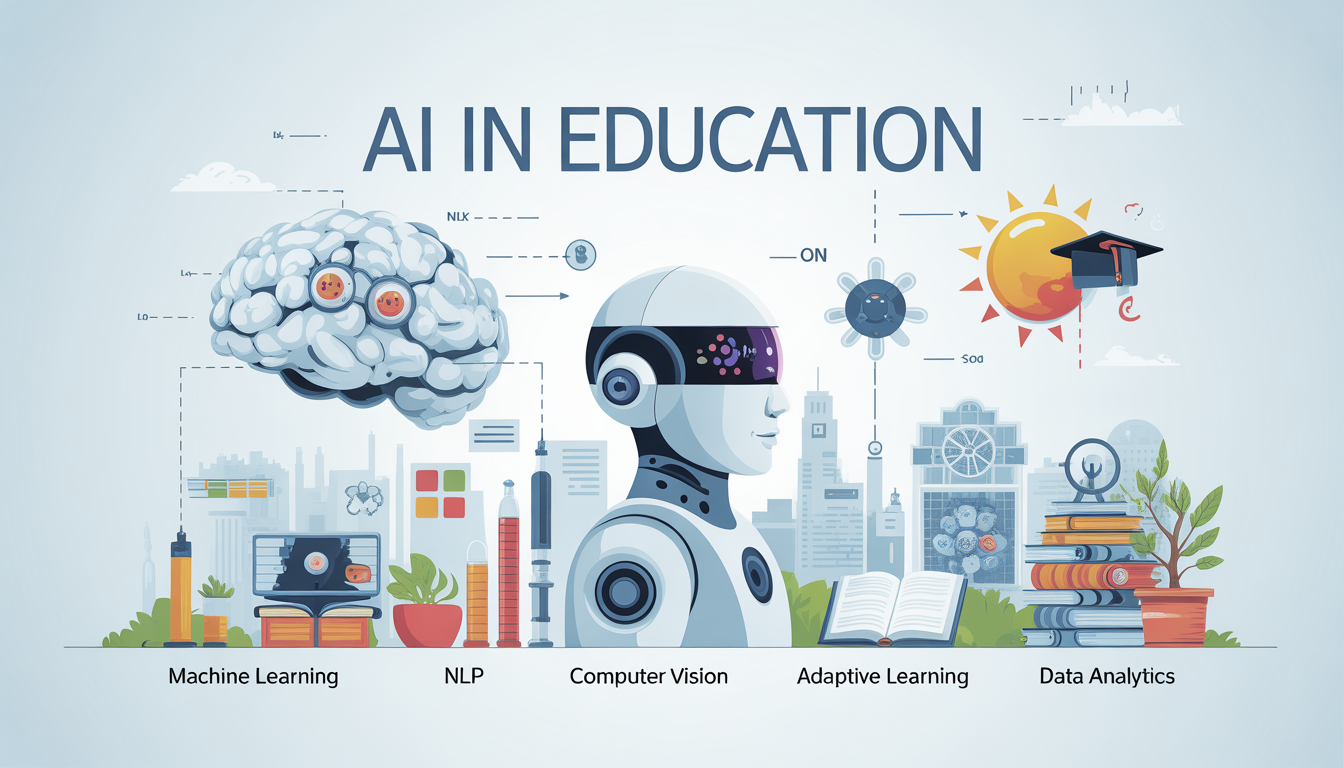
AI in education is reshaping how students learn, how teachers teach, and how EdTech platforms scale globally. From personalized learning paths to AI-powered tutors and automated grading systems, artificial intelligence is driving the next generation of digital education.
At Square Infosoft, we don’t just talk about AI in education. We build real-world AI-powered learning platforms that improve engagement, automate processes, and deliver measurable business results.
The Rise of AI in Education: A New Era of Learning
Artificial intelligence in education is no longer a futuristic concept. It is actively transforming how learning is delivered, consumed, and optimized across schools, universities, and digital learning platforms.
With the rapid growth of online learning and EdTech platforms, traditional education systems are struggling to keep up with personalization, scalability, and engagement demands. This is where AI in education plays a critical role by enabling intelligent systems that adapt to individual learning behaviors, automate complex processes, and provide real-time insights.
From AI-powered tutoring systems and adaptive learning platforms to automated grading and predictive analytics, artificial intelligence is helping institutions and businesses create more efficient and impactful learning experiences.
According to global industry reports from organizations like UNESCO and World Economic Forum, AI adoption in education is accelerating due to increasing demand for personalized learning, remote education, and scalable digital platforms.
At Square Infosoft, we have built real-world AI-powered education platforms that go beyond theory. Our solutions combine AI technologies such as machine learning, natural language processing, and computer vision to deliver intelligent, scalable, and user-centric learning systems.
From AI tutors and adaptive study planners to gamified learning ecosystems and real-time performance tracking, we help EdTech businesses transform their ideas into powerful digital education platforms.
Planning to Build an AI Learning Platform?
Let’s discuss your idea and create a powerful AI-driven education platform tailored to your business.
Get Free ConsultationWhat is Artificial Intelligence in Education
Artificial Intelligence in education refers to the use of advanced technologies such as machine learning, natural language processing, and computer vision to create smarter, more personalized, and scalable learning experiences.
AI enables education platforms to analyze student behavior, adapt content in real time, automate repetitive tasks, and provide intelligent insights that improve both teaching efficiency and student outcomes.
Role of AI in the Modern Education Ecosystem
AI is not just a feature. It acts as the backbone of next-generation digital learning platforms.
Key Roles of AI in Education
- Personalizing learning paths based on student performance
- Enabling AI-powered tutors for real-time support
- Automating grading and assessment systems
- Providing predictive analytics for student success
- Enhancing engagement through gamification and recommendations
- Supporting multilingual and accessible learning
Core Technologies Behind AI in Education
To build effective AI-powered education systems, multiple technologies work together.
1. Machine Learning (ML)
Machine learning models analyze student data such as learning speed, accuracy, and behavior patterns.
Use Cases:
- Personalized course recommendations
- Predicting student performance
- Adaptive learning systems
2. Natural Language Processing (NLP)
NLP allows systems to understand and respond to human language.
Use Cases:
- AI chatbots for student support
- AI tutors answering questions
- Content summarization and generation
3. Computer Vision
Computer vision enables systems to interpret visual data.
Use Cases:
- Note scanning and text extraction (OCR)
- AI proctoring in online exams
- Handwriting recognition
4. Speech Recognition
Speech-based AI enhances accessibility and interaction.
Use Cases:
- Voice-based learning
- Lecture transcription
- Voice-enabled AI tutors
Market Growth and Industry Adoption
The adoption of AI in education is accelerating globally due to increasing demand for scalable and personalized learning.
Key drivers include:
- Growth of online learning platforms
- Demand for remote and hybrid education
- Need for automation in academic processes
- Rising investment in EdTech startups
Real-World Implementation Insight
At Square Infosoft, we have implemented AI in education beyond theory by building real-world platforms that integrate multiple AI technologies into a unified system.
Our implementations include:
- AI Copilot Tutor using NLP for real-time Q&A
- Smart note scanning using computer vision
- Adaptive learning systems powered by machine learning
- Voice-enabled interaction using speech recognition
- Performance analytics and weak spot detection
These systems are designed to handle real user behavior, large-scale data, and multi-platform deployment across mobile and web.
Key Challenges in Traditional Education Systems Without AI
Despite rapid digital transformation, many education systems and online learning platforms still rely on traditional methods that limit scalability, personalization, and efficiency. Without artificial intelligence, these challenges create operational inefficiencies, higher costs, and poor learning experiences.
Below are the most critical challenges faced by modern education systems without AI-driven solutions.
1. Lack of Personalized Learning
Most education systems follow a one-size-fits-all approach, where every student receives the same content regardless of their learning speed or capability.
- Operational Impact: Inefficient learning outcomes
- Financial Impact: Increased dropout rates
- Student Gap: Frustration and low engagement
- Scalability Issue: Difficult to customize for large audiences
2. Teacher Workload Overload
Teachers spend significant time on grading, reporting, and administrative tasks instead of focusing on teaching.
- Operational Impact: Reduced productivity
- Financial Impact: Increased staffing needs
- Student Gap: Limited interaction time
- Scalability Issue: Not sustainable for growing institutions
3. Limited Student Engagement
Static learning materials fail to keep students interested, especially in online environments.
- Operational Impact: Low course completion rates
- Financial Impact: Reduced subscription renewals
- Student Gap: Lack of motivation
- Scalability Issue: Engagement drops with scale
4. Inefficient Grading Systems
Manual grading is time-consuming and prone to errors.
- Operational Impact: Delayed feedback
- Financial Impact: High operational costs
- Student Gap: Slow improvement cycles
- Scalability Issue: Not feasible at scale
5. Learning Gaps Are Not Identified
Traditional systems cannot track individual weaknesses effectively.
- Operational Impact: Poor performance tracking
- Financial Impact: Ineffective learning outcomes
- Student Gap: Unnoticed skill gaps
- Scalability Issue: No real-time monitoring
6. High Dropout Rates in Online Learning
Lack of support and personalization leads to higher dropout rates.
- Operational Impact: Low completion rates
- Financial Impact: Revenue loss
- Student Gap: Poor learning experience
- Scalability Issue: Retention challenges
7. Scalability Issues in Online Education Platforms
As user base grows, maintaining quality becomes difficult.
- Operational Impact: System inefficiencies
- Financial Impact: Increased infrastructure cost
- Student Gap: Inconsistent experience
- Scalability Issue: Limited growth potential
8. Language and Localization Barriers
Global learners face challenges due to language limitations.
- Operational Impact: Limited reach
- Financial Impact: Missed global opportunities
- Student Gap: Poor understanding
- Scalability Issue: Difficult multilingual support
9. Accessibility Challenges
Many platforms are not optimized for differently-abled learners.
- Operational Impact: Limited inclusivity
- Financial Impact: Reduced user base
- Student Gap: Unequal learning opportunities
- Scalability Issue: Compliance issues
10. Manual Administrative Processes
Enrollment, scheduling, and reporting are often handled manually.
- Operational Impact: Time-consuming workflows
- Financial Impact: Increased operational costs
- Student Gap: Delays and inefficiencies
- Scalability Issue: Hard to manage at scale
11. Poor Assessment Accuracy
Traditional exams fail to measure real skills and knowledge depth.
- Operational Impact: Inaccurate evaluation
- Financial Impact: Ineffective learning strategies
- Student Gap: Misjudged capabilities
- Scalability Issue: Limited analytics
12. Lack of Real-Time Feedback
Students often wait too long to receive feedback.
- Operational Impact: Slow learning cycles
- Financial Impact: Reduced course effectiveness
- Student Gap: Delayed improvement
- Scalability Issue: Feedback bottlenecks
Build Your AI-Powered Education Platform
Looking to create a smart, scalable, and feature-rich learning platform? We help you design and develop AI-powered education solutions tailored to your business.
Get Free ConsultationAI-Powered Education Solutions Transforming Modern Learning Platforms
Artificial intelligence is solving the biggest challenges in education by introducing intelligent automation, personalization, and real-time insights. Modern EdTech platforms are no longer just content delivery systems. They are intelligent ecosystems powered by AI.
At Square Infosoft, we have built advanced AI-powered education platforms that combine machine learning, natural language processing, and computer vision to deliver scalable, high-performance learning solutions.
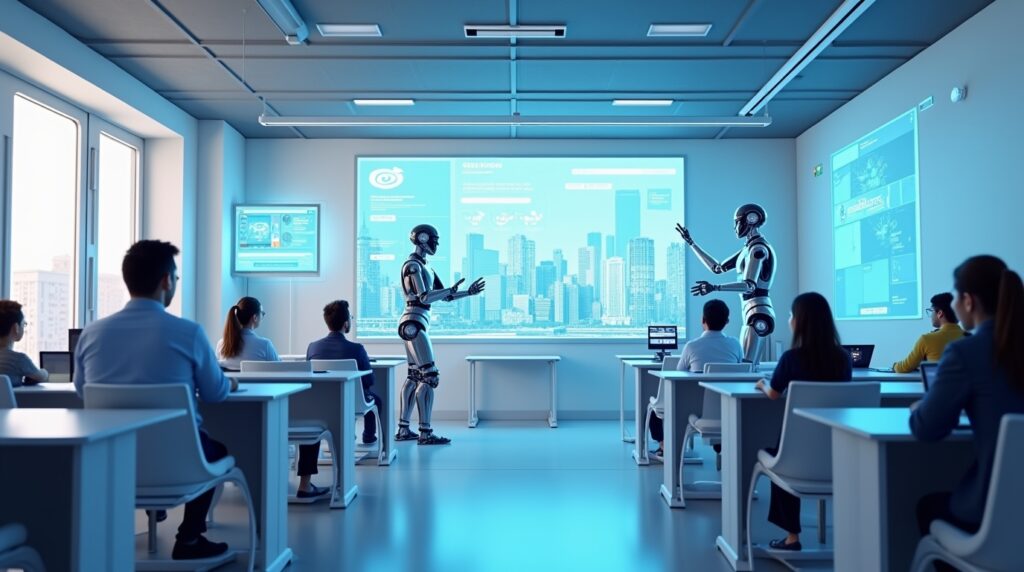
Below are the most impactful AI solutions transforming education today.
1. AI Copilot Tutor (24/7 Intelligent Learning Assistant)
AI-powered tutors provide instant support to students anytime, anywhere.
How It Works
- Students ask questions via text or voice
- NLP processes the query
- AI generates structured, contextual answers
- Responses can be converted into flashcards or quizzes
Real Implementation
We developed an AI Copilot Tutor system with:
- Voice and text-based question input
- Structured AI-generated responses with examples
- Save answers to notes or flashcards
- Continuous learning improvements based on usage
Business Impact
- Reduces dependency on human tutors
- Improves student engagement
- Enables scalable support systems
2. AI Note Scanner & Smart Content Generation
Students can convert raw notes into structured learning materials.
Technologies Used
- Computer Vision (OCR)
- NLP for summarization
- Machine Learning for correction
Real Implementation
Our platform includes:
- Camera/gallery note upload
- AI text extraction and correction
- Gap detection in notes
- Auto-conversion into summaries and flashcards
Benefits
- Saves time for students
- Improves content quality
- Enables automated learning workflows
3. Adaptive Learning & AI Study Planner
AI dynamically creates personalized learning journeys.
Features Implemented
- Placement quiz for skill analysis
- Personalized roadmap generation
- Daily and weekly study plans
- Smart rescheduling for missed sessions
Real System Capability
- Dashboard with real-time progress tracking
- AI-driven recommendations
- Learning path adjustments based on performance
Impact
- Higher student retention
- Improved learning efficiency
- Better outcomes at scale
4. Flashcards + Spaced Repetition System
AI enhances memory retention using scientifically proven methods.
Features
- AI-generated flashcards
- Correct/incorrect tracking
- Auto-scheduled revision cycles
- Daily review reminders
Real Implementation
- Flashcards generated from notes and AI tutor answers
- Spaced repetition based on performance
Outcome
- Improved long-term memory
- Faster concept mastery
5. AI-Powered Exam Simulation & Question Banks
AI enables intelligent practice environments.
Features
- Subject-based filtering
- Mock test creation
- Performance tracking (accuracy, speed, trends)
Real Use Case
- Simulados system for exam preparation
- AI analyzes performance and suggests improvements
6. Weak Spot Detection & Performance Analytics
AI identifies exactly where students struggle.
Features
- Tracks incorrect answers
- Highlights weak topics
- Recommends additional practice
Impact
- Targeted learning
- Faster improvement cycles
7. Gamification Powered by AI
AI makes learning engaging and addictive.
Features
- Streaks and badges
- Leaderboards
- Reward systems (including cashback models)
Real Implementation
- Daily streak tracking
- Reward-based learning progression
Result
- Increased engagement
- Higher retention rates
8. AI Video Learning & Transcription System
AI converts lectures into structured learning content.
Features
- Lecture recording
- Speech-to-text transcription
- AI-generated summaries
- Flashcard creation from lectures
Technologies
- Speech recognition
- NLP summarization
9. Multi-Language AI Learning Systems
AI enables global scalability.
Features
- Multi-language onboarding
- Content localization
- Language-based personalization
Real Implementation
- Portuguese, English, Spanish support
- Region-specific learning adaptation
10. Offline Learning Capabilities
Critical for global and remote users.
Features
- Download notes and flashcards
- Offline access
- Sync when online
11. Admin Panel & AI Analytics Dashboard
Complete control for platform owners.
Features
- Content management
- Subscription management
- User analytics
- AI usage tracking
12. Payment Integration & Monetization Systems
AI platforms are designed for revenue growth.
Features
- Freemium model
- Subscription plans
- Payment gateways (PIX, boleto, card)
- Wallet systems
Real-World Examples of AI in Education
Artificial intelligence in education is not just a concept. It is actively being used by leading global platforms and innovative EdTech companies to improve learning outcomes, engagement, and scalability.
Below are some of the most impactful real-world examples of AI in education, including both global leaders and our own implementations.
Global AI in Education Platforms
1. Coursera
Coursera uses AI to recommend courses based on user behavior, learning history, and career goals.
Key AI Use Cases
- Personalized course recommendations
- Skill-based learning paths
- Data-driven learning insights
2. Duolingo
Duolingo leverages AI to create adaptive language learning experiences.
Key AI Use Cases
- Difficulty adjustment based on performance
- Real-time feedback
- Gamified learning experience
3. Khan Academy
Khan Academy uses AI-powered systems to support personalized education.
Key AI Use Cases
- AI tutoring assistance
- Personalized dashboards
- Performance tracking
4. BYJU’S
BYJU’S integrates AI to deliver personalized learning journeys for students.
Key AI Use Cases
- Adaptive learning modules
- Behavioral analysis
- Content recommendations
5. Udemy
Udemy uses AI to recommend courses and improve learner engagement.
Key AI Use Cases
- Personalized recommendations
- Learning path optimization
- User behavior analytics
Square Infosoft Portfolio (REAL IMPLEMENTATIONS)
1. AI-Powered Learning Platform (Brazil-Based Education App)
A complete AI-driven study ecosystem designed to deliver personalized and engaging learning experiences.
Core Features
- AI Copilot Tutor (voice + text Q&A)
- Smart note scanning with AI correction
- Adaptive study planner with personalized roadmap
- Flashcards with spaced repetition system
- Weak spot detection and performance analytics
- Simulated exams and question banks
- Gamification (streaks, badges, leaderboards, rewards)
- Multi-language support (Portuguese, English, Spanish)
- Offline learning capabilities
- Integrated payment systems (PIX, boleto, card)
Business Value
- End-to-end AI education SaaS platform
- Designed for scalability and global markets
- Combines multiple AI technologies into one system
2. Medical Education Platform (Kshipra App)
A structured learning platform designed specifically for medical students with a focus on content-driven and mentor-supported education.
Key Features
- Topic-wise notes and flashcards system
- PDF and HTML-based learning content
- Mentor-based live session booking system
- Subscription-based access model
- Secure content protection (anti-screen recording)
- Performance tracking based on flashcard completion
Unique Value
- Combines education + mentorship + structured learning
- Scalable for specialized industries like medical education
3. Production-Ready Mobile Applications
We have also developed and deployed multiple mobile applications that demonstrate scalable architecture and content-driven ecosystems.
Platforms Include
- AI-based content platforms
- Learning and knowledge-sharing apps
- Cross-platform mobile solutions
These apps highlight our expertise in building:
- High-performance mobile apps
- Scalable backend systems
- AI-ready architectures
Want Similar Results for Your EdTech Platform?
Talk to our experts and discover how AI can improve engagement, retention, and revenue for your platform.
Talk to AI ExpertsBusiness Impact and ROI of AI in Education Platforms
Artificial intelligence in education is not just about innovation. It is a strategic investment that delivers measurable business results. From reducing operational costs to improving student engagement and increasing revenue, AI enables education platforms to scale efficiently while delivering better learning experiences.
For EdTech companies, schools, and enterprise training providers, AI adoption directly impacts growth, retention, and long-term profitability.
1. Significant Reduction in Operational Costs
AI automates time-consuming processes such as grading, student support, and administrative tasks.
Impact
- Reduced dependency on manual staff
- Faster workflows and automation
- Lower operational overhead
Business Result
Organizations can achieve up to 40–60% cost reduction in operational processes by implementing AI-driven automation.
2. Higher Student Retention and Engagement
AI-powered personalization keeps students engaged by adapting content based on their behavior and performance.
Impact
- Personalized learning journeys
- Gamification-driven engagement
- Real-time feedback systems
Business Result
- Increased course completion rates
- Improved subscription renewals
- Stronger user retention
3. Faster Content Creation and Delivery
AI enables automated generation of learning materials, reducing content production time.
Impact
- AI-generated summaries and notes
- Auto-created quizzes and flashcards
- Faster course deployment
Business Result
Content creation time can be reduced by up to 50–70%, allowing platforms to scale rapidly.
4. Data-Driven Decision Making
AI provides actionable insights through analytics and predictive models.
Impact
- Student performance tracking
- Dropout prediction
- Learning behavior analysis
Business Result
- Better strategic decisions
- Improved learning outcomes
- Optimized platform performance
5. Global Scalability and Market Expansion
AI enables platforms to scale across regions without significant operational increase.
Impact
- Multi-language support
- Cloud-based infrastructure
- Automated workflows
Business Result
- Expansion into global markets
- Increased user base
- Higher revenue potential
6. Increased Revenue Through Monetization Models
AI enables advanced monetization strategies.
Impact
- Freemium to premium conversion
- Personalized upselling
- Subscription optimization
Business Result
- Higher lifetime value (LTV)
- Improved conversion rates
- Sustainable revenue growth
7. Automation of Support and Learning Systems
AI chatbots and virtual assistants reduce support workload.
Impact
- 24/7 student support
- Instant query resolution
- Reduced support team size
Business Result
- Lower customer support costs
- Improved user satisfaction
8. Competitive Advantage in EdTech Market
AI-driven platforms stand out in a competitive market.
Impact
- Advanced features
- Better user experience
- Faster innovation
Business Result
- Strong brand positioning
- Higher customer acquisition
- Long-term market leadership
Ready to Scale Your EdTech Platform with AI?
Unlock higher engagement, better retention, and scalable growth with AI-driven education solutions built for real-world performance.
Talk to AI Experts View PortfolioFuture of AI in Education: Trends Shaping Learning (2026–2030)
Artificial intelligence in education is evolving rapidly, and the next few years will redefine how learning is delivered, personalized, and scaled globally. As AI technologies become more advanced, education platforms will shift from static systems to fully intelligent, adaptive ecosystems.

Organizations that invest in AI today will be the leaders of tomorrow’s digital education landscape.
1. AI Tutors Will Become the New Standard
AI-powered tutors will move from optional features to core components of every learning platform.
What to Expect
- 24/7 intelligent tutoring support
- Real-time doubt resolution
- Context-aware learning assistance
Impact
Students will rely on AI tutors as their primary support system, reducing dependency on traditional tutoring models.
2. Hyper-Personalized Learning Experiences
Every student will have a completely unique learning journey.
What to Expect
- AI-driven learning paths based on behavior
- Dynamic content recommendations
- Real-time difficulty adjustment
Impact
Learning will become more efficient, engaging, and outcome-driven.
3. AI-Powered Skill Assessment and Certification
Traditional exams will evolve into continuous AI-based evaluation systems.
What to Expect
- Real-time skill tracking
- Competency-based assessment models
- AI-driven certification systems
Impact
Employers will focus more on verified skills than traditional degrees.
4. Global AI Classrooms Without Borders
AI will enable seamless global education systems.
What to Expect
- Real-time translation and localization
- Cross-border learning platforms
- Global collaboration between students
Impact
Education will become accessible to anyone, anywhere.
5. Integration of AI with AR/VR for Immersive Learning
AI combined with AR and VR will create highly interactive learning environments.
What to Expect
- Virtual classrooms
- Simulation-based learning
- Hands-on digital experiences
Impact
Students will learn through experience rather than passive content.
6. Lifelong Learning Ecosystems
Education will shift from one-time learning to continuous skill development.
What to Expect
- AI-driven career learning paths
- Continuous upskilling platforms
- Personalized long-term learning journeys
Impact
Professionals will constantly upgrade skills based on market demand.
Conclusion: AI in Education is the Future of Learning
Artificial intelligence is transforming education into a smarter, more scalable, and highly personalized experience. From AI-powered tutors and adaptive learning systems to automated grading and real-time analytics, AI is solving some of the biggest challenges in modern education.
For EdTech companies, schools, and digital learning platforms, adopting AI is no longer a choice. It is a strategic necessity to stay competitive, improve learning outcomes, and scale globally.
Organizations that invest in AI today are not just improving their platforms. They are building the future of education.
At Square Infosoft, we specialize in designing and developing AI-powered education platforms that combine advanced technology with real-world usability. From idea to deployment, we help businesses create intelligent, scalable, and high-performing learning solutions.
Frequently Asked Questions About AI in Education
1. What is artificial intelligence in education?
Artificial intelligence in education refers to the use of technologies like machine learning, natural language processing, and data analytics to improve learning experiences, automate processes, and provide personalized education at scale.
2. How is AI used in education platforms?
AI is used in education platforms for personalized learning, AI tutoring systems, automated grading, predictive analytics, content recommendations, and student performance tracking. It helps create more efficient and engaging learning environments.
3. What are the benefits of AI in education?
AI improves personalization, reduces operational costs, increases student engagement, enables real-time feedback, and supports scalable learning systems. It also helps institutions make data-driven decisions.
4. Can AI replace teachers in the future?
AI will not replace teachers but will support them by automating repetitive tasks and providing intelligent insights. Teachers will focus more on mentoring, creativity, and student interaction.
5. How does AI improve student learning outcomes?
AI improves learning outcomes by analyzing student behavior, identifying weak areas, and adapting content in real time. This ensures that each student learns at their own pace and receives targeted support.
6. What are examples of AI in education?
Examples include AI tutors, adaptive learning systems, automated grading tools, AI chatbots, speech recognition systems, and predictive analytics platforms used by EdTech companies.
7. Is AI in education expensive to implement?
The initial investment in AI can be higher, but it significantly reduces long-term operational costs through automation and scalability. It also improves ROI by increasing retention and engagement.
8. What is the future of AI in education?
The future of AI in education includes AI tutors as standard, hyper-personalized learning, immersive learning using AR and VR, and global AI-powered classrooms that remove geographical barriers.