
Food Delivery Software Development Services
Build a food delivery app or online food ordering platform tailored to your business model. Square Infosoft provides food delivery software development services for restaurants, cloud kitchens, food delivery startups, multi-vendor marketplaces, and growing FoodTech businesses.
From customer-facing mobile apps and restaurant ordering systems to delivery partner apps and admin dashboards, we develop connected software solutions with mobile and web development, UI/UX design, backend engineering, API integration, quality assurance, and ongoing maintenance.
Planning a new food delivery MVP, adding AI-powered features, or modernizing an existing platform? We can help you explore custom software development, Generative AI integration, AI-assisted prototyping, and suitable low-code or no-code approaches based on your product requirements.
TRUSTED CLIENT’S
Trusted Mobile App Development Partner’s
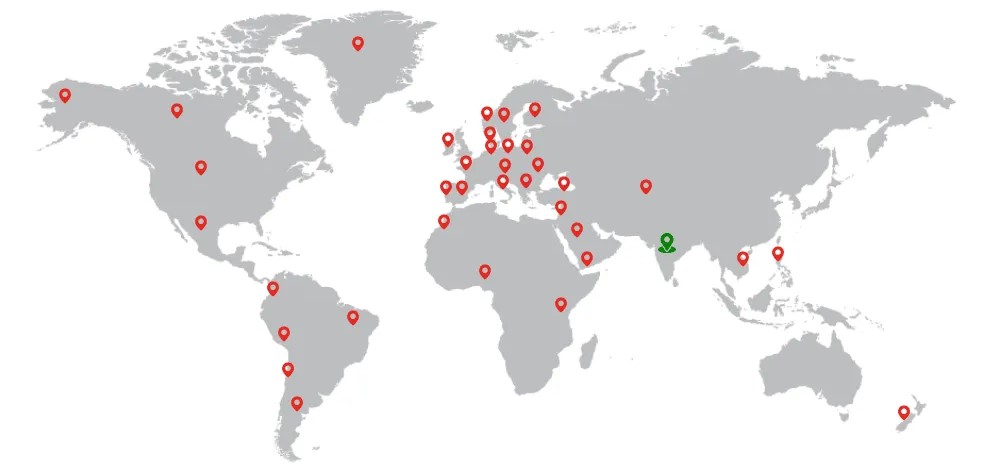
Trusted by high-growth companies across the globe









Projects Delivered
Happy Clients
Countries Served
Years of Experience
Square Infosoft brings together mobile app development, web development, backend engineering, API integration, AI development, UI/UX design, and quality assurance to help businesses turn software ideas into working digital products.
For food delivery businesses, this technical foundation can support customer ordering apps, restaurant partner applications, delivery partner apps, admin dashboards, and integrated online food ordering platforms. We focus on understanding your business model, defining the required workflows, and building software that can evolve as your needs change.

Challenges We Help Solve
Food Delivery App Development Challenges We Help Solve
Building a food delivery platform involves more than creating an app for customers. Restaurants, delivery partners, administrators, payments, and order workflows must work together smoothly. Square Infosoft helps businesses address these challenges through food delivery software development, mobile and web application development, API integration, automation, and scalable software architecture.
Disconnected Ordering and Order Management
Managing orders across customer apps, restaurant dashboards, delivery partner apps, and admin panels can create delays and inconsistent order information.
We develop integrated food delivery management software with centralized order workflows, status updates, notifications, and administrative controls to help keep each stage of the ordering process connected.
Restaurant, Menu, and Availability Management
Managing restaurant onboarding, menus, prices, operating hours, item availability, and incoming orders becomes more complex as a platform grows.
We build restaurant management software, menu management systems, and partner dashboards that help businesses manage restaurant information and ordering workflows from connected interfaces.
Scaling a Food Delivery Platform
A platform that works for a limited launch may need architectural changes as order volumes, restaurants, delivery partners, and service locations increase.
We develop scalable food delivery applications with backend systems, cloud infrastructure, API integrations, and performance testing designed around expected workloads and future expansion.
Manual Operations and Repetitive Workflows
Restaurant onboarding, order notifications, customer queries, reporting, and routine administrative tasks can consume time when managed manually.
We can help automate suitable workflows through API integrations, business rules, AI-powered automation, and AI agent development. Generative AI and conversational AI can also be explored for food discovery, ordering assistance, and customer support where appropriate.
Rigid Platforms and Slow Product Development
A growing business may need new features, third-party integrations, improved performance, or a different ordering model that its existing platform cannot easily support.
Square Infosoft can support food delivery app modernization, legacy software upgrades, API development, and feature enhancements. Depending on the product’s complexity, rapid MVP development, AI-assisted prototyping, or suitable low-code and no-code approaches may also be considered.
Real-Time Delivery Tracking and Dispatch
Customers expect timely delivery updates, while operations teams need visibility into order progress and delivery assignments. Delayed location updates or manual dispatch workflows can make coordination difficult.
Our food delivery app development solutions can integrate GPS tracking, maps, delivery status updates, dispatch workflows, and estimated arrival times according to your platform’s requirements.
Payment Integration and Order Reconciliation
Food delivery platforms may need to support multiple payment methods and coordinate order payments, refunds, commissions, and restaurant settlements.
Our food delivery software development services include payment gateway integration and backend development to support payment workflows, transaction records, and reconciliation requirements. The exact setup depends on the business model and payment providers.
Customer Retention and Ordering Experience
Complicated checkout flows, limited discovery options, inconsistent notifications, and disconnected support can make the ordering experience harder to manage.
Our food ordering app development services can support streamlined browsing, personalized recommendations, saved preferences, loyalty features, push notifications, and customer support integrations based on your product goals.
Limited Business Insights and Demand Forecasting
Without accessible operational data, food delivery businesses may struggle to understand order patterns, restaurant performance, delivery times, and customer behaviour.
We develop analytics dashboards and data integrations that help bring relevant operational information together. Where sufficient data is available, machine learning and predictive analytics can support demand forecasting and other data-driven workflows.
Build a Food Delivery Platform Around Your Business Needs
Whether you are launching a food delivery startup, digitizing restaurant operations, or upgrading an existing marketplace, we can help identify the software capabilities needed to address your current challenges and support your next stage of growth.
Discuss Your Food Delivery Software Requirements
CORE SERVICES
Our Food Delivery Software Development Services We Provide
Square Infosoft provides food delivery software development services for restaurants, cloud kitchens, food delivery startups, multi-vendor marketplaces, and established food businesses. Our services cover the complete product lifecycle, from product planning and UI/UX design to mobile app development, web development, backend engineering, AI integration, quality assurance, deployment, and ongoing support.
Whether you need a food delivery app, an online food ordering system, a restaurant management platform, or a connected delivery marketplace, we can tailor the technology to your business model, workflows, integrations, and growth plans.
Food Delivery App Development
Build a food delivery application that connects customers, restaurants, delivery partners, and administrators through coordinated workflows. Our food delivery app development services can support single-restaurant apps, multi-restaurant platforms, on-demand delivery systems, and food ordering marketplaces.
Solutions can include:
- Customer food delivery apps
- Restaurant partner apps
- Delivery partner and driver apps
- Admin panels and operational dashboards
- iOS, Android, and cross-platform applications
- Food delivery app feature development and enhancements
Online Food Ordering Website Development
Create a responsive online food ordering website that enables customers to explore menus, customize orders, check availability, pay online, and follow order progress. We develop food ordering websites for individual restaurants, restaurant chains, cloud kitchens, and multi-vendor food businesses.
Solutions can include:
- Restaurant ordering websites
- Online menu and catalogue management
- Shopping cart and checkout workflows
- Online payment integration
- Customer accounts and order history
- Website and mobile app integration
Custom Food Delivery Software Development
Develop custom food delivery software around your operating model instead of forcing your workflows into a generic solution. We can design connected systems for restaurant onboarding, order processing, delivery coordination, commissions, payments, reporting, and administration.
Solutions can include:
- Custom food delivery management software
- Restaurant order management systems
- Food delivery marketplace software
- Multi-vendor food ordering platforms
- Food delivery SaaS applications
- Business-specific dashboards and workflows
Restaurant and Cloud Kitchen Software Development
Manage restaurant ordering and kitchen operations through software designed around your workflows. Our restaurant software development capabilities can support menu updates, incoming orders, preparation statuses, availability management, reporting, and integrations with compatible restaurant systems.
Solutions can include:
- Restaurant management applications
- Cloud kitchen management software
- Restaurant online ordering systems
- Kitchen order workflow management
- Menu, pricing, and availability management
- Restaurant POS and third-party integrations
Delivery Partner App Development
Develop a delivery partner app that helps drivers or riders receive assignments, access pickup and drop-off information, navigate routes, and update delivery statuses. Features depend on your delivery model and operational requirements.
Solutions can include:
- Delivery partner registration and profiles
- Order assignment and acceptance
- GPS navigation and location updates
- Delivery status notifications
- Earnings and payout dashboards
- Proof-of-delivery workflows
- Delivery partner performance reporting
Food Delivery Admin Panel and Dashboard Development
Manage your platform through a centralized food delivery admin panel. We develop web-based dashboards that provide appropriate access to operational information and administrative controls across customers, restaurants, delivery partners, orders, and business performance.
Solutions can include:
- Customer and restaurant management
- Delivery partner management
- Order monitoring and status management
- Commission, payment, and settlement workflows
- Delivery zone and service-area management
- Promotions and discount controls
- Analytics dashboards and reporting
Food Delivery API Development and Integration
Connect your food delivery application with the external services and business systems it needs. Our API development and integration services help applications exchange relevant data and coordinate workflows across compatible platforms.
Potential integrations include:
- Payment gateways and UPI payments
- Maps, GPS, and geolocation services
- Restaurant POS systems
- CRM and ERP platforms
- SMS, email, and push notification services
- Analytics and reporting tools
- Inventory and menu management systems
- AI APIs and third-party services
Integration feasibility depends on API availability, provider permissions, documentation, and the requirements of each system.
AI and Generative AI Development for Food Delivery
Add AI capabilities where they can improve food discovery, customer interactions, operational decisions, or internal workflows. Our AI development services can support food delivery products that need intelligent features alongside conventional mobile, web, and backend development.
Potential solutions include:
- AI-powered food and restaurant recommendations
- Intelligent food search and personalization
- Generative AI ordering assistants
- AI chatbot and conversational AI integration
- AI agent development for suitable workflows
- Predictive analytics and demand forecasting
- AI-powered customer support automation
- Machine learning and recommendation engine integration
AI capabilities should be selected according to the available data, business objectives, privacy requirements, and expected user value.
No-Code and Low-Code Food Delivery App Development
Explore no-code and low-code app development when you need to validate an idea, prototype a workflow, or test a focused food delivery MVP. We can help assess whether a visual development platform fits your requirements or whether a custom-built application is more appropriate.
Potential solutions include:
- No-code food delivery app prototypes
- Low-code food ordering applications
- FoodTech MVP development
- Rapid app prototyping
- Workflow automation
- Third-party integrations
- No-code or low-code application enhancements
Platform selection depends on customization needs, integrations, security, scalability, maintenance, and ownership requirements.
AI-Assisted Development and Rapid MVP Development
Validate your food delivery product idea through structured discovery, prototyping, and MVP development. AI-assisted development and Vibe Coding approaches may help explore concepts or accelerate selected development tasks, but the resulting software still needs appropriate architecture, code review, security checks, and testing.
Solutions can include:
- Food delivery MVP development
- AI-assisted app prototyping
- Rapid product validation
- Proof-of-concept development
- AI-assisted coding and development workflows
- Prototype-to-production planning
- Feature prioritization and iteration
The right approach depends on the complexity of the product and the quality, reliability, and maintainability expected for launch.
Food Delivery App UI/UX Design
Design clear, accessible user journeys for customers, restaurant teams, delivery partners, and administrators. Our UI/UX design services focus on the workflows each user needs to complete, from discovering food and placing an order to managing deliveries and reviewing operations.
Solutions can include:
- Customer app UI/UX design
- Restaurant and delivery partner interfaces
- Food ordering website design
- Admin dashboard design
- User journey mapping and wireframes
- Interactive prototypes and usability improvements
Backend and Full-Stack Development
Build the backend services that connect your food delivery apps, websites, databases, and external systems. Backend and full-stack development can support order processing, user accounts, menu data, payments, notifications, permissions, and reporting.
Solutions can include:
- Food delivery backend development
- Database and API architecture
- Authentication and role-based access
- Order and transaction workflows
- Real-time data and notification services
- Web application and dashboard development
- Performance and scalability improvements
Food Delivery App QA and Software Testing
Test food delivery software across its key user journeys and integrations before release and during ongoing development. Quality assurance helps identify defects and validate expected behaviour across supported devices, platforms, and workflows.
Our testing services can include:
- Functional testing
- Mobile app and web testing
- API and integration testing
- Payment and checkout testing
- Order workflow testing
- Real-time tracking validation
- Performance and regression testing
- Security and usability testing
- Cross-platform testing
Testing scope should reflect the product's architecture, risk areas, supported devices, and release requirements.
Food Delivery App Maintenance and Modernization
Improve an existing food delivery application as customer expectations, operating requirements, and technology needs change. We can help maintain, upgrade, integrate, or rebuild parts of your platform based on its current condition and future plans.
Solutions can include:
- Food delivery app maintenance
- Bug fixing and performance optimization
- New feature development
- API and third-party integration updates
- Legacy software modernization
- Mobile app upgrades and migration
- Backend and database improvements
- Cloud migration and deployment support
- AI feature integration into existing applications
Ready to Build the Food Delivery Solution Your Business Needs?
From food delivery app development and online ordering software to AI integration, low-code prototyping, backend engineering, QA, and application modernization, Square Infosoft can help you plan a solution around your product requirements.
RESULTS AND CASE STUDIES
Our Software Development Success Stories Across Digital Products
Explore our software development portfolio to see how we approach mobile apps, web platforms, integrations, and scalable digital products. Discover relevant project examples that demonstrate our development capabilities, technical approach, and problem-solving process.
What Our Clients Say
What Our Clients Say About Working With Us



Kreg Thornley
Marketing Director, Alchemy Spetec Tucker, Georgia, United States
James Guttman
San Francisco, California, United StatesBusiness Types We Serve
Food Delivery Software Solutions for Different Business Types
Every food business has different ordering, fulfilment, customer management, and operational requirements. Square Infosoft develops food delivery software and online food ordering applications tailored to your business model, whether you need a branded restaurant app, a cloud kitchen platform, a multi-vendor food delivery marketplace, or an MVP for a FoodTech startup.
Restaurants, Cafes, and Restaurant Chains
Build restaurant ordering apps and online ordering platforms that help customers browse menus, customize orders, make payments, and track deliveries. Multi-outlet businesses can also explore centralized menu management, location-specific availability, loyalty features, and restaurant system integrations.
Relevant solutions: Restaurant App Development, Online Food Ordering Software, Restaurant Management Software.
Cloud Kitchens and Virtual Restaurant Brands
Support delivery-first food businesses with connected ordering and kitchen workflows. Software can help manage multiple virtual brands, menus, incoming orders, preparation statuses, and reporting across one or more kitchens.
Relevant solutions: Cloud Kitchen Software Development, Multi-Brand Ordering Platforms, Kitchen Order Management.
Food Delivery Startups and FoodTech Entrepreneurs
Turn a food delivery business idea into a working product with a defined feature scope and development roadmap. Depending on your model, we can support rapid MVP development, prototype validation, custom mobile apps, web platforms, and scalable backend systems.
Relevant solutions: Food Delivery MVP Development, FoodTech Software Development, AI-Powered App Development.
Multi-Restaurant Food Delivery Marketplaces
Develop a multi-vendor food delivery platform that connects customers with multiple restaurants through a shared ordering experience. The platform can include restaurant onboarding, menu management, commissions, payments, delivery assignments, customer support, and administration.
Relevant solutions: Multi-Vendor Food Delivery App Development, Food Delivery Marketplace Development, Food Delivery Management Software.
Quick-Service Restaurants and Fast-Food Businesses
Support high-frequency ordering workflows with streamlined menus, repeat ordering, offers, digital payments, and kitchen coordination. For businesses with multiple outlets, the platform can be designed around outlet-specific menus and operating rules.
Relevant solutions: QSR App Development, Restaurant Ordering System Development, POS Integration.
Grocery and Fresh-Food Delivery Businesses
Build ordering and delivery applications for businesses delivering groceries, fresh produce, dairy products, and other food essentials. Depending on the requirements, solutions can support product catalogues, stock availability, delivery slots, payments, and order tracking.
Relevant solutions: Grocery Delivery App Development, Inventory Integration, On-Demand Delivery Software.
Meal Subscription and Meal-Plan Businesses
Support recurring meal orders and planned deliveries through applications designed for subscription-based food services. Features may include meal selection, subscription management, delivery schedules, dietary preferences, recurring payments, and customer account management.
Relevant solutions: Meal Delivery App Development, Subscription Management Software, Recurring Order Systems.
Catering and Bulk Food Ordering Businesses
Manage advance orders, scheduled deliveries, bulk quantities, menu selections, and customer requirements through a tailored ordering platform. These workflows can be particularly relevant for corporate catering, events, and institutional food services.
Relevant solutions: Catering Software Development, Bulk Food Ordering Systems, Scheduled Delivery Management.
Campus, Office, and Institutional Food Services
Develop food ordering platforms for colleges, hostels, offices, cafeterias, and other closed communities. Depending on the operating model, the software can support location-specific menus, scheduled pickup, order-ready notifications, and digital payments.
Relevant solutions: Campus Food Ordering Apps, Cafeteria Management Software, Pre-Order and Pickup Systems.
Food Delivery Aggregators and Delivery Operators
Build software for businesses coordinating orders, restaurants, delivery partners, and customers across defined service areas. Platforms can be designed around delivery zones, partner onboarding, dispatch workflows, order visibility, and operational reporting.
Relevant solutions: On-Demand Food Delivery App Development, Delivery Partner App Development, Delivery Management Software.
Businesses Modernizing Existing Food Delivery Platforms
Upgrade an existing food delivery app or ordering system when you need new features, better performance, updated integrations, improved user journeys, or a more scalable architecture. We can assess whether targeted improvements, a platform migration, or a larger rebuild fits your requirements.
Relevant solutions: Food Delivery App Modernization, API Integration, Legacy Software Modernization, AI Integration.
Choose a Food Delivery Solution That Fits Your Business
Whether you operate a restaurant, cloud kitchen, delivery startup, marketplace, or established food business, Square Infosoft can help define the right combination of mobile apps, web platforms, backend systems, integrations, AI capabilities, and ongoing support for your requirements.
Solutions
Custom Food Delivery Software Solutions for Your Business
Build a connected food delivery platform that brings customers, restaurants, delivery partners, and administrators together through coordinated digital workflows. Square Infosoft develops custom food delivery software solutions based on your business model, operational requirements, integrations, and product roadmap.
From online food ordering systems and restaurant management applications to delivery tracking, marketplace management, and AI-powered features, each solution can be developed as part of a new platform or integrated into an existing application where technically suitable.
Customer Food Delivery App Solutions
Create a user-friendly food delivery app that helps customers discover restaurants, browse menus, customize meals, place orders, make payments, and follow delivery progress.
Key capabilities include:
- Customer registration and profile management
- Restaurant discovery, search, and filters
- Menu browsing and item customization
- Cart, checkout, and online payments
- Order tracking and delivery notifications
- Order history, repeat ordering, and saved addresses
- Ratings, reviews, offers, and loyalty features
Restaurant Partner and Order Management Solutions
Help restaurants manage their digital ordering operations through connected applications and dashboards. Restaurant partners can review incoming orders, update menus, manage item availability, and monitor preparation and order statuses.
Key capabilities include:
- Restaurant onboarding and profile management
- Menu, pricing, and availability management
- Order acceptance and status updates
- Kitchen workflow coordination
- Restaurant earnings and settlement reports
- Promotions and discount management
- POS and compatible restaurant system integration
Delivery Partner and Fleet Management Solutions
Coordinate delivery operations through a dedicated delivery partner app and management dashboard. The software can help delivery teams receive assignments, navigate pickup and drop-off locations, and update delivery progress.
Key capabilities include:
- Delivery partner registration and profiles
- Order assignment and acceptance
- GPS-based location updates
- Maps and navigation integration
- Delivery status management
- Delivery zones and fleet allocation
- Earnings, payout, and delivery reports
Food Delivery Admin Panel and Marketplace Management
Manage the wider food delivery ecosystem through a centralized administration platform. For multi-vendor businesses, the admin panel can provide controls for customers, restaurants, delivery partners, orders, payments, and service areas.
Key capabilities include:
- Customer, restaurant, and delivery partner management
- Multi-vendor onboarding and approvals
- Order monitoring and issue management
- Commission and settlement configuration
- Delivery fees and service-zone management
- Coupons, promotions, and loyalty administration
- Role-based access and operational reporting
Online Food Ordering and Direct Ordering Solutions
Enable restaurants and food businesses to accept orders through their own branded digital channels. An online food ordering platform can support website ordering, mobile app ordering, and connected operational workflows.
Key capabilities include:
- Restaurant website and online ordering development
- Branded food ordering applications
- Digital menus and customizable items
- Cart and checkout workflows
- Payment gateway integration
- Pickup, scheduled ordering, and delivery options
- Integration with restaurant and order management systems
Real-Time Order Tracking and Delivery Coordination
Improve visibility across the order journey by connecting order statuses, delivery assignments, location information, and customer notifications. Tracking capabilities can be designed around the delivery model and the availability of location and mapping services.
Key capabilities include:
- Live or periodic delivery location updates
- Order status notifications
- Estimated delivery time displays
- Pickup and drop-off coordination
- Delivery assignment workflows
- Map and geolocation integration
- Delivery performance reporting
Food Delivery Payments and Business Integration
Connect food delivery applications with the payment and business systems needed to process transactions and coordinate operations. Integration requirements vary depending on the payment provider, restaurant systems, and platform architecture.
Key capabilities include:
- Payment gateway and UPI integration
- Card, wallet, and cash-on-delivery workflows where applicable
- Refund and transaction status handling
- Restaurant commission and payout workflows
- POS, CRM, and ERP integration
- SMS, email, and push notifications
- Third-party API development and integration
Food Delivery Analytics and Business Intelligence
Bring relevant operational information into dashboards to help business teams monitor ordering activity, restaurant performance, delivery operations, and customer engagement.
Key capabilities include:
- Order and sales reporting
- Popular menu item analysis
- Restaurant performance dashboards
- Delivery time and fulfilment reporting
- Customer engagement and repeat-order analysis
- Commission and settlement reports
- Data integration for advanced analytics and forecasting
AI-Powered Food Delivery Solutions
Extend a food delivery platform with AI capabilities where they support practical customer or operational needs. Depending on the use case, we can explore AI app development, Generative AI integration, machine learning, and AI agent development.
Potential capabilities include:
- Personalized food and restaurant recommendations
- AI-assisted food search and discovery
- Conversational ordering assistants
- AI chatbots for customer support
- Demand forecasting and predictive analytics
- Workflow automation for suitable tasks
- AI-powered delivery and operational insights
AI features should be selected according to the available data, integration requirements, privacy considerations, and expected business value.
Food Delivery MVP, No-Code, and Low-Code Solutions
For startups and businesses validating a new concept, the initial platform can focus on essential ordering and fulfilment workflows before expanding into a larger product.
We can assess traditional custom development, rapid MVP development, AI-assisted prototyping, and suitable no-code or low-code platforms based on the intended functionality and long-term requirements.
Potential capabilities include:
- Food delivery MVP planning and development
- Customer ordering and restaurant management workflows
- Prototype and proof-of-concept development
- No-code or low-code application development where suitable
- API and third-party service integration
- Feature prioritization for phased releases
- Planning for future migration or expansion
Existing Food Delivery App Modernization
If you already operate a food delivery application, you may not need to rebuild the entire platform. We can assess existing applications and identify suitable improvements based on technical condition, business needs, and future plans.
Potential improvements include:
- Mobile app redesign and feature enhancements
- Backend and database modernization
- API and third-party integration updates
- Performance and reliability improvements
- Cloud migration and deployment improvements
- AI feature integration
- Application maintenance and QA testing
AI Solution’s
AI-Powered Food Delivery Software Solutions
Artificial intelligence can help food delivery businesses improve food discovery, personalize ordering experiences, automate repetitive workflows, and make better use of operational data. Square Infosoft provides AI app development, Generative AI integration, AI/ML development, and AI automation capabilities that can be incorporated into food delivery apps, restaurant platforms, and FoodTech software according to your business requirements.
From AI-powered food recommendations and conversational ordering to demand forecasting and intelligent delivery coordination, we help identify practical AI use cases that fit your product goals, available data, existing systems, and technical requirements.
AI-Powered Food Delivery App Development
Build an AI-powered food delivery app with intelligent features designed around customer preferences and ordering behaviour. AI capabilities can complement traditional app functionality without replacing essential ordering, payment, and delivery workflows.
Potential features include:
- Personalized food and restaurant recommendations
- Intelligent restaurant and menu search
- Context-aware food discovery
- Personalized offers and promotions
- Repeat-order suggestions
- AI-assisted customer support
- AI-powered search and filtering
Generative AI Development for Food Ordering
Generative AI can support more natural interactions between customers and food ordering platforms. Using suitable language models and application integrations, we can develop features that interpret requests, summarize options, and assist users during the ordering journey.
Potential solutions include:
- Generative AI app development for FoodTech
- AI-powered food ordering assistants
- Conversational food search
- Natural-language menu discovery
- LLM application development
- OpenAI API and other AI API integration
- AI-generated menu descriptions, subject to content review
- Generative AI chatbot development
AI Agent Development for Food Delivery Platforms
AI agents can help coordinate selected tasks across connected systems when provided with suitable tools, permissions, and business rules. For food delivery platforms, an AI agent may assist with searching, comparing, retrieving order information, or initiating permitted workflows.
Potential applications include:
- AI ordering agent development
- Restaurant information and menu assistants
- Customer support agents
- Order-status assistance
- Restaurant operations assistants
- AI workflow automation
- Multi-step task automation through APIs
- AI agent integration with existing software
AI Chatbot and Conversational AI Development
Give customers and restaurant teams a conversational way to access information and complete supported tasks. AI chatbot development and conversational AI integration can connect natural-language interfaces with verified platform data and existing business workflows.
Potential features include:
- Food ordering chatbots
- Restaurant FAQ assistants
- Order-status chatbots
- Customer support automation
- Voice-based ordering interfaces
- Multilingual conversational experiences
- Integration with order management systems
- Human handoff for complex requests
AI/ML Development and Predictive Analytics
AI/ML development can help food delivery businesses analyze historical and operational data to identify patterns and support forecasting. The usefulness of these features depends on data quality, availability, and the specific business problem being addressed.
Potential applications include:
- Food delivery demand forecasting
- Restaurant-level order prediction
- Sales and order-volume forecasting
- Customer churn prediction
- Repeat-order prediction
- Menu recommendation models
- Food preparation time estimation
- Inventory and replenishment insights
- Predictive operational analytics
AI-Powered Delivery Dispatch and Route Optimization
Delivery coordination involves multiple variables, including order locations, driver availability, restaurant preparation times, traffic, and delivery commitments. Suitable optimization algorithms and predictive models can help businesses evaluate dispatch and routing decisions.
Potential capabilities include:
- Intelligent delivery assignment
- Route optimization
- Estimated delivery time prediction
- Order batching recommendations
- Delivery demand analysis
- Dispatch workflow automation
- Delivery performance analytics
The actual benefit depends on the quality and freshness of location, order, traffic, and operational data. AI-based estimates should not be treated as guaranteed delivery times.
AI Integration for Existing Food Delivery Applications
You do not necessarily need to build a new application to introduce AI features. Our AI integration services can help assess how suitable AI capabilities may be added to an existing food delivery app, website, backend, or restaurant management system.
Potential services include:
- OpenAI and LLM API integration
- Generative AI integration
- AI chatbot integration
- Recommendation engine integration
- AI agent integration
- AI-powered search integration
- Backend and third-party API integration
- AI workflow automation
- AI feature testing and maintenance
Integration feasibility depends on the existing application’s architecture, data access, API availability, security requirements, and the AI feature being considered.
AI-Assisted App Development and Rapid MVP Development
FoodTech startups may want to validate an idea before investing in a larger platform. AI-assisted development, rapid prototyping, and structured MVP development can help explore product concepts and test essential workflows.
Depending on project requirements, development approaches may include:
- AI-assisted app development
- AI-powered prototyping
- Generative AI-assisted coding
- Rapid food delivery MVP development
- Proof-of-concept development
- AI-assisted testing and code review
- Prototype-to-production planning
Vibe Coding and AI coding tools may support selected development tasks, but production applications still require appropriate architecture, code review, security validation, testing, and maintenance.
No-Code and Low-Code Food Delivery App Development
No-code and low-code development can be suitable for some prototypes, internal tools, and focused MVPs. We can evaluate whether a visual development platform meets your food delivery product requirements or whether a custom application offers the flexibility and control you need.
Potential services include:
- No-code food delivery app prototyping
- Low-code food ordering application development
- No-code and low-code MVP development
- Workflow automation
- API and third-party service integration
- AI feature integration where supported
- Low-code application enhancement
- Migration planning for future expansion
The choice between no-code, low-code, AI-assisted coding, and traditional custom development should consider functionality, integrations, security, scalability, maintainability, and ownership.
Tech Stack
Technology Stack for Food Delivery App Development
The right technology stack helps your food delivery application support ordering workflows, restaurant operations, payment processing, delivery tracking, and future product expansion. Square Infosoft approaches technology selection around your business model, required features, integration needs, security requirements, and long-term maintenance plans.
Our food delivery software development approach can combine mobile and web technologies, backend engineering, databases, cloud infrastructure, third-party APIs, and AI services to create a connected platform for customers, restaurants, delivery partners, and administrators.
Build food delivery mobile applications for iOS and Android using native or cross-platform development approaches, depending on the product requirements.
Relevant technologies include:
These technologies can support customer food delivery apps, restaurant applications, and delivery partner apps. The right choice depends on device requirements, performance needs, platform-specific features, development scope, and future maintenance.
Develop responsive interfaces for online food ordering websites, restaurant dashboards, delivery operations, and food delivery admin panels.
Relevant technologies include:
The frontend architecture can be selected according to interface complexity, user roles, accessibility, performance, and integration requirements.
A food delivery platform needs backend services to coordinate user accounts, menus, orders, payments, notifications, restaurant workflows, and delivery operations.
Relevant technologies include:
Our backend and full-stack development approach focuses on connecting application components, managing business logic, and supporting the platform's expected workload.
Food delivery software needs reliable data handling for customers, restaurants, menus, orders, transactions, delivery records, and reporting.
Relevant technologies include:
Database selection depends on data relationships, transaction requirements, query patterns, real-time functionality, and expected growth. Different technologies may serve different purposes within the same architecture.
Cloud infrastructure can help food delivery platforms deploy applications, manage environments, monitor performance, and scale resources according to demand.
Relevant platforms and technologies include:
The infrastructure design should reflect availability requirements, deployment complexity, operational capacity, data location, and cost management.
Food delivery apps often need location services to support delivery addresses, driver navigation, delivery progress, and estimated arrival times.
Relevant technologies and integrations include:
The implementation depends on the required tracking accuracy, location permissions, device behaviour, mapping coverage, and service-provider capabilities.
Connect your food delivery application with payment providers and communication services that support your target markets and business workflows.
Potential integrations include:
Provider selection depends on country coverage, supported payment methods, settlement workflows, API access, fees, and compliance requirements.
AI services can extend food delivery software with personalized recommendations, conversational ordering, customer support, predictive analytics, and workflow automation.
Potential technologies and integrations include:
These capabilities can support AI-powered food delivery app development, Generative AI integration, AI/ML development, and intelligent food ordering workflows. The choice of model or service depends on the use case, data availability, privacy, cost, latency, and accuracy requirements.
For suitable prototypes, internal tools, or early-stage products, no-code and low-code platforms may help validate workflows before a larger development investment. AI-assisted coding tools may also support selected prototyping and implementation tasks.
Platforms and tools to evaluate where appropriate include:
The best approach may be custom development, no-code or low-code development, or a hybrid architecture. Tool selection should consider integrations, security, scalability, maintainability, platform limitations, and ownership of the resulting application.
DEVELOPMENT PROCESS
Our Food Delivery App Development Process
We follow a structured food delivery app development process to turn your business requirements into a practical digital product. From product discovery and UI/UX design to development, integrations, quality assurance, deployment, and ongoing support, each stage is planned around your business model, target users, and operational needs.
01. Discovery and Requirement Analysis
We start by understanding your food delivery business, target audience, revenue model, and operational workflows. Whether you are launching a restaurant ordering app, cloud kitchen platform, or multi-vendor food delivery marketplace, we define the core requirements before development begins.
This stage includes:
02. UI/UX Design and User Journey Planning
We design user experiences around the people who will use your platform, from customers browsing menus to restaurant staff managing orders and delivery partners handling assignments.
Our food delivery app UI/UX design process can include wireframes, interactive prototypes, navigation flows, and interface design for mobile apps, web applications, and admin dashboards.
03. Software Architecture and Development Planning
We plan the application architecture around your expected features, integrations, security requirements, and future growth. This includes defining how customer applications, restaurant panels, delivery systems, admin dashboards, APIs, and backend services will communicate.
For startups, we can prioritize an MVP that covers essential ordering and operational workflows before expanding into advanced features.
04. Food Delivery App and Backend Development
Our development team builds the required components of your food delivery platform, including customer apps, restaurant management systems, delivery partner apps, online ordering websites, and administrative dashboards.
Development can cover:
05. API Integration and AI Feature Development
We integrate the third-party services required by your business, such as payment gateways, maps, location services, notifications, restaurant systems, and analytics platforms, subject to API access and provider requirements.
Where appropriate, we can also incorporate AI app development and Generative AI capabilities, such as conversational food discovery, personalized recommendations, support automation, and operational insights. AI agents or automated actions should include appropriate permissions, validation, and human approval for sensitive tasks.
06. Quality Assurance and Software Testing
Before release, we test the application across its key user journeys and operational workflows. Food delivery software testing should cover more than individual screens because ordering, payment, restaurant acceptance, and delivery status all need to work together.
Our QA process can include:
07. Deployment and Launch Preparation
Once the required testing and launch checks are complete, we prepare the application for deployment. This may include production environment setup, app store submission, configuration of integrations, monitoring, and launch-readiness checks.
Depending on the business model, we can also help plan a limited initial rollout to gather feedback and identify operational issues before wider expansion.
08. Maintenance, Monitoring, and Continuous Improvement
After launch, your food delivery platform may need new features, integration updates, performance improvements, security updates, or support for additional locations and business workflows.
Our ongoing support can include bug fixes, application modernization, API updates, AI feature enhancements, and iterative improvements based on user feedback and product requirements.
WHY CHOOSE US
Why Choose Square Infosoft for Food Delivery Software Development?
Every food delivery business has different operational needs. A restaurant launching its own ordering app requires a different solution from a cloud kitchen, food delivery startup, or multi-vendor marketplace.
Square Infosoft combines mobile app development, web development, backend engineering, API integration, UI/UX design, AI development, quality assurance, and ongoing maintenance to build food delivery software around your business model and product requirements.
End-to-End Food Delivery App Development
Build your food delivery platform with support across the product lifecycle, from initial planning and interface design to development, integration, testing, deployment, and post-launch improvements.
Our development capabilities can support customer apps, restaurant panels, delivery partner apps, online food ordering websites, admin dashboards, and backend systems as part of a connected platform.
Business-Specific Software Development
We plan food delivery applications around your workflows, revenue model, users, and operational requirements. Whether you need direct restaurant ordering, cloud kitchen management, or a multi-vendor food delivery marketplace, the solution can be structured around the features your business needs.
Connected Integrations and Backend Engineering
Food delivery platforms rely on communication between customers, restaurants, delivery partners, payment services, and administrators. We develop backend systems and API integrations to help these components exchange order, payment, menu, delivery, and status information.
Integration feasibility depends on the capabilities, documentation, access permissions, and requirements of each third-party provider.
AI and Modern Development Capabilities
Explore AI-powered food delivery app development for use cases such as personalized food recommendations, conversational food discovery, customer support automation, demand forecasting, and operational insights.
Depending on your project, we can assess Generative AI integration, AI agents, machine learning, rapid MVP development, and suitable no-code or low-code approaches. The implementation method is selected according to product complexity, security, maintainability, and long-term requirements.
Quality Assurance Across Critical Workflows
A food delivery application needs to coordinate multiple workflows, not just individual screens. Our QA and software testing capabilities can cover ordering, checkout, payments, restaurant order acceptance, delivery status updates, notifications, APIs, and administrative functions.
Testing can include functional, integration, API, usability, performance, regression, security, and cross-platform validation based on project scope.
Scalable Architecture for Product Growth
Your initial food delivery MVP may eventually need additional restaurants, delivery zones, payment options, business locations, or advanced analytics. We plan application architecture around current requirements while considering future enhancements, integrations, and operational growth.
Ongoing Maintenance and Product Improvement
Food delivery software often needs continued updates after launch. Our maintenance and modernization capabilities can support bug fixes, new features, API changes, performance improvements, application upgrades, AI integration, and evolving business requirements.
FAQ’s
Frequently Asked Questions About Food Delivery Software Development
How much does it cost to develop a food delivery app?
The cost of food delivery app development depends on your business model, required features, number of applications, integrations, design, and technical complexity. A single-restaurant ordering app generally requires a different investment from a multi-vendor marketplace with customer, restaurant, delivery partner, and admin applications. We can help define your project scope and prepare an estimate based on your requirements.
How long does it take to build a food delivery app?
The development timeline depends on the number of features, platforms, integrations, and workflows involved. An MVP with essential ordering functionality has a different scope from a full-scale food delivery marketplace. The timeline can be estimated more accurately after reviewing your requirements, technical dependencies, and launch goals.
What features should a food delivery app include?
Core food delivery app features may include customer registration, restaurant listings, menu management, search and filters, cart and checkout, payment integration, order tracking, push notifications, ratings, and order history. Restaurant management, delivery partner workflows, and admin dashboards may also be required. The final feature set should reflect your business model and target users.
Can you develop a food delivery app for restaurants and cloud kitchens?
Yes. Food delivery software can be designed for individual restaurants, restaurant chains, cloud kitchens, and virtual restaurant brands. Depending on your requirements, the solution may include online ordering, menu and availability management, order processing, payment integration, delivery coordination, customer notifications, and an administrative dashboard.
Can you build a multi-vendor food delivery marketplace?
A multi-vendor food delivery platform can connect customers with multiple restaurants through a shared ordering experience. Depending on the scope, it may include restaurant onboarding, vendor dashboards, menu management, commissions, order assignment, payment workflows, delivery tracking, reporting, and marketplace administration.
Can you develop both a food delivery mobile app and website?
Yes. A food delivery solution can include Android and iOS applications, a responsive online food ordering website, restaurant interfaces, delivery partner applications, and an admin panel. The platform architecture and development approach can be planned around your users, operational requirements, budget, and future expansion plans.
Can AI be integrated into a food delivery application?
Yes. Depending on the use case, AI integration can support personalized food recommendations, conversational food discovery, customer support chatbots, demand forecasting, menu search, and operational analytics. Generative AI, machine learning, and AI agents can be evaluated according to their practical value, data requirements, reliability, and security considerations.
Can I launch a food delivery MVP before building the full platform?
Yes. MVP development allows you to start with a defined set of essential features and validate your business model before expanding the product. An initial version might focus on customer ordering, restaurant management, payments, basic delivery workflows, and an admin dashboard. Additional capabilities can be prioritized based on user feedback and operational needs.
Can you integrate payment gateways, maps, and third-party APIs?
Yes. Depending on provider availability and API access, a food delivery application can integrate payment gateways, mapping and location services, push notifications, SMS, analytics, restaurant systems, and other business tools. Integration requirements should be assessed early because provider capabilities, approval processes, and technical restrictions can affect the project scope.
Can you modernize an existing food delivery app?
Yes. Existing food delivery applications can be reviewed for UI/UX improvements, performance issues, outdated technology, integration limitations, maintenance requirements, and new feature opportunities. Modernization may involve upgrading selected components, improving the backend, migrating technologies, adding AI capabilities, or rebuilding specific parts of the platform.
Do you provide food delivery app testing and quality assurance?
Yes. Software testing can cover customer registration, menu browsing, ordering, checkout, payments, restaurant order acceptance, delivery status updates, notifications, APIs, and administrative workflows. Depending on project requirements, testing may include functional, integration, API, usability, performance, security, regression, and cross-platform testing.
Do you provide maintenance and support after launch?
Post-launch support can include bug fixes, application updates, performance improvements, security updates, API maintenance, compatibility checks, and new feature development. The support scope and engagement model can be defined according to your application’s complexity, operational needs, and planned product roadmap.
Can no-code, low-code, or AI-assisted development be used for a food delivery app?
No-code, low-code, and AI-assisted development may be suitable for prototypes, internal tools, or selected MVP features. A production food delivery platform may require more extensive engineering for real-time tracking, payment workflows, integrations, security, and scalability. The right approach depends on your product requirements and long-term plans.
How do I get started with a food delivery software development project?
Start by sharing your business model, target users, required platforms, essential features, preferred integrations, and launch objectives. These details help establish the project scope and identify a suitable development approach. Square Infosoft can then discuss the technical requirements and potential next steps for your food delivery software project.
Let’s Build Your Food Delivery Software Solution With Square Infosoft
Planning a food delivery app, online food ordering platform, cloud kitchen solution, or multi-vendor marketplace? Square Infosoft can help you explore the right development approach based on your business model, features, integrations, and growth plans.
Whether you are starting with an MVP, adding AI-powered features, or modernizing an existing food delivery application, share your requirements with us to discuss the next steps.

