
Logistics & Transportation Software Development Services
Build scalable, secure, and connected logistics software and transportation solutions designed around your operational workflows.
Square Infosoft develops custom logistics platforms, transportation management systems, fleet management software, logistics mobile apps, shipment tracking solutions, delivery platforms, and AI-powered logistics applications for growing businesses.
From logistics software development and transportation software development to mobile apps, real-time tracking, API integrations, cloud platforms, and AI-powered automation, we help logistics and transportation businesses modernize operations, improve visibility, and build technology around their specific business requirements.
TRUSTED CLIENT’S
Trusted Mobile App Development Partner’s
Trusted by high-growth companies across the globe









Projects Delivered
Happy Clients
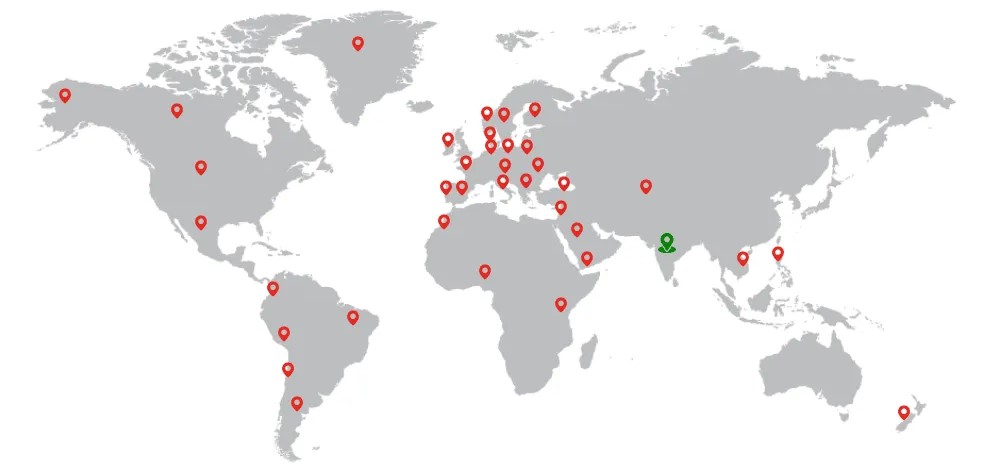
Countries Served
Years of Experience
Challenges We Help Solve
Challenges Logistics & Transportation Companies Face
Modern logistics and transportation businesses manage complex operations across fleets, drivers, warehouses, shipments, customers, carriers, and third-party systems. When these workflows depend on disconnected tools or manual processes, businesses can face limited visibility, operational delays, inefficient routing, and difficulty scaling their logistics operations.
A well-designed logistics software development strategy can connect these workflows through centralized transportation software, fleet management systems, warehouse solutions, mobile applications, APIs, real-time tracking, automation, and AI-powered logistics technology.
Turning Logistics Challenges Into Connected Digital Solutions
These challenges create opportunities for businesses to connect their operations through custom logistics software, transportation management systems, fleet management platforms, warehouse management software, logistics mobile apps, AI-powered logistics solutions, API integrations, cloud platforms, and workflow automation.
Limited Fleet & Shipment Visibility
Without connected fleet management software and shipment tracking software, logistics teams may have limited visibility into vehicle locations, shipment status, driver activity, delivery progress, and estimated arrival times.
A centralized logistics platform can connect GPS tracking, fleet data, shipment information, and operational dashboards to provide more connected visibility across transportation operations.
Inefficient Route Planning & Delivery Management
Poorly coordinated route planning can affect delivery schedules, vehicle utilization, and transportation operations.
Route optimization software can use operational, location, vehicle, and delivery information to support better route planning and delivery management workflows.
Warehouse & Transportation Data Silos
When warehouse management and transportation operations work through disconnected systems, teams may have difficulty coordinating inventory, orders, shipments, dispatch, and deliveries.
Warehouse management software (WMS) integrated with transportation and logistics platforms can help connect warehouse and transportation workflows.
Manual Proof of Delivery & Documentation
Paper-based or disconnected documentation can create additional work around delivery confirmation, signatures, receipts, invoices, and shipment records.
Logistics mobile app development can support digital proof of delivery, document capture, signatures, status updates, and communication between drivers and operations teams.
Legacy Logistics Software
Older logistics applications can become difficult to maintain, integrate, scale, or extend with modern capabilities.
Legacy logistics software modernization can help businesses gradually improve existing applications, APIs, databases, cloud infrastructure, user interfaces, and integrations without necessarily replacing the entire technology ecosystem at once.
Limited Logistics Analytics & Operational Insights
Without centralized logistics data, businesses may struggle to understand fleet performance, delivery activity, route efficiency, shipment status, warehouse operations, and other operational indicators.
Logistics analytics and AI-powered transportation software can bring operational data together for dashboards, reporting, forecasting, predictive insights, and data-driven decision-making.
Manual Dispatch & Transportation Operations
Manual dispatching can make it difficult to assign drivers, manage loads, update shipment statuses, and coordinate transportation operations efficiently.
Transportation management software development can help centralize dispatch, load management, driver assignments, shipment workflows, and transportation data within a connected platform.
Fragmented Logistics Systems
Logistics businesses may use separate systems for fleet management, warehouse operations, shipment tracking, customer management, accounting, and transportation management.
Through custom logistics software development, API development, and third-party integrations, these systems can be connected into a more unified technology environment.
Delayed Delivery & ETA Information
Customers and operations teams increasingly need access to shipment status, delivery progress, and estimated arrival information.
Real-time logistics tracking software can connect GPS, maps, shipment data, driver applications, and notification systems to support delivery visibility.
Complex Third-Party Integrations
Logistics platforms often need to communicate with ERP, CRM, WMS, TMS, GPS, telematics, maps, carrier, payment, and communication systems.
Logistics API integration can connect these systems through REST APIs, GraphQL, webhooks, authentication, and other integration methods based on the existing technology environment.
Scaling Logistics Operations
As shipment volumes, fleets, drivers, warehouses, customers, and business locations grow, logistics software needs to support increasing operational complexity.
Scalable logistics software development can combine cloud infrastructure, optimized backend architecture, databases, APIs, real-time systems, and mobile applications to support evolving business requirements.
Connectivity Challenges in Field Operations
Drivers and field teams may operate in environments where network connectivity is inconsistent. Logistics mobile applications therefore need workflows that can continue operating when connectivity is temporarily unavailable and synchronize data when the connection returns.
This is particularly relevant for logistics mobile app development, driver app development, fleet management applications, and delivery management software.
CORE SERVICES
Our Custom Logistics Software Development Services
Every logistics business has different workflows across transportation, fleet operations, warehouses, shipments, deliveries, customers, and supply chains. Square Infosoft provides custom logistics software development services that combine mobile, web, backend, API, cloud, AI, and UI/UX capabilities to build technology around those specific requirements.
Our logistics software development company capabilities cover transportation management, fleet management, warehouse operations, supply chain workflows, freight management, delivery operations, CRM, and AI-powered logistics solutions.
Transportation Management Software Development
Build custom Transportation Management Systems (TMS) to manage transportation planning, shipment workflows, dispatch, carrier operations, load management, route planning, delivery status, and transportation analytics.
Our transportation software development approach can connect web dashboards, mobile applications, backend systems, APIs, GPS data, and third-party platforms to create a connected transportation management environment.
Key capabilities
- Transportation planning and scheduling
- Load and shipment management
- Dispatch management
- Carrier management
- Driver assignment
- Route planning
- Real-time shipment visibility
- ETA tracking
- Transportation analytics
Fleet Management Software Development
Develop fleet management software to help businesses manage vehicles, drivers, routes, maintenance, fuel activity, GPS data, and fleet operations from connected digital platforms.
Fleet management solutions can include
- GPS vehicle tracking
- Driver management
- Vehicle management
- Geofencing
- Fuel monitoring
- Maintenance workflows
- Driver activity tracking
- Fleet dashboards
- Real-time alerts
- Fleet analytics
Warehouse Management Software Development
Develop custom Warehouse Management Systems (WMS) to connect inventory, warehouse operations, order processing, picking, packing, stock movement, and fulfillment workflows.
Our warehouse software development capabilities can support
- Inventory management
- Barcode and QR code workflows
- Stock tracking
- Order management
- Picking and packing
- Warehouse dashboards
- Inventory visibility
- Warehouse staff workflows
- Integration with transportation systems
Supply Chain Software Development
Build custom supply chain software that connects suppliers, procurement, inventory, orders, transportation, warehouses, and distribution operations.
Supply chain software can provide centralized visibility across business workflows while supporting data integration, operational reporting, analytics, and supply chain management.
Explore Supply Chain Software Development →Freight Management Software Development
Develop freight management software for businesses managing freight bookings, shipments, carriers, documentation, billing, tracking, and transportation workflows.
Solutions can support
- Freight booking
- Shipment management
- Carrier management
- Freight tracking
- Documentation
- Billing workflows
- Customer communication
- Shipment dashboards
- Operational reporting
Logistics CRM Development
Build a logistics CRM to manage customers, leads, accounts, communication, service requests, shipment-related interactions, and customer information.
A logistics CRM can connect with transportation software, shipment tracking systems, ERP platforms, communication tools, and other business applications through APIs and integrations.
Explore Logistics CRM Development →Last-Mile Delivery App Development
Develop last-mile delivery applications for drivers, dispatchers, customers, and operations teams.
A custom last-mile delivery app can support
- Delivery assignments
- Driver navigation
- Route information
- Delivery status updates
- GPS tracking
- Proof of delivery
- Digital signatures
- Document capture
- Customer notifications
- Delivery history
AI-Powered Logistics Software Development
Integrate AI into logistics software to support operational intelligence, automation, forecasting, optimization, and decision-making.
AI-powered logistics applications can include
- AI route optimization
- Predictive fleet maintenance
- Demand forecasting
- Predictive ETA
- AI logistics agents
- Intelligent document processing
- Logistics analytics
- AI-powered customer support
- Supply chain intelligence
- Workflow automation
End-to-End Logistics Technology Development
Our broader software development services for logistics and transportation businesses can bring together:
This allows businesses to develop connected logistics platforms instead of building isolated applications for individual operational processes.
Discuss Your Logistics Software Requirements →Ready to Build Custom Logistics & Transportation Software for Your Business?
Have a logistics software idea, an existing platform to modernize, or a complex transportation workflow that needs a digital solution? Square Infosoft can help you plan and develop custom logistics software, transportation software, logistics mobile apps, fleet management platforms, TMS, WMS, delivery solutions, and AI-powered logistics applications around your business requirements.
From product discovery and logistics software development to UI/UX design, mobile and web development, API integration, AI, cloud deployment, QA, and ongoing maintenance, we can support your product development journey.
RESULTS AND CASE STUDIES
Our Mobile App Development Success Stories Across Digital Products
Real-world logistics software requires technology that can support fleet tracking, transportation operations, route optimization, shipment visibility, driver workflows, and operational management. Our logistics portfolio includes a custom freight optimization web portal built to bring these workflows together in one connected platform.


What Our Clients Say
What Our Clients Say About Working With Us



Kreg Thornley
Marketing Director, Alchemy Spetec Tucker, Georgia, United States
James Guttman
San Francisco, California, United StatesBusiness Types We Serve
Logistics & Transportation Businesses We Serve Solutions for Different Business Types
Different logistics businesses operate with different transportation workflows, fleet structures, delivery models, warehouse requirements, and customer processes. Our logistics software development services can be adapted to the operational requirements of freight companies, 3PL providers, delivery businesses, supply chain organizations, and logistics startups.
Square Infosoft develops custom logistics software, transportation software, logistics mobile apps, fleet management platforms, shipment tracking systems, warehouse solutions, and AI-powered logistics applications for different logistics and transportation business models.
Freight & Trucking Companies
Develop trucking and freight management software to support fleet operations, driver management, dispatch, shipment tracking, route planning, GPS tracking, freight documentation, and delivery workflows.
Third-Party Logistics (3PL) Companies
Build 3PL logistics software to connect customers, carriers, warehouses, shipments, transportation operations, and fulfillment workflows through centralized platforms.
Fourth-Party Logistics (4PL) Companies
Develop 4PL technology platforms for coordinating multiple logistics providers, transportation networks, supply chain activities, reporting, and operational visibility.
Courier & Parcel Delivery Companies
Create courier management software and delivery applications for parcel assignment, driver management, route planning, real-time tracking, delivery status, proof of delivery, and customer notifications.
Last-Mile Delivery Businesses
Build last-mile delivery software and mobile applications for managing delivery assignments, driver routes, GPS tracking, customer communication, delivery status, digital proof of delivery, and ETA information.
E-Commerce Logistics Companies
Develop ecommerce logistics software that connects orders, inventory, warehouses, fulfillment, shipments, delivery operations, and customer tracking.
Cold Chain Logistics Companies
Build cold chain logistics software to support shipment monitoring, transportation visibility, location tracking, operational alerts, and connected logistics workflows where applicable.
Freight Forwarders
Develop freight forwarding software to manage shipments, documentation, carrier coordination, tracking, customer communication, and freight operations.
Maritime & Shipping Logistics
Build maritime logistics software and connected transportation platforms for shipment management, tracking, documentation, operational workflows, and integrations.
Air Cargo Logistics Companies
Develop air cargo logistics software for shipment management, tracking, documentation, operational coordination, and integration with connected transportation systems.
Rail Transportation Businesses
Create rail transportation software to support scheduling, shipment visibility, transportation management, operational tracking, and connected logistics workflows.
Warehousing & Distribution Companies
Develop warehouse management software (WMS) and distribution solutions for inventory, stock movement, order fulfillment, warehouse operations, shipment coordination, and logistics visibility.
Logistics Startups
Build scalable logistics software and logistics mobile apps for startups developing new transportation, delivery, freight, fleet, marketplace, or supply chain products.
Build Custom Logistics Software for Your Business
Whether you operate a freight company, 3PL, courier business, e-commerce logistics operation, warehouse, or transportation network, Square Infosoft can help you build technology around your workflows.
From custom logistics software development and transportation software development to logistics mobile apps, fleet management software, TMS, WMS, shipment tracking, delivery platforms, and AI-powered logistics solutions, we can support your product from planning through development and ongoing improvement.
Solutions
Logistics Software Development Solutions We Build
Logistics businesses need connected technology to manage transportation, fleets, shipments, warehouses, deliveries, and supply chain operations from a single digital ecosystem. Square Infosoft develops custom logistics software solutions designed around specific business workflows, operational requirements, user roles, and integration needs.
Our logistics software development capabilities cover transportation management, fleet tracking, driver operations, shipment visibility, warehouse management, route optimization, freight management, supply chain visibility, courier operations, and delivery management.
Transportation Management System (TMS)
Develop a custom Transportation Management System (TMS) to manage transportation planning, shipment scheduling, carrier operations, dispatch, load management, route planning, delivery tracking, and transportation analytics.
Key capabilities:
- Shipment and load planning
- Carrier management
- Dispatch management
- Route planning and optimization
- Real-time shipment tracking
- ETA management
- Transportation dashboards
- Reporting and analytics
- TMS API integrations
Fleet Tracking Software
Build fleet tracking software that provides real-time visibility into vehicles, drivers, routes, and fleet operations through GPS and telematics integrations.
Key capabilities:
- GPS vehicle tracking
- Real-time fleet visibility
- Driver tracking
- Geofencing
- Vehicle status monitoring
- Fuel management
- Maintenance tracking
- Route monitoring
- Fleet analytics
- Alerts and notifications
Driver Management Platform
Create a centralized driver management platform for assigning jobs, monitoring driver activity, managing communication, and connecting drivers with dispatch and transportation operations.
Key capabilities:
- Driver profiles
- Job and delivery assignments
- Driver status tracking
- Route and navigation support
- Driver communication
- Delivery status updates
- Digital documents
- Proof of delivery
- Driver performance insights
Shipment Tracking Software
Develop shipment tracking software that gives logistics teams and customers real-time visibility into shipment status, locations, ETAs, and delivery progress.
Key capabilities:
- Real-time shipment tracking
- Shipment status updates
- GPS and location tracking
- ETA visibility
- Customer tracking portals
- Delivery notifications
- Tracking history
- Exception alerts
- Shipment analytics
Warehouse Management System (WMS)
Build a custom Warehouse Management System (WMS) to manage inventory, warehouse operations, orders, picking, packing, stock movement, and warehouse visibility.
Key capabilities:
- Inventory management
- Barcode and QR code support
- Stock tracking
- Order management
- Picking and packing workflows
- Warehouse receiving
- Dispatch management
- Multi-location inventory
- Warehouse dashboards
- WMS integrations
Route Optimization Platform
Develop route optimization software to help transportation and delivery businesses plan efficient routes based on locations, delivery requirements, vehicle availability, and operational constraints.
Key capabilities:
- Route planning
- Multi-stop optimization
- Driver assignment
- Delivery scheduling
- GPS and maps integration
- Traffic-aware routing
- Route deviation alerts
- ETA calculation
- Delivery performance analytics
Freight Management Software
Build freight management software for managing freight bookings, carriers, shipments, transportation documents, tracking, billing, and customer communication.
Key capabilities:
- Freight booking
- Carrier management
- Shipment management
- Freight tracking
- Rate and quote management
- Digital documentation
- Billing workflows
- Customer communication
- Freight analytics
Supply Chain Visibility Platform
Develop supply chain software that connects suppliers, warehouses, transportation operations, carriers, and customers to provide better visibility across the supply chain.
Key capabilities:
- Shipment visibility
- Supplier information
- Purchase order tracking
- Inventory visibility
- Transportation tracking
- Exception management
- Supply chain dashboards
- Operational analytics
- Third-party system integrations
Courier Management System
Create a courier management system for managing courier orders, delivery assignments, drivers, routes, shipment tracking, and customer notifications.
Key capabilities:
- Courier order management
- Delivery assignment
- Driver management
- Route planning
- Real-time tracking
- Proof of delivery
- Customer notifications
- Delivery status management
- Courier performance analytics
Delivery Management Platform
Build a delivery management platform that connects customers, drivers, dispatchers, and operations teams through coordinated delivery workflows.
Key capabilities:
- Delivery scheduling
- Driver assignment
- Real-time delivery tracking
- Route optimization
- Digital proof of delivery
- Signature and document capture
- Customer notifications
- Failed delivery workflows
- Delivery analytics
Logistics Marketplace & Automation Platforms
For logistics businesses that need more specialized digital ecosystems, Square Infosoft can develop logistics marketplace platforms, freight platforms, delivery marketplaces, and logistics automation solutions that connect multiple users, partners, carriers, and operational workflows.
These platforms can combine mobile applications, web dashboards, backend systems, APIs, real-time tracking, payment integrations, AI, analytics, and cloud infrastructure based on the business model.
AI Solution’s
AI-Powered Logistics Software & Advanced Technologies
Artificial intelligence is transforming logistics and transportation by helping businesses optimize routes, predict operational issues, improve fleet performance, automate repetitive workflows, and gain better visibility across transportation and supply chain operations.
Square Infosoft develops AI-powered logistics software by combining AI, machine learning, real-time data, automation, IoT, GPS, telematics, and cloud technologies with existing logistics platforms. AI capabilities can be integrated into new logistics applications or added to existing transportation and logistics software.
AI Route Optimization
Develop AI-powered route optimization solutions that analyze transportation data, delivery locations, vehicle availability, and operational conditions to support more efficient route planning.
AI capabilities can include:
- Dynamic route planning
- Multi-stop route optimization
- Delivery sequence optimization
- ETA prediction
- Route deviation detection
- Driver and vehicle assignment
- Real-time route recommendations
AI-Powered Fleet Management
Enhance fleet management software with AI-driven insights that help businesses monitor vehicles, drivers, routes, and operational performance.
AI can support:
- Fleet performance analysis
- Driver behavior analysis
- Fuel efficiency insights
- Vehicle utilization analysis
- Maintenance predictions
- Anomaly detection
- Fleet performance forecasting
Predictive Fleet Maintenance
Use machine learning and vehicle data to identify potential maintenance requirements before they become major operational problems.
Predictive maintenance solutions can analyze vehicle usage, telematics data, diagnostic information, maintenance history, and operational patterns to generate maintenance alerts and recommendations.
AI Demand Forecasting for Logistics
Develop AI demand forecasting solutions that analyze historical and operational data to help logistics businesses anticipate transportation, inventory, delivery, and capacity requirements.
Potential applications include:
- Shipment demand forecasting
- Delivery volume prediction
- Inventory demand forecasting
- Capacity planning
- Warehouse planning
- Seasonal demand analysis
Predictive ETA & Delivery Intelligence
AI can analyze historical delivery data, routes, locations, transportation conditions, and operational patterns to improve ETA prediction and delivery intelligence.
This can support:
- Predictive delivery times
- Delay detection
- Shipment risk identification
- Delivery exception alerts
- Customer notifications
- Operational decision-making
AI Dispatch Optimization
Build intelligent dispatch workflows that use business rules, real-time operational data, vehicle availability, driver information, locations, and delivery requirements to support dispatch decisions.
AI-powered dispatch can help with:
- Driver assignment
- Vehicle allocation
- Delivery prioritization
- Load assignment
- Dispatch recommendations
- Exception handling
AI Logistics Agent Development
Develop AI logistics agents that can assist employees and customers with logistics workflows, information retrieval, operational tasks, and repetitive processes.
AI logistics agents can support:
- Shipment status inquiries
- Delivery information
- Dispatch assistance
- Customer support
- Logistics data retrieval
- Operational alerts
- Workflow assistance
- Document-related tasks
Generative AI for Logistics Operations
Integrate Generative AI into logistics applications to make operational data and workflows easier to access and manage.
Potential applications include:
- AI logistics assistants
- Natural-language search
- Automated operational summaries
- Intelligent customer support
- Report generation
- Internal knowledge assistants
- Logistics workflow assistance
AI Document Processing for Logistics
Use AI and document-processing technologies to extract and organize information from logistics documents and reduce manual data entry.
Applications can include:
- Freight documents
- Delivery documents
- Invoices
- Receipts
- Shipping documents
- Proof-of-delivery documents
- Automated document classification
- Data extraction workflows
AI-Powered Supply Chain Analytics
Combine AI, machine learning, and logistics analytics to identify patterns across transportation, inventory, shipments, warehouses, suppliers, and delivery operations.
AI-powered analytics can support:
- Supply chain forecasting
- Shipment risk analysis
- Exception detection
- Operational performance analysis
- Demand prediction
- Supply chain visibility
- Predictive logistics analytics
Computer Vision for Warehouse Operations
Computer vision can be integrated into logistics and warehouse applications for image-based operational workflows.
Potential applications include:
- Package identification
- Barcode and label recognition
- Inventory verification
- Warehouse monitoring
- Package condition analysis
- Automated visual inspection
IoT, GPS & Telematics for Intelligent Logistics
Connect IoT devices, GPS systems, vehicle telematics, and logistics software to collect real-time operational data and make it available across fleet, transportation, and supply chain platforms.
This can enable:
- Real-time vehicle tracking
- Vehicle health monitoring
- Driver activity data
- Geofencing
- Sensor data collection
- Fleet analytics
- Predictive maintenance
- Real-time logistics visibility
AI Integration Into Existing Logistics Software
Businesses do not always need to replace their existing logistics platforms. Square Infosoft can integrate AI capabilities into existing logistics software, transportation management systems, fleet platforms, mobile apps, and enterprise applications through APIs and modern AI technologies.
AI integration can include AI APIs, machine learning models, Generative AI, AI agents, predictive analytics, NLP, computer vision, and recommendation systems, depending on the business requirement.
Tech Stack
Technology Stack for Logistics Software Development
Modern logistics platforms require a technology stack that can support real-time tracking, transportation management, mobile applications, operational dashboards, API integrations, AI workloads, cloud scalability, and large volumes of logistics data.
Square Infosoft selects technologies based on the project’s business requirements, scalability, performance, integration needs, and existing infrastructure rather than using the same stack for every logistics application.
We build logistics mobile applications for drivers, dispatchers, warehouse teams, fleet managers, and customers.
These technologies can support logistics use cases such as GPS tracking, driver applications, delivery management, shipment updates, offline workflows, navigation, proof of delivery, and real-time notifications.
We develop responsive web applications, transportation dashboards, fleet management portals, shipment tracking interfaces, and operational control panels.
Frontend technologies can be used for TMS dashboards, fleet tracking platforms, shipment portals, warehouse dashboards, customer portals, logistics analytics, and real-time operational interfaces.
The backend manages logistics business logic, real-time tracking, transportation workflows, integrations, data processing, and API communication.
Node.js can support real-time logistics events and tracking APIs, while Python can support AI, machine learning, analytics, and data-processing workloads.
Logistics applications generate data across vehicles, drivers, shipments, customers, warehouses, orders, routes, and operational transactions.
The database architecture can be selected according to the application's data structure, transaction requirements, real-time capabilities, scalability, and performance requirements.
Cloud infrastructure helps logistics platforms support scalable applications, real-time operations, APIs, mobile backends, analytics, and distributed users.
These technologies can support cloud-based logistics software, scalable transportation platforms, real-time tracking infrastructure, API services, application deployment, and containerized environments.
For AI-powered logistics software development, we can use AI and machine learning technologies based on the required use case.
These technologies can support AI route optimization, predictive maintenance, demand forecasting, AI logistics agents, document processing, predictive analytics, intelligent assistants, and AI-powered supply chain solutions.
Logistics platforms often require location and vehicle data to support real-time transportation operations. Technology integrations can support:
These capabilities can connect fleet management software, transportation management systems, delivery applications, and logistics dashboards with real-world transportation data.
DevOps technologies support reliable development, testing, deployment, monitoring, and scaling of logistics applications. Technologies may include:
The exact DevOps architecture is selected according to the application's infrastructure, scalability, deployment, and operational requirements.
Real-time logistics applications require continuous communication between drivers, vehicles, customers, dispatchers, and backend systems. Technology can include:
These technologies can support live fleet tracking, shipment status updates, driver communication, delivery notifications, dispatch updates, and operational alerts.
DEVELOPMENT PROCESS
Our Logistics & Transportation Software Development Process
Building logistics software requires more than development alone. Transportation workflows, fleet operations, shipment tracking, warehouse processes, mobile applications, APIs, GPS integrations, AI capabilities, security, and scalability all need to work together.
Our logistics software development process combines business analysis, solution architecture, UI/UX design, mobile and web development, API integration, QA testing, deployment, and ongoing maintenance.
01. Logistics Business & Workflow Discovery
We begin by understanding your logistics operations, users, workflows, technology requirements, and business objectives.
This stage helps define the right approach for custom logistics software development, transportation platforms, fleet management software, TMS, WMS, delivery applications, or logistics mobile apps.
02. Logistics Solution Architecture & Planning
After understanding the requirements, we plan the technical foundation of the logistics platform.
The architecture is planned around performance, scalability, security, integrations, and future product growth.
03. Logistics UI/UX Design & Prototyping
We design user experiences around the different people interacting with the logistics platform.
This can include
Wireframes and interactive prototypes help validate user journeys and workflows before development begins.
04. Mobile, Web & Backend Development
Once the design and architecture are approved, development begins across the required platforms.
Our logistics software development can include
Development is structured around the defined logistics workflows and product requirements.
05. API, GPS & Third-Party Integration
Logistics platforms often need to communicate with multiple external systems and devices.
We can integrate
These integrations help create a connected transportation and logistics software platform instead of isolated systems.
06. QA, Security & Performance Testing
Before production deployment, the platform goes through structured testing based on its functionality and operational requirements.
Testing can include
For logistics platforms, testing can also focus on real-time tracking, GPS data, shipment updates, driver workflows, delivery status, API synchronization, and operational dashboards.
07. Deployment & Production Launch
After successful testing and approval, we prepare the logistics software for production.
The launch process can include
The deployment approach depends on the platform architecture, business requirements, integrations, and operational environment.
08. Logistics Software Maintenance & Continuous Improvement
Our work can continue after launch through logistics software maintenance and modernization.
Ongoing support can include
This allows your logistics software to evolve as your fleet, users, shipments, integrations, and business requirements grow.
WHY CHOOSE US
Why Choose Square Infosoft for Logistics & Transportation Software Development?
Choosing a technology partner for a logistics platform requires more than development capabilities. Logistics software often connects mobile applications, transportation operations, fleet data, warehouses, APIs, GPS systems, cloud infrastructure, AI, and business applications.
Square Infosoft combines logistics software development, transportation software development, mobile app development, web development, backend development, API integration, AI development, cloud technologies, and QA testing to build technology around your business workflows and long-term requirements.
End-to-End Logistics Software Development Expertise
We can support the complete development lifecycle, from business discovery and UI/UX design to development, integration, testing, deployment, and ongoing maintenance.
Our capabilities include:
– Custom Logistics Software Development
– Transportation Software Development
– Logistics App Development
– Logistics Mobile App Development
– Fleet Management Software Development
– TMS Development
– WMS Development
– Backend and API Development
– AI-Powered Logistics Software
– Cloud-Based Logistics Solutions
– QA and Software Testing
– Logistics Software Maintenance
Logistics-Focused Technology Architecture
Logistics platforms often require multiple connected systems rather than a single application.
We design solutions around requirements such as:
– Real-time fleet and shipment tracking
– Transportation management workflows
– Driver and delivery operations
– Warehouse management
– Route planning and optimization
– GPS and telematics
– Third-party APIs
– Real-time data synchronization
– Cloud infrastructure
– Operational dashboards
This helps create a connected technology environment around your logistics operations.
Custom Software Built Around Your Workflows
Every logistics company operates differently. Fleet sizes, transportation workflows, warehouse processes, delivery models, user roles, integrations, and business rules can vary significantly.
Our custom logistics software development approach allows the platform to be designed around your existing processes, technology environment, operational requirements, and future product roadmap.
Mobile, Web & Backend Development Under One Development Approach
Modern logistics operations often require multiple applications working together.
We can develop and connect:
– Driver mobile applications
– Delivery management apps
– Fleet management applications
– Dispatcher dashboards
– Warehouse applications
– Customer portals
– Admin panels
– Transportation management platforms
– Backend systems
– APIs and integrations
This supports consistent functionality across mobile, web, and backend systems.
AI & Automation Capabilities for Logistics
AI can be integrated into logistics workflows where it provides practical value.
Our logistics AI capabilities can include:
– AI Route Optimization
– AI Fleet Management
– Predictive Fleet Maintenance
– Predictive ETA
– AI Dispatch Optimization
– AI Logistics Agent Development
– AI Document Processing
– AI-Powered Supply Chain Analytics
– Generative AI for Logistics
– Logistics Workflow Automation
AI capabilities can also be integrated into an existing logistics platform rather than requiring an entirely new system.
Integration-Ready Logistics Platforms
Logistics businesses commonly depend on existing ERP, CRM, TMS, WMS, GPS, telematics, payment, communication, and other third-party systems.
Our logistics API development and integration capabilities support connected platforms through technologies and integration approaches such as REST APIs, GraphQL, webhooks, authentication systems, and third-party APIs.
Scalable Mobile & Web Applications
Logistics platforms need to support changing operational requirements as businesses expand.
We develop mobile and web applications with architecture planned around factors such as:
– Growing users
– Increasing fleet and shipment data
– Additional business locations
– New integrations
– Additional user roles
– Expanding functionality
– Cloud infrastructure requirements
– Future AI capabilities
Quality Assurance Across Logistics Workflows
Our QA approach can cover the functionality and integrations that are important to logistics platforms.
Testing can include:
– Functional testing
– Mobile and web testing
– API testing
– Integration testing
– Performance testing
– Security testing
– Regression testing
– Cross-platform testing
– User acceptance testing
This is particularly relevant for applications involving real-time tracking, shipment updates, driver workflows, GPS data, delivery management, and operational dashboards.
Long-Term Logistics Software Support & Modernization
Our involvement can continue after the initial launch through logistics software maintenance, modernization, and enhancement.
Support can include:
– Bug fixes
– Feature enhancements
– Performance optimization
– Security updates
– Technology upgrades
– API updates
– New integrations
– AI feature improvements
– Cloud optimization
– Legacy application modernization
This allows your logistics technology to evolve alongside your business.
Technology Partnership for Startups, SMBs & Enterprises
We can work with different business stages and technology requirements, whether you are:
– Building a new logistics product
– Launching a logistics startup
– Developing an MVP
– Modernizing an existing platform
– Connecting disconnected logistics systems
– Adding AI to an existing application
– Scaling an established logistics platform
The development approach can be adapted to your product scope, technology requirements, and business objectives.
FAQ’s
Frequently Asked Questions About Logistics & Transportation Software Development
What is logistics software development?
Logistics software development is the process of designing and building digital systems that help logistics and transportation businesses manage operations such as fleet management, shipment tracking, transportation planning, warehouse operations, delivery management, route optimization, supply chain visibility, and customer communication.
Custom logistics software can include web applications, mobile apps, backend systems, dashboards, APIs, integrations, and AI-powered logistics solutions.
What types of logistics software can you develop?
Square Infosoft can develop different types of custom logistics software based on business requirements, including:
- Transportation Management Systems (TMS)
- Fleet Management Software
- Warehouse Management Systems (WMS)
- Shipment Tracking Software
- Delivery Management Platforms
- Route Optimization Software
- Freight Management Software
- Courier Management Systems
- Supply Chain Visibility Platforms
- Driver Management Platforms
- Logistics CRM Systems
- Logistics Mobile Applications
Can you develop a custom Transportation Management System (TMS)?
Yes. A custom TMS development solution can be designed around your transportation workflows.
Depending on requirements, a TMS can include shipment planning, load management, carrier management, dispatching, route planning, real-time tracking, ETA information, transportation analytics, notifications, and third-party integrations.
Can you build fleet management software?
Yes. Fleet management software development can include GPS tracking, vehicle management, driver management, geofencing, fuel monitoring, maintenance scheduling, route monitoring, alerts, dashboards, and fleet analytics.
The functionality can be customized according to fleet size, vehicle types, operational workflows, and tracking requirements.
Can you develop a logistics mobile app?
Yes. We can develop logistics mobile applications for drivers, delivery teams, fleet managers, warehouse staff, dispatchers, and customers.
A logistics mobile app can include GPS tracking, delivery assignments, navigation, shipment status, proof of delivery, digital documents, notifications, communication, and offline workflows where required.
Can you build a driver app for logistics companies?
Yes. A custom driver app development solution can provide drivers with assigned deliveries, navigation, route information, shipment details, status updates, proof of delivery, digital signatures, documents, notifications, and communication with dispatch teams.
Can logistics software support GPS and real-time tracking?
Yes. Logistics platforms can integrate GPS and location technologies to support real-time vehicle, driver, shipment, and delivery tracking.
Depending on the project, tracking functionality can also include geofencing, route monitoring, location history, ETA information, alerts, and operational dashboards.
Can you integrate logistics software with existing ERP, TMS or WMS systems?
Yes. Logistics API development and integration can connect custom logistics applications with existing ERP, CRM, TMS, WMS, payment, GPS, telematics, communication, and other third-party systems.
Integration requirements are assessed during the discovery and solution architecture stages.
Can you develop Warehouse Management Software (WMS)?
Yes. Custom WMS development can support warehouse workflows such as inventory management, barcode and QR scanning, receiving, stock management, order processing, picking, packing, multi-location inventory, dashboards, and integrations with transportation or business systems.
How can AI improve logistics operations?
AI can support logistics operations through use cases such as:
- AI route optimization
- Predictive ETA
- AI dispatch optimization
- Predictive fleet maintenance
- Demand forecasting
- AI-powered supply chain analytics
- AI document processing
- Logistics AI agents
- Generative AI assistants
- Exception and workflow automation
The appropriate AI capabilities depend on available data, business workflows, and the specific logistics problem being addressed.
Can you integrate AI into existing logistics software?
Yes. AI can be integrated into an existing logistics platform through AI APIs, machine learning models, generative AI, predictive analytics, AI agents, NLP, computer vision, or recommendation systems.
The integration approach depends on the existing architecture, data sources, security requirements, and intended AI use case.
Can you build last-mile delivery software?
Yes. Last-mile delivery software development can support delivery scheduling, driver assignment, route planning, GPS tracking, delivery status, proof of delivery, digital signatures, notifications, failed deliveries, and delivery analytics.
Can you develop software for 3PL companies?
Yes. 3PL logistics software development can be customized for third-party logistics providers managing multiple customers, shipments, carriers, warehouses, drivers, and transportation workflows.
The platform can include customer portals, shipment management, tracking, billing workflows, carrier management, dashboards, APIs, and operational analytics based on requirements.
Can you modernize existing logistics software?
Yes. Existing logistics applications can be assessed for software modernization, application modernization, API modernization, cloud migration, mobile modernization, or legacy system integration.
The modernization approach depends on the existing technology stack, architecture, integrations, technical limitations, and business requirements.
How long does logistics software development take?
The development timeline depends on the scope and complexity of the project.
Factors that can affect the timeline include:
- Number of platforms
- Features and workflows
- User roles
- Mobile and web requirements
- TMS or WMS functionality
- GPS and real-time tracking
- Third-party integrations
- AI requirements
- Data migration
- Security and testing requirements
A more accurate timeline can be defined after requirements discovery and technical planning.
How much does logistics software development cost?
There is no single cost for custom logistics software. The investment depends on the product scope, complexity, platforms, integrations, technology requirements, AI functionality, scalability, security, and testing requirements.
A project estimate can be prepared after understanding your business requirements and technical scope.
How do we start a logistics software development project?
The process typically starts with a discussion about your business model, logistics workflows, users, existing systems, technology requirements, and project objectives.
From there, the team can define the scope, solution architecture, UI/UX requirements, technology approach, development process, and estimated project requirements.
Let’s Build Secure, Scalable Banking Software With Square Infosoft
Turn your banking product idea, modernization requirement, or digital transformation initiative into a secure and scalable software solution.
Whether you need custom banking software, core banking modernization, digital banking software, mobile banking app development, banking API integration, AI-powered banking solutions, or Generative AI development, our team can help you plan and build the right technology solution around your business requirements.
From initial discovery and architecture to development, integrations, security testing, deployment, and ongoing support, we provide end-to-end banking software development services for banks, FinTech companies, financial institutions, and banking technology businesses.

