

Introduction:
How AI is Transforming the Fitness Industry
Artificial intelligence is rapidly transforming the global fitness industry by enabling smarter workout planning, personalized training programs, and advanced performance tracking. Today, AI in fitness is being used in workout apps, wearable fitness devices, and digital coaching platforms to analyze user data, optimize training routines, and help individuals achieve their health and fitness goals more efficiently.
Traditional fitness programs often follow generalized training plans that may not suit every individual’s body type, performance level, or recovery needs. With artificial intelligence in fitness, advanced algorithms can analyze user activity, workout history, biometric data, and health metrics to deliver highly personalized workout recommendations. These AI-driven insights help users improve performance, reduce injury risks, and maintain long-term fitness consistency.
AI technologies are also solving several common problems in the fitness industry such as lack of personalized coaching, incorrect exercise form, and difficulty tracking long-term progress. Modern AI fitness apps use technologies like motion tracking, predictive analytics, and machine learning to provide real-time workout feedback and adaptive training programs.
For example, AI-powered fitness platforms such as Freeletics and Fitbod use intelligent algorithms to generate personalized workout routines based on user performance and recovery patterns. Similarly, wearable fitness technologies like Whoop analyze biometric data to deliver insights about recovery, strain, and sleep quality.
As the demand for digital health and wellness solutions continues to grow, AI fitness technologies are becoming essential tools for building smarter training platforms, connected gym ecosystems, and personalized health and fitness experiences.
In this guide, we explore the applications of AI in fitness, real-world use cases, emerging technologies, benefits for athletes and everyday users, and the future of AI-powered fitness innovation.

What is AI in Fitness?
Artificial intelligence in fitness refers to the use of advanced technologies such as machine learning, computer vision, and predictive analytics to analyze workout data, track physical activity, and deliver personalized training recommendations. AI in fitness enables digital platforms and mobile applications to understand user behavior, monitor performance, and provide real-time insights that help individuals improve their health and fitness routines.
Unlike traditional fitness programs that rely on generic workout plans, AI fitness systems analyze large amounts of user data including workout history, body metrics, recovery patterns, and health indicators. By processing this information, AI fitness applications can generate personalized workout plans, recommend optimal training intensity, and adapt exercise routines based on individual progress.
Definition of Artificial Intelligence in Fitness
Artificial intelligence in fitness involves integrating intelligent algorithms into fitness apps, wearable devices, and digital coaching platforms to analyze physical activity and health data. These systems use AI models to detect patterns in exercise performance, track workout progress, and provide actionable insights that help users train more effectively.
Modern AI fitness technology powers a wide range of digital fitness solutions including AI workout apps, AI personal trainer apps, and AI fitness tracking systems. These platforms continuously analyze user behavior to optimize workouts, suggest recovery strategies, and deliver personalized health and fitness guidance.
How AI Works in Fitness Apps and Platforms
AI fitness platforms work by collecting and analyzing data from multiple sources such as smartphone sensors, wearable fitness devices, and connected gym equipment. This data includes metrics such as heart rate, step count, calorie expenditure, workout duration, and movement patterns.
Using machine learning algorithms, AI workout apps evaluate this data to understand user fitness levels and training progress. Based on these insights, the system can automatically adjust workout intensity, recommend new exercises, and provide real-time feedback during training sessions.
Many AI personal trainer apps also use motion tracking and computer vision technology to analyze exercise form. This allows the system to detect incorrect posture, provide form correction suggestions, and help users avoid injuries while performing workouts.
Key Technologies Behind AI Fitness Systems
Several advanced technologies power modern AI fitness platforms and applications.
Machine Learning in Fitness
Machine learning algorithms analyze user workout data and adapt training programs based on performance trends and recovery metrics.
Computer Vision for Exercise Tracking
Computer vision technology enables AI systems to track body movement and analyze exercise posture using smartphone cameras or smart fitness equipment.
Predictive Fitness Analytics
Predictive analytics models analyze historical workout data to recommend optimal training schedules, recovery periods, and performance improvements.
AI Fitness Data Analytics
AI-driven analytics platforms process large volumes of health and fitness data to provide insights about workout efficiency, calorie expenditure, and long-term fitness progress.
Together, these technologies form the foundation of modern AI fitness solutions, enabling smarter workout systems, connected gym environments, and highly personalized fitness experiences.
Looking to Build an AI Fitness App or Platform?
AI is transforming the fitness industry with personalized workout tracking, virtual coaching platforms, and wearable integrations. Square Infosoft helps startups, gyms, and digital health companies build intelligent AI-powered fitness applications using machine learning, data analytics, and modern mobile technologies.
Discuss Your AI Fitness App IdeaMajor Problems in the Fitness Industry That AI is Solving
The global fitness industry has grown rapidly in recent years, but it still faces several challenges that affect workout effectiveness, injury prevention, and long-term fitness engagement. Many individuals struggle with inconsistent training routines, lack of personalized coaching, and difficulty tracking progress over time. AI in fitness is helping address these issues by providing intelligent training systems that analyze workout data and deliver personalized fitness insights.
Modern AI fitness applications can analyze user behavior, workout performance, and health metrics to identify patterns and recommend optimized training strategies. By using machine learning and predictive analytics, AI-powered platforms help individuals overcome common fitness obstacles and achieve better results.
Below are some of the key problems in the fitness industry that artificial intelligence in fitness is helping solve.
Lack of Personalized Workout Programs
Traditional fitness programs often provide generalized workout routines that may not be suitable for every individual. People have different body types, fitness goals, recovery abilities, and training capacities, making one-size-fits-all programs ineffective.
AI-powered fitness recommendation systems analyze user data such as age, fitness level, workout history, and health metrics to generate personalized workout programs. Modern AI workout apps use adaptive training algorithms to adjust exercise intensity, workout duration, and recovery periods based on individual performance.
Incorrect Exercise Form and Injury Risks
Improper exercise form is one of the most common causes of workout-related injuries. Many individuals train without professional supervision, which increases the risk of performing exercises incorrectly.
AI-powered motion tracking systems and computer vision fitness tracking technology can analyze body movement and detect posture errors during workouts. These systems provide real-time feedback and posture correction suggestions, helping users improve exercise form and reduce injury risks.
Limited Progress Tracking and Performance Insights
Many fitness enthusiasts struggle to measure their progress accurately over time. Without detailed analytics, it can be difficult to understand whether a training routine is producing effective results.
AI-powered fitness tracking systems and wearable fitness devices collect detailed workout data such as heart rate, movement patterns, calorie expenditure, and workout intensity. AI algorithms analyze this data to generate fitness performance analytics, helping users understand their progress and optimize training routines.
Lack of Motivation and Workout Consistency
Maintaining consistent workout habits is another major challenge in the fitness industry. Many people start fitness programs but struggle to maintain motivation over time.
AI-powered virtual fitness coaches and AI personal trainer apps help improve user engagement by providing adaptive workout recommendations, performance insights, and motivational feedback. These intelligent systems can adjust workout programs based on user performance and provide personalized encouragement to keep users motivated.
Key Benefits of AI in Fitness
Artificial intelligence is transforming the fitness industry by enabling more personalized training programs, advanced performance tracking, and smarter health monitoring. One of the biggest advantages of AI in fitness is its ability to analyze large amounts of workout and health data to generate insights that help individuals train more effectively and achieve better results.
Unlike traditional fitness programs, AI fitness technology can adapt to user performance in real time, providing personalized workout recommendations, tracking progress, and optimizing training routines. These capabilities make AI-powered fitness platforms powerful tools for athletes, trainers, and everyday fitness enthusiasts.
Below are some of the most important benefits of artificial intelligence in fitness.
Personalized Workout Programs
One of the most significant benefits of AI fitness applications is their ability to generate highly personalized workout programs. AI-powered fitness systems analyze user data such as fitness goals, exercise history, body metrics, and performance levels to create customized training plans.
Many AI workout apps continuously adjust these programs based on user progress and recovery patterns, ensuring that each workout session remains effective and aligned with the individual’s fitness objectives.
Real-Time Workout Feedback
AI-powered fitness platforms can provide real-time feedback during workouts using motion tracking, computer vision, and wearable sensor data. These technologies help detect incorrect posture, analyze movement patterns, and provide suggestions to improve exercise form.
This feature is particularly valuable in AI personal trainer apps, where users receive immediate feedback and guidance while performing exercises, helping them train safely and efficiently.
Advanced Fitness Tracking and Analytics
Modern AI fitness tracking systems collect detailed data about workouts, including heart rate, movement patterns, workout intensity, and calorie expenditure. AI algorithms analyze this information to generate detailed fitness performance analytics.
These insights help users understand how their bodies respond to different exercises, track long-term progress, and optimize training routines for better results.
Improved Motivation and User Engagement
Maintaining consistent workout habits can be challenging, but AI technologies help improve user engagement through personalized coaching and adaptive training programs. AI virtual fitness coaches analyze user behavior and performance to provide motivational feedback and recommendations.
Many AI fitness apps also use gamification and progress tracking features to encourage users to stay committed to their training routines and achieve their fitness goals.
Data-Driven Health and Fitness Insights
AI-powered fitness platforms combine workout data with health metrics such as sleep quality, recovery levels, and activity patterns. This allows AI systems to deliver more comprehensive health and fitness insights.
By analyzing these factors, AI fitness analytics platforms can recommend optimal workout schedules, recovery periods, and lifestyle adjustments that help users maintain long-term wellness.
Applications of AI in Fitness
Artificial intelligence is being applied across multiple areas of the fitness industry, from personalized workout apps to intelligent gym equipment and wearable fitness technology. These AI fitness applications help users optimize workouts, monitor performance, and receive personalized fitness guidance based on real-time data.
Modern AI fitness platforms analyze workout behavior, biometric signals, and training history to deliver adaptive training recommendations. This allows fitness enthusiasts, athletes, and personal trainers to make more data-driven decisions and improve long-term fitness outcomes.
Below are some of the most common applications of AI in fitness.
AI Workout Apps
AI-powered workout apps are among the most popular digital fitness solutions today. These applications analyze user fitness data and create personalized training routines tailored to individual goals and fitness levels.
For example, platforms like Freeletics use machine learning algorithms to generate adaptive workout programs that evolve based on user performance and recovery levels. These AI workout apps provide step-by-step exercise guidance, track progress, and adjust training intensity automatically.
AI Personal Trainer Apps
AI personal trainer apps simulate the experience of working with a professional fitness coach. These applications use advanced analytics and user performance data to provide personalized workout recommendations and training insights.
Apps such as Fitbod analyze previous workouts, muscle recovery status, and training history to generate optimized strength training routines. By using AI-powered coaching systems, users can receive intelligent workout guidance without requiring constant supervision from a human trainer.
AI Fitness Tracking Systems
Fitness tracking has evolved significantly with the introduction of artificial intelligence. Modern AI fitness tracking systems combine wearable technology, mobile apps, and predictive analytics to monitor health and workout performance.
Devices and platforms such as Whoop analyze biometric data including heart rate variability, sleep patterns, and recovery metrics. These insights help users understand how their bodies respond to workouts and make adjustments to improve performance and recovery.
AI Gym Management and Smart Equipment
Artificial intelligence is also transforming traditional gym environments by enabling smart fitness equipment and automated gym management systems. AI-powered gym technologies can track equipment usage, monitor member activity, and provide personalized workout recommendations inside gym facilities.
Smart fitness equipment equipped with AI sensors can analyze movement patterns, adjust resistance levels, and guide users through optimal exercise techniques. These innovations are helping create connected gym ecosystems where training programs are personalized for each user.
AI Virtual Fitness Coaches
AI-powered virtual fitness coaches are becoming increasingly popular as digital fitness solutions expand. These intelligent coaching platforms analyze user behavior, workout patterns, and fitness goals to provide personalized training advice and motivational feedback.
Virtual fitness coaching systems combine AI algorithms, predictive analytics, and user engagement tools to help individuals maintain consistent workout routines and achieve long-term fitness progress.
Real-World AI Fitness Use Cases
Artificial intelligence is already transforming how people train, recover, and monitor their health. Across mobile apps, wearable fitness devices, and digital coaching platforms, AI in fitness is enabling more intelligent workout systems that adapt to individual performance and health data.
By analyzing large volumes of fitness data, AI fitness solutions can identify patterns, optimize training programs, and provide real-time feedback to improve workout efficiency and safety. These capabilities are helping athletes, trainers, and everyday fitness enthusiasts achieve better performance and long-term health outcomes.
Below are some of the most important real-world AI fitness use cases.
AI Motion Tracking and Workout Analysis
One of the most powerful applications of artificial intelligence in fitness is motion tracking and workout analysis. AI systems can analyze body movements using computer vision and motion tracking technologies to understand how exercises are performed.
These systems evaluate factors such as joint angles, body posture, and movement patterns during workouts. By analyzing this data, AI workout optimization platforms can provide recommendations to improve training efficiency and ensure exercises are performed correctly.
AI Posture Correction and Injury Prevention
Incorrect exercise posture is one of the most common causes of fitness injuries. AI-powered workout systems use computer vision fitness tracking and motion analysis algorithms to detect incorrect exercise form in real time.
These systems provide posture correction suggestions and injury prevention insights, helping users perform exercises safely. AI-powered fitness coaching tools can also recommend alternative exercises or recovery strategies to reduce injury risks.
AI Virtual Fitness Coaches
AI-powered virtual fitness coaches are transforming the digital fitness ecosystem by providing intelligent training guidance without requiring a human trainer. These systems analyze user performance data, fitness goals, and workout behavior to deliver adaptive coaching recommendations.
AI coaching platforms can adjust workout intensity, recommend new exercises, and track user progress over time. By using predictive fitness analytics, these platforms help users stay motivated and maintain consistent workout routines.
AI-Powered Wellness and Personal Growth Apps
Artificial intelligence is also being used in wellness and personal development applications that help users build healthier lifestyles and improve emotional wellbeing.
For example, SelfApp (MyTrueValue) is a health and fitness platform designed to help users improve self-worth, monitor emotional wellness, and build positive daily habits. The application integrates intelligent recommendation systems that guide users through self-reflection exercises, wellness tracking, and personal growth activities.
The platform analyzes user inputs and behavioral patterns to deliver personalized insights that encourage long-term mental wellness and healthier lifestyle choices.
Project link:
https://www.squareinfosoft.com/project/my-true-value/
Mobile app availability:
Android
https://play.google.com/store/apps/details?id=com.feelgoodcompany.feelgood
iOS
https://apps.apple.com/dk/app/my-true-value-grow-self-worth/id1497689443
This example demonstrates how AI-powered health and fitness apps can combine behavioral insights, wellness analytics, and digital coaching to support personal development and overall wellbeing.
Technologies Powering AI Fitness Platforms
Artificial intelligence in the fitness industry relies on several advanced technologies that enable intelligent workout systems, personalized coaching platforms, and real-time performance analysis. These technologies allow AI fitness platforms to analyze user behavior, monitor body movements, and generate data-driven workout recommendations.
Modern AI fitness applications integrate machine learning models, computer vision systems, wearable sensor data, and predictive analytics to create smarter digital fitness solutions. Together, these technologies power the next generation of AI-powered fitness systems and connected training environments.
Below are the key technologies behind modern AI fitness technology.
Machine Learning in Fitness Apps
Machine learning plays a central role in modern AI fitness applications. Machine learning algorithms analyze large volumes of user data including workout history, performance metrics, and health indicators to identify patterns and optimize training programs.
By analyzing this data, machine learning models can generate personalized workout plans, recommend recovery periods, and predict how different exercises impact individual fitness performance. Over time, these models continuously learn from user behavior and improve the accuracy of their recommendations.
Computer Vision for Exercise Tracking
Computer vision technology enables AI systems to analyze body movement and detect exercise posture using smartphone cameras or smart gym equipment. This technology is widely used in AI workout apps and AI personal trainer platforms.
Using computer vision fitness tracking, AI systems can detect body positioning, analyze movement patterns, and provide feedback on exercise technique. This helps users maintain proper form during workouts and reduce the risk of injury.
AI Motion Tracking and Body Analysis
AI motion tracking technology monitors body movements and analyzes how users perform different exercises. Motion tracking systems can detect joint angles, movement speed, and exercise posture to generate performance insights.
These systems are commonly used in AI smart fitness equipment and wearable fitness devices that monitor training sessions and provide real-time feedback. Motion tracking technology helps users improve workout efficiency and maintain proper training techniques.
Predictive Fitness Analytics
Predictive analytics uses historical workout data and health metrics to forecast future performance outcomes and recommend optimal training strategies. These systems analyze factors such as workout intensity, recovery patterns, sleep quality, and heart rate variability.
By using AI fitness analytics, predictive models can recommend personalized workout schedules, suggest recovery periods, and help users avoid overtraining. This data-driven approach improves both fitness performance and long-term health outcomes.
AI in Wearable Fitness Devices
Wearable technology has become an essential part of the modern fitness ecosystem. Devices such as smartwatches, fitness trackers, and connected health monitors now use artificial intelligence to analyze user health data and provide personalized fitness insights. These AI-powered wearable fitness devices help users monitor their physical activity, track health metrics, and optimize workout performance.
Modern AI fitness tracking systems collect a wide range of biometric data including heart rate, step count, sleep patterns, calorie expenditure, and activity levels. By processing this data using machine learning algorithms, AI fitness platforms can generate personalized fitness recommendations and provide insights that help users improve their overall health and fitness.
Wearable devices also enable real-time monitoring, allowing users to receive immediate feedback during workouts and adjust their training intensity accordingly. This integration of AI fitness analytics and wearable technology is transforming how individuals approach fitness and health management.
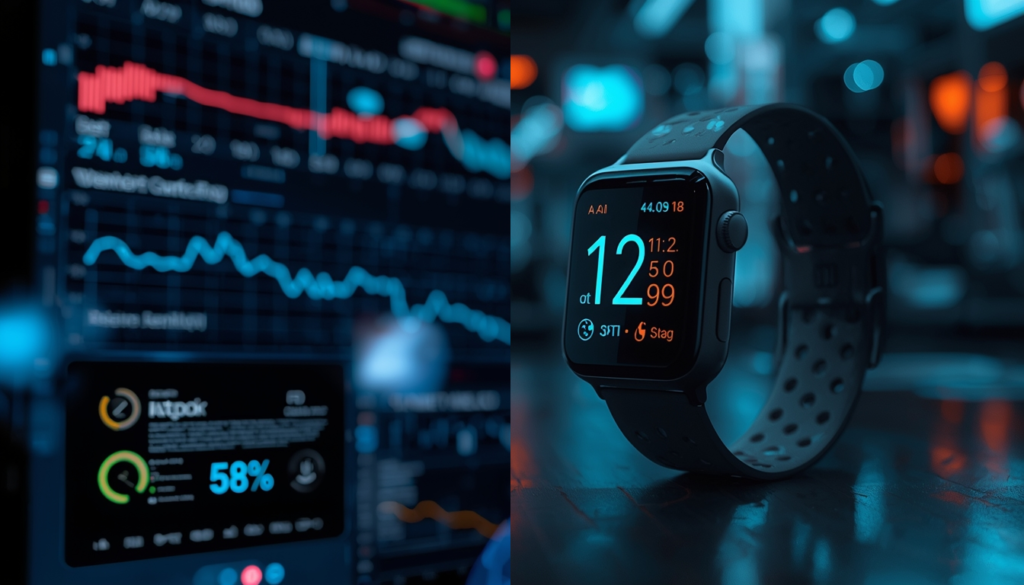
Smart Fitness Wearables
Smart fitness wearables combine sensors, mobile applications, and artificial intelligence algorithms to monitor user activity and health metrics continuously. These devices are capable of tracking steps, measuring heart rate, monitoring sleep cycles, and analyzing workout performance.
Advanced wearable devices also provide AI-powered fitness recommendations by analyzing historical workout data and health indicators. These insights help users make better decisions about training intensity, recovery periods, and overall fitness routines.
Platforms like Whoop demonstrate how AI-driven wearable technology can deliver deep insights into recovery, strain, and sleep quality, helping users optimize their training performance.
AI Health Monitoring Devices
Many wearable devices now function as AI health monitoring systems that track not only fitness activity but also broader health indicators. These devices can monitor heart rate variability, stress levels, oxygen saturation, and sleep patterns.
AI algorithms analyze this data to detect trends and provide personalized health recommendations. This helps users maintain balanced training routines while also improving overall wellness and long-term health outcomes.
Connected Fitness Ecosystems
The integration of wearable devices with AI fitness platforms, mobile apps, and connected gym equipment is creating fully connected fitness ecosystems. These ecosystems allow different devices and applications to share data and provide unified insights about user health and performance.
For example, a wearable device may track heart rate and activity levels, while a mobile AI workout app uses that data to adjust training programs automatically. This seamless integration enables a more personalized and data-driven fitness experience for users.
Challenges and Limitations of AI in Fitness
While artificial intelligence is transforming the fitness industry with smarter training systems and personalized coaching platforms, there are still several challenges and limitations that must be addressed. The effectiveness of AI in fitness depends heavily on the quality of data, accuracy of algorithms, and user adoption of new technologies.
As AI fitness applications continue to evolve, developers and fitness platforms must address issues related to data privacy, algorithm accuracy, and technology accessibility to ensure reliable and safe fitness experiences.
Below are some of the major challenges of artificial intelligence in fitness.
Data Privacy and Health Data Security
AI fitness platforms collect large volumes of personal data, including health metrics, workout history, and biometric signals. This data is essential for generating personalized fitness recommendations, but it also raises concerns about data privacy and health information security.
Developers of AI fitness apps and wearable fitness devices must ensure that user data is protected using strong encryption, secure cloud storage, and privacy-compliant data management systems. Protecting sensitive health data is critical for building trust in AI-powered fitness solutions.
Accuracy of AI Fitness Algorithms
The effectiveness of AI fitness systems depends on the accuracy of the algorithms used to analyze workout data and generate recommendations. If the data used to train these algorithms is incomplete or biased, the recommendations may not always be accurate.
For example, incorrect posture detection or inaccurate workout analytics could lead to ineffective training programs. To overcome this challenge, AI fitness technology developers must continuously improve their models using high-quality data and advanced machine learning techniques.
Technology Accessibility and Adoption
Although AI-powered fitness platforms offer many benefits, not all users have access to the technology required to use them effectively. Advanced AI workout apps, wearable fitness devices, and smart gym equipment may require high-end smartphones or specialized hardware.
Additionally, some users may prefer traditional fitness training methods or may not fully trust AI-powered coaching systems. As a result, developers must design AI fitness applications that are accessible, user-friendly, and adaptable to different levels of technological experience.
Dependence on Data Quality
AI systems rely heavily on accurate and consistent data to generate meaningful insights. If users do not track their workouts regularly or if wearable sensors collect incomplete data, the effectiveness of AI fitness analytics platforms may be reduced.
To improve reliability, modern AI fitness platforms are integrating multiple data sources including wearable devices, mobile apps, and connected gym equipment to ensure more accurate and comprehensive fitness analysis.
Future of AI in Fitness
The future of AI in fitness is expected to bring even more advanced technologies that transform how individuals train, recover, and monitor their health. As artificial intelligence continues to evolve, fitness platforms will become increasingly personalized, data-driven, and integrated with wearable devices and connected gym ecosystems.
Emerging AI fitness technologies are already enabling intelligent training systems that analyze real-time biometric data and provide adaptive workout recommendations. In the coming years, the fitness industry is expected to see greater adoption of AI-powered coaching platforms, smart gym environments, and advanced health monitoring systems.
Below are some of the major AI fitness trends shaping the future of the fitness industry.
AI Personalized Health and Fitness Coaching
AI-powered coaching systems are expected to become more advanced and widely adopted in the coming years. Future AI personal trainer apps will combine workout analytics, health monitoring data, and predictive insights to deliver highly personalized training experiences.
These platforms will analyze factors such as sleep quality, nutrition, recovery patterns, and activity levels to generate customized workout programs tailored to each user’s lifestyle and fitness goals.
AI-Driven Fitness Ecosystems
The future of the fitness industry will likely involve fully connected AI-driven fitness ecosystems where mobile apps, wearable devices, smart gym equipment, and health monitoring platforms work together seamlessly.
For example, wearable fitness devices may track health metrics throughout the day, while AI fitness platforms use that data to automatically adjust training programs and provide personalized fitness insights. This integration will allow users to manage their health, workouts, and recovery more efficiently.
Integration of AI with Digital Health Platforms
Artificial intelligence will increasingly integrate with broader digital health and wellness platforms, allowing users to track both fitness and overall health in one ecosystem. AI-powered health platforms will combine fitness tracking, nutrition planning, mental wellness monitoring, and medical insights to provide a more holistic approach to personal health management.
These innovations will continue to drive the growth of the AI fitness market, making artificial intelligence a central component of next-generation health and fitness technologies.
Build Your AI-Powered Fitness App or Platform
AI technologies are transforming fitness applications, wearable devices, and digital coaching platforms. Businesses adopting AI-driven fitness solutions can deliver personalized training programs, real-time workout analytics, and intelligent health insights.
Square Infosoft specializes in designing and developing scalable AI fitness applications for startups, gyms, and digital wellness platforms. From AI workout apps and virtual personal trainer platforms to wearable fitness integrations and intelligent health monitoring systems, our team helps turn innovative ideas into production-ready solutions.
Discuss Your AI Fitness App ProjectExpansion of AI Across Multiple Industries
Artificial intelligence is not only transforming the fitness industry but is also reshaping how businesses and organizations operate across many sectors. From improving customer experiences to optimizing operations and enabling intelligent decision-making, AI technologies are creating new opportunities for digital transformation.
As AI in fitness continues to evolve with smarter workout apps, wearable health monitoring devices, and personalized training platforms, similar AI-driven innovations are being adopted in other industries as well. These technologies help organizations analyze large volumes of data, automate complex processes, and deliver more personalized services to users.
For example, AI-powered systems are improving travel planning, optimizing retail and fashion experiences, and enabling smarter healthcare and education platforms. Businesses are increasingly investing in artificial intelligence solutions to build more efficient, data-driven, and customer-focused ecosystems.
Explore how artificial intelligence is transforming multiple industries through real-world applications and intelligent digital solutions in our guide:
AI Use Cases Across Industries and Solutions
Artificial intelligence is rapidly expanding across many sectors, including:
- AI in Travel Industry
- AI in Fashion Industry
- AI in Healthcare Industry
- AI in Fitness Industry
- AI in Construction Industry
- AI in Spirituality Industry
- AI in Education Industry
- AI in Medical Education Industry
- AI in Business Industry
- AI in Social Industry
- AI in News Industry
- AI in Utility Industry
- AI in Food Industry
These cross-industry AI applications demonstrate how intelligent technologies are driving innovation, improving operational efficiency, and delivering more personalized digital experiences across the global economy.
AI Fitness App Development
The rapid growth of digital health platforms and connected fitness ecosystems has increased demand for intelligent mobile applications that can analyze workout data, monitor health metrics, and deliver personalized training recommendations. AI fitness app development enables businesses to build advanced health and fitness platforms that provide data-driven insights and personalized user experiences.
Modern AI fitness applications integrate technologies such as machine learning, motion tracking, predictive analytics, and wearable device integration to create smarter fitness solutions. These applications help users track workouts, monitor performance, and receive personalized fitness coaching through mobile devices.
Organizations looking to build innovative health platforms are increasingly investing in AI health and fitness app development to create digital products that combine fitness tracking, intelligent coaching, and advanced analytics.
AI Workout App Development Solutions
AI-powered workout apps use intelligent algorithms to generate personalized workout programs based on user performance, training goals, and recovery patterns. These apps analyze user activity data to recommend exercises, adjust training intensity, and provide real-time feedback during workouts.
Through AI workout app development, businesses can create platforms that offer adaptive training programs, progress tracking, and virtual fitness coaching experiences for users across different fitness levels.
Custom AI Fitness Platforms
Many fitness startups and digital wellness companies are building custom AI fitness platforms that combine mobile apps, wearable device integration, and cloud-based analytics systems. These platforms collect and analyze large volumes of fitness data to generate insights about user health and workout performance.
By developing AI fitness software solutions, organizations can build scalable platforms that support personalized training programs, health monitoring tools, and data-driven fitness coaching features.
AI Health and Fitness App Development Services
Developing intelligent health and fitness applications requires expertise in artificial intelligence, mobile app development, data analytics, and cloud technologies. Experienced development teams can design and build AI-powered fitness apps that integrate advanced technologies such as computer vision, predictive analytics, and machine learning models.
These platforms can include features such as:
- personalized workout recommendations
- AI-powered fitness tracking
- wearable device integration
- real-time exercise feedback
- fitness performance analytics
- virtual fitness coaching
By combining these capabilities, businesses can launch innovative AI fitness platforms that provide engaging digital experiences and help users achieve their health and fitness goals.
FAQ: Artificial Intelligence in Fitness
What is AI in fitness?
AI in fitness refers to the use of artificial intelligence technologies such as machine learning, predictive analytics, and motion tracking to analyze workout data and provide personalized training recommendations. AI fitness applications can monitor user performance, track health metrics, and generate customized workout plans that adapt to individual fitness goals and progress.
How is AI used in fitness apps?
AI is widely used in fitness apps and digital workout platforms to analyze user activity data and deliver personalized training programs. Many AI workout apps use machine learning algorithms to track exercise performance, recommend workouts, and provide real-time feedback on training intensity and recovery.
These platforms often integrate with wearable fitness devices to collect biometric data such as heart rate, movement patterns, and sleep quality, enabling more accurate fitness insights.
What are AI fitness apps?
AI fitness apps are digital health and workout platforms that use artificial intelligence to personalize fitness training and health monitoring. These applications analyze user behavior, workout history, and health metrics to generate personalized fitness programs.
Popular examples of AI fitness apps include platforms that provide virtual coaching, workout tracking, motion analysis, and adaptive training plans that evolve based on user performance.
How does AI improve workout performance?
AI improves workout performance by analyzing fitness data and identifying patterns that help optimize training programs. AI fitness analytics platforms can monitor user progress, recommend recovery strategies, and adjust training intensity to prevent overtraining.
By using data-driven insights, AI fitness technology helps users train more efficiently and achieve better long-term fitness results.
Can AI replace personal trainers?
Artificial intelligence can enhance the digital fitness experience by providing personalized workout recommendations and performance analytics, but it does not completely replace human trainers. AI personal trainer apps are designed to complement traditional coaching by offering intelligent workout guidance and automated progress tracking.
Many fitness professionals now use AI fitness platforms to improve training efficiency and provide better insights to their clients.
What is the future of AI in fitness?
The future of AI in fitness will likely involve more advanced personalized coaching systems, smarter wearable fitness devices, and fully connected digital health ecosystems. AI-powered fitness platforms will continue to evolve by integrating predictive analytics, motion tracking, and real-time health monitoring technologies.
These innovations will make fitness training more personalized, data-driven, and accessible for users worldwide.